Mistral Large 4Mistral Large 4 Beats Kimi K3 on Legal Work With No Licence Yet
Mistral Large 4 beats Kimi K3 on Harvey's legal agent benchmark and trails it on the Vals Index. It is a discounted preview API for now, and the licence for its end-of-October weights is unpublished.
October 6, 2026 · 9 min readGPU insuranceWhen the Colo's Chillers Fail, the GPU Loss Is Yours
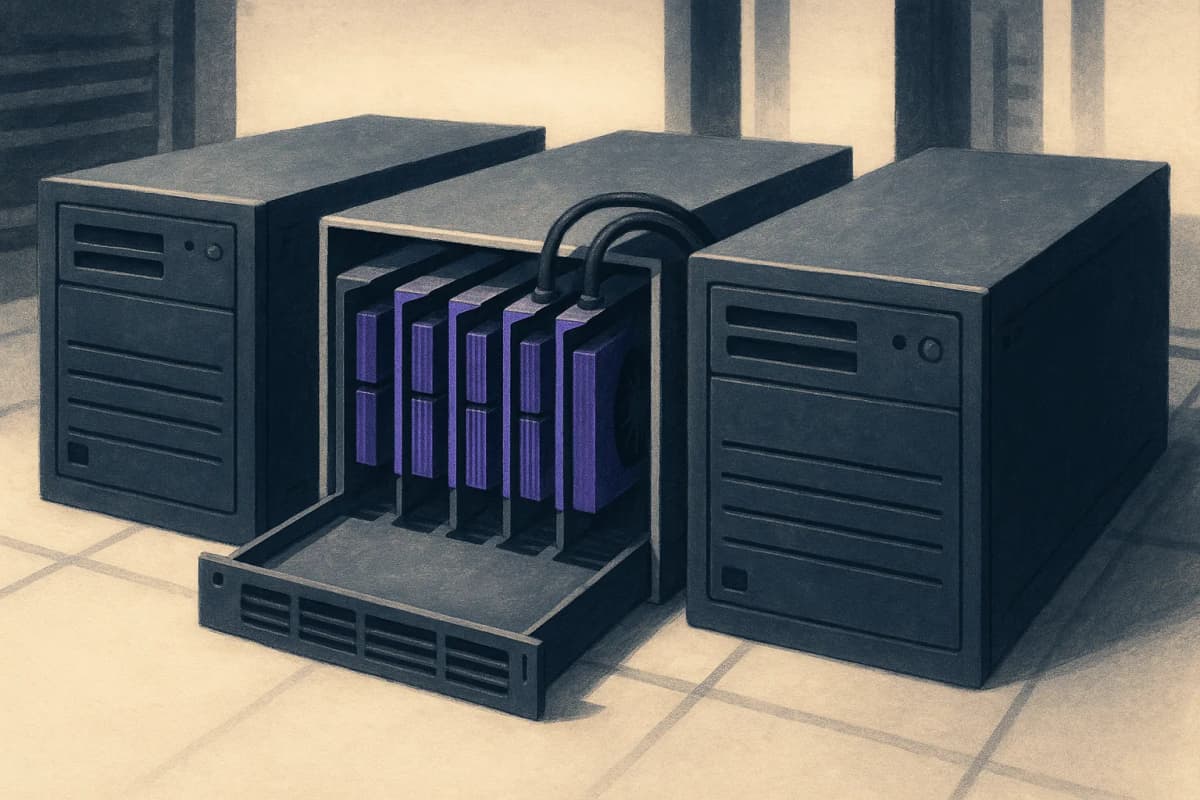
S&P says there is no obvious insurance product for the GPUs inside AI data centers, and colo agreements often cap the operator's liability at three months of fees. If you own a GPU cluster in someone else's hall, the gap between that cap and the hardware is yours to close.
September 14, 2026 · 11 min readKV cacheRandom Eviction Matched the Scorers. Protect the Prompt.
Salesforce AI Research and UIUC replaced the scoring pass in KV cache eviction with a uniform random draw, kept the prompt pinned, and matched the strongest published evictor across four models and six reasoning tasks — at 32-43% higher vLLM throughput. Random-plus-prompt-protection is now the baseline any 'intelligent cache compression' claim has to beat.
September 9, 2026 · 13 min readMixture of ExpertsTencent Says 49B Active. Your Node Loads All 770B.
Tencent's Hy4 preview markets 49B active parameters, but all 770B must stay resident — roughly 780GB in FP8, which an 8xH100 node cannot load at all. Size a Mixture-of-Experts model on total parameters and price throughput on active ones.
August 30, 2026 · 12 min readAI inference3,400 Tokens/s Was Batch 1. At 100K Context, It's Batch 12.
Nvidia's 3,400 tokens/sec on Groq 3 LPX and Cerebras' 4,400 on CS-4 are both single-stream figures. On a 256-LPU rack at 100K context, the memory math caps concurrency near a batch of 12 — so any capacity plan sized off a headline token rate is sized for one user.
August 29, 2026 · 12 min readvLLMvLLM vs TensorRT-LLM vs SGLang: Default to vLLM
TensorRT-LLM 1.2 removed the TensorRT engine build entirely, invalidating most published advice on this choice. vLLM is the default, SGLang wins prefix-heavy agent traffic, and the properties that actually matter never appear in a benchmark.
August 24, 2026 · 18 min read