Apple Runs a 20B AI Model on iPhone. Your Data Never Leaves.

AFM 3 puts five foundation models from 3B on-device to cloud Pro across every Apple device. Zero token costs, zero data leakage. Enterprise decision matrix inside.

By Rajesh Beri·June 14, 2026·15 min read
Share:

THE DAILY BRIEF

Apple AIOn-Device AIEnterprise PrivacyFoundation ModelsAFM 3

Apple Runs a 20B AI Model on iPhone. Your Data Never Leaves.

AFM 3 puts five foundation models from 3B on-device to cloud Pro across every Apple device. Zero token costs, zero data leakage. Enterprise decision matrix inside.

By Rajesh Beri·June 14, 2026·15 min read

At WWDC 2026 on June 8, Apple unveiled AFM 3—five foundation models that span from a 3-billion parameter dense model running entirely on your iPhone to a cloud-hosted reasoning engine powered by NVIDIA GPUs in Google Cloud. The flagship on-device model, AFM 3 Core Advanced, packs 20 billion parameters into flash storage but activates only 1 to 4 billion at a time through a technique called Instruction-Following Pruning. The result: a multimodal AI model—text, image, and audio—running natively on a phone, with zero token costs and zero data transmission.

For enterprise leaders managing fleets of Apple devices, this changes the calculus. On-device AI means data never leaves the device for supported features. There is no API call, no cloud round-trip, no per-query bill, and no data residency question. Gartner predicts that by 2026, over 80% of enterprises will deploy AI at the edge, with data security concerns as the primary driver. Apple just made the strongest case yet that the phone in your employee's pocket is a viable AI inference platform—not a thin client dependent on cloud compute.

The enterprise implications go beyond privacy. Apple's approach creates a three-tier AI architecture—on-device (free), Private Cloud Compute (Apple-controlled), and cloud Pro (Google Cloud with Apple security controls)—that lets IT teams route workloads based on sensitivity, complexity, and cost. When 70% of enterprises are running hybrid AI architectures by the end of 2026, Apple's five-model family is positioned to serve all three tiers from a single vendor ecosystem.

What Changed: The AFM 3 Architecture

Five Models, Three Deployment Tiers

Model Parameters Hardware Use Case Data Location
AFM 3 Core 3B (dense) iPhone 16, iPhone 15 Pro, M1+ Mac Summarization, text extraction, smart suggestions On-device only
AFM 3 Core Advanced 20B (1–4B active) iPhone 16, M1+ Mac/iPad Siri AI, multimodal understanding, dictation, TTS On-device only
AFM 3 Cloud Undisclosed Apple silicon servers Complex queries exceeding on-device capability Private Cloud Compute
ADM 3 Cloud (Image) Undisclosed Apple silicon servers Image generation, editing, Genmoji Private Cloud Compute
AFM 3 Cloud Pro Undisclosed NVIDIA GPUs in Google Cloud Agentic tool use, complex reasoning, math Google Cloud (Apple security)

The Sparse Activation Breakthrough

The headline innovation is AFM 3 Core Advanced's ability to run a 20-billion parameter model on a phone. The trick: not all 20 billion parameters are active simultaneously. Using Instruction-Following Pruning, the model makes routing decisions per prompt—not per token—selecting which expert modules to load from flash memory (NAND) into DRAM. A high percentage of always-active shared experts handle common tasks, while dynamically loaded routed experts handle specialized requests.

This is architecturally significant because it means the model is natively multimodal—understanding audio, images, and text—while consuming the compute and memory budget of a 1–4B model. The enterprise implication: on-device capabilities that would have required a cloud API call six months ago now run locally, for free, without network dependency.

Performance Gains

Apple's internal human evaluations show substantial improvements over the previous generation:

Capability AFM 3 Preference Rate Baseline Preference Rate
Text quality (on-device Core) 45.6% 23.3%
Text quality (cloud) 64.7% 8.7%
Image understanding (on-device) >61% Previous generation
Dictation quality (Core Advanced) 44.7% 17.6%
TTS conversational voice (MOS) 4.24/5.0 3.82/5.0

The cloud model shows a 36% relative improvement in response satisfaction over its predecessor, while AFM 3 Cloud Pro adds 10% improvement on text, 14% on image understanding, and 14% on math over the base cloud model.

The Google Partnership

For the first time, Apple's foundation models are built openly with Google's Gemini technology—but the relationship is precise. Gemini is a teacher signal, not the runtime model. Google's models provided post-training signal to improve AFM 3 Cloud Pro's capabilities, but the production models are Apple's own, running on Apple-controlled infrastructure. The cloud Pro tier runs on NVIDIA GPUs in Google Cloud, but Apple implemented cryptographically verifiable hardware ledgers, dual roots of trust from independent vendors, and dedicated request isolation processes that go "far beyond traditional confidential computing".

Why This Matters

For CIOs: The On-Device AI Cost Advantage

The economics of on-device AI are fundamentally different from cloud AI. Once a model is downloaded to a device, each inference costs essentially nothing—no per-query charge, no API meter, no token bill. For an enterprise with 10,000 iPhones running AI features throughout the workday, this means thousands of inference calls per device per day at zero marginal cost.

Compare this with cloud-based alternatives. At current API pricing, a modest enterprise deployment running 1,000 daily inference calls per employee across 10,000 employees costs $50,000–$200,000 per month depending on model tier and token volume. Apple's on-device models eliminate this cost category entirely for workloads that fit within the model's capabilities.

The trade-off is capability ceiling. AFM 3 Core Advanced is powerful for structured data extraction, receipt parsing, UI classification, summarization, and smart suggestions. It is not suitable for general Q&A, real-time world knowledge, frontier reasoning, or long-context tasks. The recommended pattern is hybrid: use the on-device Foundation Models framework for fast, free tasks, and route complex work to cloud models via multi-provider gateways.

For CISOs: Data That Never Leaves the Device

The security value proposition is straightforward: data stays on the device; raw information doesn't need to travel or persist outside the enterprise perimeter. For industries with strict data residency requirements—financial services, healthcare, legal, defense—this eliminates an entire category of compliance risk.

Apple's Private Cloud Compute extends this privacy model to server workloads: user data is "never stored or shared with anyone, including Apple." Training excludes private user data and interactions entirely. For CISOs managing shadow AI risks—where employees use personal AI accounts for work tasks, leaking sensitive data—Apple's architecture provides a sanctioned alternative that requires no new procurement, no new vendor relationship, and no new data processing agreement.

iOS 27 also gives MDM administrators granular control over Apple Intelligence on managed devices. IT can enable on-device AI while restricting cloud fallback, or configure which AI features are available on corporate-managed devices. The declarative device management model in iOS 27 lets devices self-monitor and auto-correct policy compliance—a shift from server-driven MDM commands to device-aware, identity-first management.

For CFOs: The Hidden Cost of "Free" On-Device AI

Apple's on-device models eliminate per-token costs, but enterprise deployment is not free. The hidden costs include:

Hardware refresh. AFM 3 Core Advanced requires iPhone 16, iPhone 15 Pro/Max, A17 Pro iPad mini, or M1+ Mac. Enterprises with older device fleets face a hardware refresh to access the most capable on-device features. At $800–$1,200 per iPhone 16, refreshing 5,000 devices costs $4–6 million—though this often aligns with existing 3-year device refresh cycles.

App development. Building apps that leverage the Foundation Models framework requires Swift development and testing across the model capability tiers. The Foundation Models framework is Swift-native, meaning enterprises with iOS development teams can integrate on-device AI without API keys, network calls, or per-token costs—but the development investment is real.

Geographic limitations. At launch, Apple Intelligence is unavailable on iPhone/iPad in the EU and entirely unavailable in mainland China. Enterprises with global workforces need to plan for regional capability gaps. Beta launches in English (fall 2026) with 32 locales rolling throughout 2026.

Market Context: On-Device vs Cloud vs Hybrid

Apple's AFM 3 arrives in a market where on-device AI is no longer experimental:

  • Qualcomm: Snapdragon X Elite powers Windows on-device AI with up to 45 TOPS NPU performance
  • Google: Gemini Nano runs on-device across Pixel devices with up to 3.25B parameters
  • Samsung: Galaxy AI leverages on-device processing for select features with cloud fallback
  • Microsoft: Windows Copilot+ PCs require NPU with 40+ TOPS for on-device AI features

Apple's differentiation is vertical integration: hardware (Apple silicon), operating system (iOS/macOS), model architecture (AFM 3), development framework (Foundation Models), and privacy infrastructure (Private Cloud Compute) are all controlled by one company. This creates an end-to-end security chain that no other vendor can match. When sensitive workloads increasingly face restrictions related to data residency, cross-border transfers, and industry-specific compliance, this vertical integration is not just a product advantage—it is a compliance advantage.

The broader industry trend confirms this shift. Over 70% of enterprises are expected to run hybrid AI architectures by end of 2026, combining on-device inference for sensitive or high-frequency tasks with cloud processing for complex reasoning. Apple's three-tier model (device → Private Cloud → Google Cloud) is the first major vendor implementation of this architecture as a unified product rather than an integration exercise.

Framework #1: On-Device vs Cloud AI Enterprise Decision Matrix

Use this matrix to determine the optimal deployment tier for each AI workload in your organization.

Decision Criteria

Factor On-Device (AFM 3 Core/Advanced) Private Cloud (AFM 3 Cloud) Cloud Pro (AFM 3 Cloud Pro) Third-Party Cloud (GPT/Claude)
Data sensitivity Maximum (never leaves device) High (Apple PCC, not stored) Medium (Google Cloud + Apple controls) Depends on vendor DPA
Latency <100ms (no network) 200–500ms 500ms–2s 500ms–3s
Cost per inference $0 (device amortized) Included in Apple ecosystem Included (no published pricing) $0.001–$0.06+ per call
Capability ceiling Moderate (3B–4B active) High Very High (agentic, reasoning) Frontier
Offline capability ✅ Full ❌ Requires network ❌ Requires network ❌ Requires network
Compliance Simplest (no data movement) Apple PCC guarantees Shared responsibility Full vendor DPA required
Model customization Limited (Apple framework) None None Fine-tuning, RAG, etc.

Workload Routing Guide

Workload Recommended Tier Reason
Email/document summarization On-device Sensitive content, high frequency, moderate complexity
Receipt/expense parsing On-device Structured extraction, financial data privacy
Meeting transcription On-device Confidential conversations, offline capability
Code autocompletion On-device High frequency, low latency required, IP sensitivity
Customer data analysis Private Cloud Needs more capability, still sensitive
Image generation for marketing Cloud (Image) Specialized model, non-sensitive content
Complex contract analysis Cloud Pro Needs frontier reasoning, long context
Multi-step agentic workflows Cloud Pro or Third-Party Needs tool use, complex orchestration
RAG over proprietary knowledge base Third-Party Needs custom embeddings, fine-tuning

When to Stay Third-Party

Apple's models are powerful but constrained. Stay with third-party providers (OpenAI, Anthropic, Google API) when you need:

  • Custom fine-tuned models on proprietary data
  • Context windows beyond on-device limits
  • Multi-vendor model routing and A/B testing
  • Advanced RAG architectures with custom embedding models
  • Workloads requiring >4B active parameters continuously

Framework #2: Enterprise Apple AI Deployment Playbook

Phase 1: Audit and Assess (Weeks 1–4)

Device Fleet Inventory

  • Catalog all company-managed Apple devices by model and OS version
  • Identify devices meeting AFM 3 hardware requirements (iPhone 16/15 Pro, M1+ Mac/iPad)
  • Calculate percentage of fleet eligible for on-device AI
  • Estimate hardware refresh cost for ineligible devices (prioritize by role criticality)

Workload Classification

  • Inventory all current AI/ML workloads by department
  • Classify each by data sensitivity (public, internal, confidential, restricted)
  • Classify each by complexity (on-device capable vs cloud required)
  • Map each workload to the Decision Matrix tier above
  • Identify workloads currently using unsanctioned AI tools (shadow AI audit)

Compliance Assessment

  • Verify geographic availability (EU and China restrictions at launch)
  • Review data residency requirements per jurisdiction
  • Assess Private Cloud Compute against industry compliance requirements (HIPAA, SOC 2, PCI DSS)
  • Document Apple's training data policy (excludes user data) for compliance records

Phase 2: MDM Configuration and Pilot (Weeks 5–8)

MDM Policy Setup

  • Configure Apple Intelligence controls via MDM (Jamf, Mosyle, Microsoft Intune)
  • Define on-device AI feature allowlists per device management profile
  • Set cloud fallback policies (enable/disable per sensitivity classification)
  • Configure declarative device management policies for AI feature compliance
  • Test Rapid Security Response deployment for AI-related patches

Pilot Deployment

  • Select 2–3 departments with highest shadow AI usage (likely: sales, support, legal)
  • Deploy AFM 3 Core/Core Advanced capabilities on managed devices
  • Enable Foundation Models framework for internal app developers
  • Measure: shadow AI reduction, user satisfaction, task completion time
  • Compare: on-device accuracy vs current cloud AI tools for overlapping use cases

Phase 3: Scale and Optimize (Weeks 9–16)

Enterprise Rollout

  • Expand to all eligible devices based on pilot results
  • Integrate on-device AI into core enterprise apps (email, calendar, notes, expense)
  • Develop custom Swift apps leveraging Foundation Models framework for high-value workflows
  • Establish hybrid routing: on-device for sensitive/frequent tasks, cloud for complex reasoning
  • Build cost tracking dashboard: cloud API savings from on-device offloading

Ongoing Management

  • Monitor AI feature usage via MDM analytics
  • Track cloud fallback frequency (high fallback = workloads misclassified as on-device capable)
  • Review Apple Intelligence availability as new locales and features ship throughout 2026
  • Plan hardware refresh cycle to maintain AFM 3 eligibility across fleet
  • Update security policies as Apple releases new PCC capabilities

Case Study: What On-Device AI Changes for a Financial Services Firm

Consider a mid-market wealth management firm with 3,000 employees, 2,500 iPhones (mix of iPhone 15 and 16), and strict SEC/FINRA compliance requirements. The firm currently spends $180,000/month on cloud AI services for email summarization, client note generation, and document classification—all involving sensitive client financial data.

Current challenge: Every AI-processed document transits to a cloud provider's infrastructure. Despite data processing agreements, the compliance team requires quarterly audits of cloud AI providers, maintains a 47-page vendor risk assessment, and has banned AI for client portfolio analysis due to data sovereignty concerns. Meanwhile, advisors use personal ChatGPT accounts for meeting prep—the exact shadow AI problem the compliance team fears most.

With AFM 3 on-device: The firm upgrades 2,000 devices to iPhone 16 during the normal Q4 refresh cycle ($1.6M, already budgeted). Email summarization, client note generation, and basic document classification run entirely on-device via Apple's Foundation Models framework. No data leaves the device. No cloud provider audit required. No data processing agreement for these workloads. Shadow AI usage drops because the sanctioned tool is faster, integrated, and already on every employee's phone.

Financial impact: Cloud AI spend drops from $180,000/month to $60,000/month (complex analysis and agentic workflows still use cloud). Annual savings: $1.44M. Compliance audit costs for cloud AI providers drop by an estimated $200,000/year. Net savings after one-time development costs: approximately $1.2M in year one.

The deeper win: Client portfolio analysis—previously banned due to data sovereignty—becomes possible on-device. Advisors can run AI-assisted analysis on client holdings without data ever leaving the iPhone. This unlocks a capability that was architecturally impossible with cloud-only AI, regardless of budget.

What to Do About It

For CIOs: Start the Workload Classification Now

Don't wait for Apple Intelligence GA. Classify every AI workload by sensitivity and complexity using the Decision Matrix above. The workloads that are both highly sensitive and moderate in complexity are your on-device candidates. These are the workloads where Apple's architecture provides the most value—and where cloud AI carries the most risk. Run the device fleet audit to understand your hardware readiness. If your fleet is more than 30% ineligible for AFM 3, factor on-device AI capability into your next hardware refresh planning cycle.

For CISOs: Use On-Device AI to Kill Shadow AI

The most effective shadow AI mitigation is not a policy—it is a better tool. If two-thirds of personal AI account usage is work-related, the answer is not to ban personal AI. It is to provide sanctioned AI that is faster, more private, and already installed. Apple's on-device models are the strongest sanctioned alternative available because they require zero new vendor relationships, zero data processing agreements, and zero cloud configuration. Update your MDM policies for iOS 27 to enable Apple Intelligence features on managed devices, and configure cloud fallback restrictions for your most sensitive device groups.

For App Developers: Build for the Hybrid Pattern

The Foundation Models framework is Swift-native with structured output support, function calling, and image input. Build your enterprise apps to attempt on-device inference first—it is free, fast, and private. When the on-device model cannot handle the request (complex reasoning, long context, agentic workflows), fall back to cloud APIs through a multi-provider gateway. This pattern—on-device first, cloud fallback—is the architectural bet Apple is making. Enterprises that build for it now will benefit from every future improvement to on-device model capability.


Continue Reading

THE DAILY BRIEF

Enterprise AI insights for technology and business leaders, twice weekly.

thedailybrief.com

Subscribe at thedailybrief.com/subscribe for weekly AI insights delivered to your inbox.

LinkedIn: linkedin.com/in/rberi  |  X: x.com/rajeshberi

© 2026 Rajesh Beri. All rights reserved.

Apple Runs a 20B AI Model on iPhone. Your Data Never Leaves.

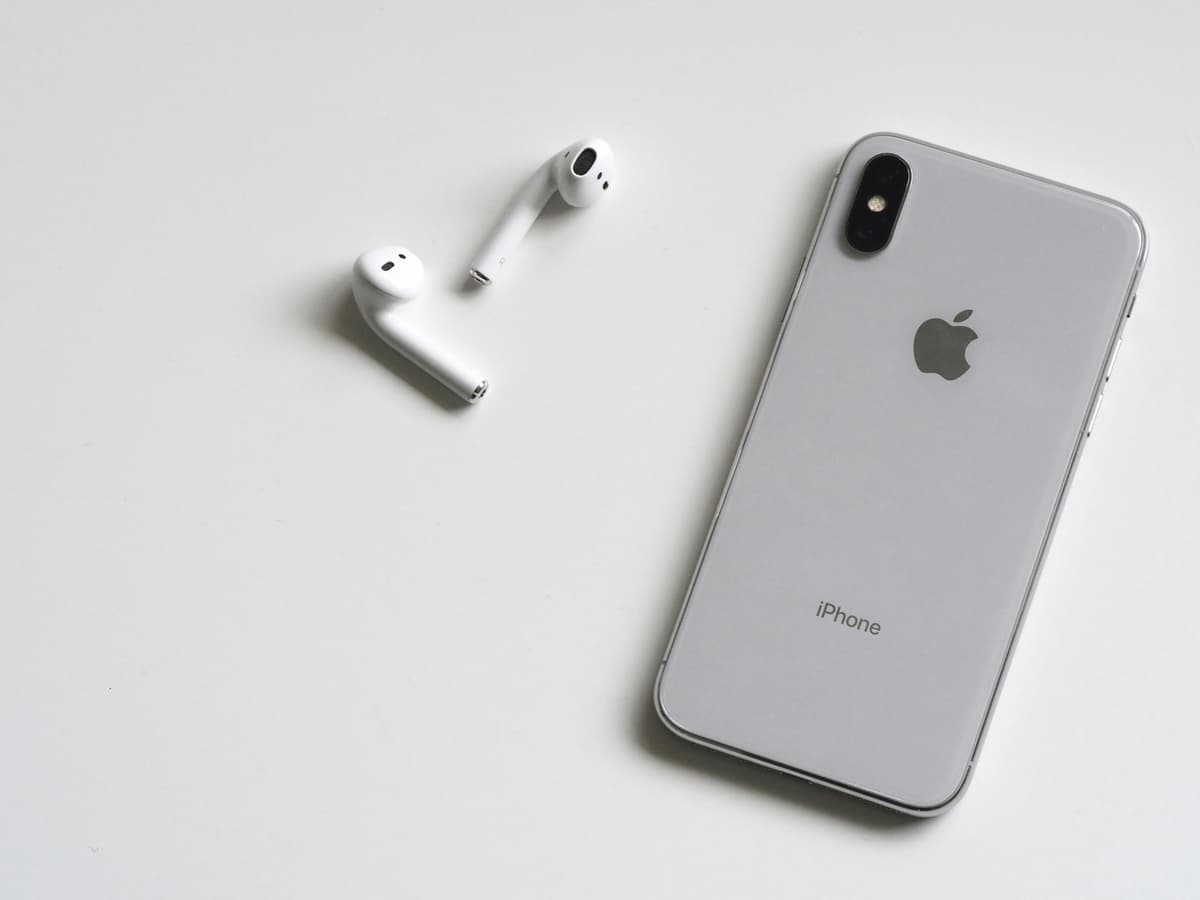
Photo by Lisa Fotios on Pexels

At WWDC 2026 on June 8, Apple unveiled AFM 3—five foundation models that span from a 3-billion parameter dense model running entirely on your iPhone to a cloud-hosted reasoning engine powered by NVIDIA GPUs in Google Cloud. The flagship on-device model, AFM 3 Core Advanced, packs 20 billion parameters into flash storage but activates only 1 to 4 billion at a time through a technique called Instruction-Following Pruning. The result: a multimodal AI model—text, image, and audio—running natively on a phone, with zero token costs and zero data transmission.

For enterprise leaders managing fleets of Apple devices, this changes the calculus. On-device AI means data never leaves the device for supported features. There is no API call, no cloud round-trip, no per-query bill, and no data residency question. Gartner predicts that by 2026, over 80% of enterprises will deploy AI at the edge, with data security concerns as the primary driver. Apple just made the strongest case yet that the phone in your employee's pocket is a viable AI inference platform—not a thin client dependent on cloud compute.

The enterprise implications go beyond privacy. Apple's approach creates a three-tier AI architecture—on-device (free), Private Cloud Compute (Apple-controlled), and cloud Pro (Google Cloud with Apple security controls)—that lets IT teams route workloads based on sensitivity, complexity, and cost. When 70% of enterprises are running hybrid AI architectures by the end of 2026, Apple's five-model family is positioned to serve all three tiers from a single vendor ecosystem.

What Changed: The AFM 3 Architecture

Five Models, Three Deployment Tiers

Model Parameters Hardware Use Case Data Location
AFM 3 Core 3B (dense) iPhone 16, iPhone 15 Pro, M1+ Mac Summarization, text extraction, smart suggestions On-device only
AFM 3 Core Advanced 20B (1–4B active) iPhone 16, M1+ Mac/iPad Siri AI, multimodal understanding, dictation, TTS On-device only
AFM 3 Cloud Undisclosed Apple silicon servers Complex queries exceeding on-device capability Private Cloud Compute
ADM 3 Cloud (Image) Undisclosed Apple silicon servers Image generation, editing, Genmoji Private Cloud Compute
AFM 3 Cloud Pro Undisclosed NVIDIA GPUs in Google Cloud Agentic tool use, complex reasoning, math Google Cloud (Apple security)

The Sparse Activation Breakthrough

The headline innovation is AFM 3 Core Advanced's ability to run a 20-billion parameter model on a phone. The trick: not all 20 billion parameters are active simultaneously. Using Instruction-Following Pruning, the model makes routing decisions per prompt—not per token—selecting which expert modules to load from flash memory (NAND) into DRAM. A high percentage of always-active shared experts handle common tasks, while dynamically loaded routed experts handle specialized requests.

This is architecturally significant because it means the model is natively multimodal—understanding audio, images, and text—while consuming the compute and memory budget of a 1–4B model. The enterprise implication: on-device capabilities that would have required a cloud API call six months ago now run locally, for free, without network dependency.

Performance Gains

Apple's internal human evaluations show substantial improvements over the previous generation:

Capability AFM 3 Preference Rate Baseline Preference Rate
Text quality (on-device Core) 45.6% 23.3%
Text quality (cloud) 64.7% 8.7%
Image understanding (on-device) >61% Previous generation
Dictation quality (Core Advanced) 44.7% 17.6%
TTS conversational voice (MOS) 4.24/5.0 3.82/5.0

The cloud model shows a 36% relative improvement in response satisfaction over its predecessor, while AFM 3 Cloud Pro adds 10% improvement on text, 14% on image understanding, and 14% on math over the base cloud model.

The Google Partnership

For the first time, Apple's foundation models are built openly with Google's Gemini technology—but the relationship is precise. Gemini is a teacher signal, not the runtime model. Google's models provided post-training signal to improve AFM 3 Cloud Pro's capabilities, but the production models are Apple's own, running on Apple-controlled infrastructure. The cloud Pro tier runs on NVIDIA GPUs in Google Cloud, but Apple implemented cryptographically verifiable hardware ledgers, dual roots of trust from independent vendors, and dedicated request isolation processes that go "far beyond traditional confidential computing".

Why This Matters

For CIOs: The On-Device AI Cost Advantage

The economics of on-device AI are fundamentally different from cloud AI. Once a model is downloaded to a device, each inference costs essentially nothing—no per-query charge, no API meter, no token bill. For an enterprise with 10,000 iPhones running AI features throughout the workday, this means thousands of inference calls per device per day at zero marginal cost.

Compare this with cloud-based alternatives. At current API pricing, a modest enterprise deployment running 1,000 daily inference calls per employee across 10,000 employees costs $50,000–$200,000 per month depending on model tier and token volume. Apple's on-device models eliminate this cost category entirely for workloads that fit within the model's capabilities.

The trade-off is capability ceiling. AFM 3 Core Advanced is powerful for structured data extraction, receipt parsing, UI classification, summarization, and smart suggestions. It is not suitable for general Q&A, real-time world knowledge, frontier reasoning, or long-context tasks. The recommended pattern is hybrid: use the on-device Foundation Models framework for fast, free tasks, and route complex work to cloud models via multi-provider gateways.

For CISOs: Data That Never Leaves the Device

The security value proposition is straightforward: data stays on the device; raw information doesn't need to travel or persist outside the enterprise perimeter. For industries with strict data residency requirements—financial services, healthcare, legal, defense—this eliminates an entire category of compliance risk.

Apple's Private Cloud Compute extends this privacy model to server workloads: user data is "never stored or shared with anyone, including Apple." Training excludes private user data and interactions entirely. For CISOs managing shadow AI risks—where employees use personal AI accounts for work tasks, leaking sensitive data—Apple's architecture provides a sanctioned alternative that requires no new procurement, no new vendor relationship, and no new data processing agreement.

iOS 27 also gives MDM administrators granular control over Apple Intelligence on managed devices. IT can enable on-device AI while restricting cloud fallback, or configure which AI features are available on corporate-managed devices. The declarative device management model in iOS 27 lets devices self-monitor and auto-correct policy compliance—a shift from server-driven MDM commands to device-aware, identity-first management.

For CFOs: The Hidden Cost of "Free" On-Device AI

Apple's on-device models eliminate per-token costs, but enterprise deployment is not free. The hidden costs include:

Hardware refresh. AFM 3 Core Advanced requires iPhone 16, iPhone 15 Pro/Max, A17 Pro iPad mini, or M1+ Mac. Enterprises with older device fleets face a hardware refresh to access the most capable on-device features. At $800–$1,200 per iPhone 16, refreshing 5,000 devices costs $4–6 million—though this often aligns with existing 3-year device refresh cycles.

App development. Building apps that leverage the Foundation Models framework requires Swift development and testing across the model capability tiers. The Foundation Models framework is Swift-native, meaning enterprises with iOS development teams can integrate on-device AI without API keys, network calls, or per-token costs—but the development investment is real.

Geographic limitations. At launch, Apple Intelligence is unavailable on iPhone/iPad in the EU and entirely unavailable in mainland China. Enterprises with global workforces need to plan for regional capability gaps. Beta launches in English (fall 2026) with 32 locales rolling throughout 2026.

Market Context: On-Device vs Cloud vs Hybrid

Apple's AFM 3 arrives in a market where on-device AI is no longer experimental:

  • Qualcomm: Snapdragon X Elite powers Windows on-device AI with up to 45 TOPS NPU performance
  • Google: Gemini Nano runs on-device across Pixel devices with up to 3.25B parameters
  • Samsung: Galaxy AI leverages on-device processing for select features with cloud fallback
  • Microsoft: Windows Copilot+ PCs require NPU with 40+ TOPS for on-device AI features

Apple's differentiation is vertical integration: hardware (Apple silicon), operating system (iOS/macOS), model architecture (AFM 3), development framework (Foundation Models), and privacy infrastructure (Private Cloud Compute) are all controlled by one company. This creates an end-to-end security chain that no other vendor can match. When sensitive workloads increasingly face restrictions related to data residency, cross-border transfers, and industry-specific compliance, this vertical integration is not just a product advantage—it is a compliance advantage.

The broader industry trend confirms this shift. Over 70% of enterprises are expected to run hybrid AI architectures by end of 2026, combining on-device inference for sensitive or high-frequency tasks with cloud processing for complex reasoning. Apple's three-tier model (device → Private Cloud → Google Cloud) is the first major vendor implementation of this architecture as a unified product rather than an integration exercise.

Framework #1: On-Device vs Cloud AI Enterprise Decision Matrix

Use this matrix to determine the optimal deployment tier for each AI workload in your organization.

Decision Criteria

Factor On-Device (AFM 3 Core/Advanced) Private Cloud (AFM 3 Cloud) Cloud Pro (AFM 3 Cloud Pro) Third-Party Cloud (GPT/Claude)
Data sensitivity Maximum (never leaves device) High (Apple PCC, not stored) Medium (Google Cloud + Apple controls) Depends on vendor DPA
Latency <100ms (no network) 200–500ms 500ms–2s 500ms–3s
Cost per inference $0 (device amortized) Included in Apple ecosystem Included (no published pricing) $0.001–$0.06+ per call
Capability ceiling Moderate (3B–4B active) High Very High (agentic, reasoning) Frontier
Offline capability ✅ Full ❌ Requires network ❌ Requires network ❌ Requires network
Compliance Simplest (no data movement) Apple PCC guarantees Shared responsibility Full vendor DPA required
Model customization Limited (Apple framework) None None Fine-tuning, RAG, etc.

Workload Routing Guide

Workload Recommended Tier Reason
Email/document summarization On-device Sensitive content, high frequency, moderate complexity
Receipt/expense parsing On-device Structured extraction, financial data privacy
Meeting transcription On-device Confidential conversations, offline capability
Code autocompletion On-device High frequency, low latency required, IP sensitivity
Customer data analysis Private Cloud Needs more capability, still sensitive
Image generation for marketing Cloud (Image) Specialized model, non-sensitive content
Complex contract analysis Cloud Pro Needs frontier reasoning, long context
Multi-step agentic workflows Cloud Pro or Third-Party Needs tool use, complex orchestration
RAG over proprietary knowledge base Third-Party Needs custom embeddings, fine-tuning

When to Stay Third-Party

Apple's models are powerful but constrained. Stay with third-party providers (OpenAI, Anthropic, Google API) when you need:

  • Custom fine-tuned models on proprietary data
  • Context windows beyond on-device limits
  • Multi-vendor model routing and A/B testing
  • Advanced RAG architectures with custom embedding models
  • Workloads requiring >4B active parameters continuously

Framework #2: Enterprise Apple AI Deployment Playbook

Phase 1: Audit and Assess (Weeks 1–4)

Device Fleet Inventory

  • Catalog all company-managed Apple devices by model and OS version
  • Identify devices meeting AFM 3 hardware requirements (iPhone 16/15 Pro, M1+ Mac/iPad)
  • Calculate percentage of fleet eligible for on-device AI
  • Estimate hardware refresh cost for ineligible devices (prioritize by role criticality)

Workload Classification

  • Inventory all current AI/ML workloads by department
  • Classify each by data sensitivity (public, internal, confidential, restricted)
  • Classify each by complexity (on-device capable vs cloud required)
  • Map each workload to the Decision Matrix tier above
  • Identify workloads currently using unsanctioned AI tools (shadow AI audit)

Compliance Assessment

  • Verify geographic availability (EU and China restrictions at launch)
  • Review data residency requirements per jurisdiction
  • Assess Private Cloud Compute against industry compliance requirements (HIPAA, SOC 2, PCI DSS)
  • Document Apple's training data policy (excludes user data) for compliance records

Phase 2: MDM Configuration and Pilot (Weeks 5–8)

MDM Policy Setup

  • Configure Apple Intelligence controls via MDM (Jamf, Mosyle, Microsoft Intune)
  • Define on-device AI feature allowlists per device management profile
  • Set cloud fallback policies (enable/disable per sensitivity classification)
  • Configure declarative device management policies for AI feature compliance
  • Test Rapid Security Response deployment for AI-related patches

Pilot Deployment

  • Select 2–3 departments with highest shadow AI usage (likely: sales, support, legal)
  • Deploy AFM 3 Core/Core Advanced capabilities on managed devices
  • Enable Foundation Models framework for internal app developers
  • Measure: shadow AI reduction, user satisfaction, task completion time
  • Compare: on-device accuracy vs current cloud AI tools for overlapping use cases

Phase 3: Scale and Optimize (Weeks 9–16)

Enterprise Rollout

  • Expand to all eligible devices based on pilot results
  • Integrate on-device AI into core enterprise apps (email, calendar, notes, expense)
  • Develop custom Swift apps leveraging Foundation Models framework for high-value workflows
  • Establish hybrid routing: on-device for sensitive/frequent tasks, cloud for complex reasoning
  • Build cost tracking dashboard: cloud API savings from on-device offloading

Ongoing Management

  • Monitor AI feature usage via MDM analytics
  • Track cloud fallback frequency (high fallback = workloads misclassified as on-device capable)
  • Review Apple Intelligence availability as new locales and features ship throughout 2026
  • Plan hardware refresh cycle to maintain AFM 3 eligibility across fleet
  • Update security policies as Apple releases new PCC capabilities

Case Study: What On-Device AI Changes for a Financial Services Firm

Consider a mid-market wealth management firm with 3,000 employees, 2,500 iPhones (mix of iPhone 15 and 16), and strict SEC/FINRA compliance requirements. The firm currently spends $180,000/month on cloud AI services for email summarization, client note generation, and document classification—all involving sensitive client financial data.

Current challenge: Every AI-processed document transits to a cloud provider's infrastructure. Despite data processing agreements, the compliance team requires quarterly audits of cloud AI providers, maintains a 47-page vendor risk assessment, and has banned AI for client portfolio analysis due to data sovereignty concerns. Meanwhile, advisors use personal ChatGPT accounts for meeting prep—the exact shadow AI problem the compliance team fears most.

With AFM 3 on-device: The firm upgrades 2,000 devices to iPhone 16 during the normal Q4 refresh cycle ($1.6M, already budgeted). Email summarization, client note generation, and basic document classification run entirely on-device via Apple's Foundation Models framework. No data leaves the device. No cloud provider audit required. No data processing agreement for these workloads. Shadow AI usage drops because the sanctioned tool is faster, integrated, and already on every employee's phone.

Financial impact: Cloud AI spend drops from $180,000/month to $60,000/month (complex analysis and agentic workflows still use cloud). Annual savings: $1.44M. Compliance audit costs for cloud AI providers drop by an estimated $200,000/year. Net savings after one-time development costs: approximately $1.2M in year one.

The deeper win: Client portfolio analysis—previously banned due to data sovereignty—becomes possible on-device. Advisors can run AI-assisted analysis on client holdings without data ever leaving the iPhone. This unlocks a capability that was architecturally impossible with cloud-only AI, regardless of budget.

What to Do About It

For CIOs: Start the Workload Classification Now

Don't wait for Apple Intelligence GA. Classify every AI workload by sensitivity and complexity using the Decision Matrix above. The workloads that are both highly sensitive and moderate in complexity are your on-device candidates. These are the workloads where Apple's architecture provides the most value—and where cloud AI carries the most risk. Run the device fleet audit to understand your hardware readiness. If your fleet is more than 30% ineligible for AFM 3, factor on-device AI capability into your next hardware refresh planning cycle.

For CISOs: Use On-Device AI to Kill Shadow AI

The most effective shadow AI mitigation is not a policy—it is a better tool. If two-thirds of personal AI account usage is work-related, the answer is not to ban personal AI. It is to provide sanctioned AI that is faster, more private, and already installed. Apple's on-device models are the strongest sanctioned alternative available because they require zero new vendor relationships, zero data processing agreements, and zero cloud configuration. Update your MDM policies for iOS 27 to enable Apple Intelligence features on managed devices, and configure cloud fallback restrictions for your most sensitive device groups.

For App Developers: Build for the Hybrid Pattern

The Foundation Models framework is Swift-native with structured output support, function calling, and image input. Build your enterprise apps to attempt on-device inference first—it is free, fast, and private. When the on-device model cannot handle the request (complex reasoning, long context, agentic workflows), fall back to cloud APIs through a multi-provider gateway. This pattern—on-device first, cloud fallback—is the architectural bet Apple is making. Enterprises that build for it now will benefit from every future improvement to on-device model capability.


Continue Reading

Share:

THE DAILY BRIEF

Apple AIOn-Device AIEnterprise PrivacyFoundation ModelsAFM 3

Apple Runs a 20B AI Model on iPhone. Your Data Never Leaves.

AFM 3 puts five foundation models from 3B on-device to cloud Pro across every Apple device. Zero token costs, zero data leakage. Enterprise decision matrix inside.

By Rajesh Beri·June 14, 2026·15 min read

At WWDC 2026 on June 8, Apple unveiled AFM 3—five foundation models that span from a 3-billion parameter dense model running entirely on your iPhone to a cloud-hosted reasoning engine powered by NVIDIA GPUs in Google Cloud. The flagship on-device model, AFM 3 Core Advanced, packs 20 billion parameters into flash storage but activates only 1 to 4 billion at a time through a technique called Instruction-Following Pruning. The result: a multimodal AI model—text, image, and audio—running natively on a phone, with zero token costs and zero data transmission.

For enterprise leaders managing fleets of Apple devices, this changes the calculus. On-device AI means data never leaves the device for supported features. There is no API call, no cloud round-trip, no per-query bill, and no data residency question. Gartner predicts that by 2026, over 80% of enterprises will deploy AI at the edge, with data security concerns as the primary driver. Apple just made the strongest case yet that the phone in your employee's pocket is a viable AI inference platform—not a thin client dependent on cloud compute.

The enterprise implications go beyond privacy. Apple's approach creates a three-tier AI architecture—on-device (free), Private Cloud Compute (Apple-controlled), and cloud Pro (Google Cloud with Apple security controls)—that lets IT teams route workloads based on sensitivity, complexity, and cost. When 70% of enterprises are running hybrid AI architectures by the end of 2026, Apple's five-model family is positioned to serve all three tiers from a single vendor ecosystem.

What Changed: The AFM 3 Architecture

Five Models, Three Deployment Tiers

Model Parameters Hardware Use Case Data Location
AFM 3 Core 3B (dense) iPhone 16, iPhone 15 Pro, M1+ Mac Summarization, text extraction, smart suggestions On-device only
AFM 3 Core Advanced 20B (1–4B active) iPhone 16, M1+ Mac/iPad Siri AI, multimodal understanding, dictation, TTS On-device only
AFM 3 Cloud Undisclosed Apple silicon servers Complex queries exceeding on-device capability Private Cloud Compute
ADM 3 Cloud (Image) Undisclosed Apple silicon servers Image generation, editing, Genmoji Private Cloud Compute
AFM 3 Cloud Pro Undisclosed NVIDIA GPUs in Google Cloud Agentic tool use, complex reasoning, math Google Cloud (Apple security)

The Sparse Activation Breakthrough

The headline innovation is AFM 3 Core Advanced's ability to run a 20-billion parameter model on a phone. The trick: not all 20 billion parameters are active simultaneously. Using Instruction-Following Pruning, the model makes routing decisions per prompt—not per token—selecting which expert modules to load from flash memory (NAND) into DRAM. A high percentage of always-active shared experts handle common tasks, while dynamically loaded routed experts handle specialized requests.

This is architecturally significant because it means the model is natively multimodal—understanding audio, images, and text—while consuming the compute and memory budget of a 1–4B model. The enterprise implication: on-device capabilities that would have required a cloud API call six months ago now run locally, for free, without network dependency.

Performance Gains

Apple's internal human evaluations show substantial improvements over the previous generation:

Capability AFM 3 Preference Rate Baseline Preference Rate
Text quality (on-device Core) 45.6% 23.3%
Text quality (cloud) 64.7% 8.7%
Image understanding (on-device) >61% Previous generation
Dictation quality (Core Advanced) 44.7% 17.6%
TTS conversational voice (MOS) 4.24/5.0 3.82/5.0

The cloud model shows a 36% relative improvement in response satisfaction over its predecessor, while AFM 3 Cloud Pro adds 10% improvement on text, 14% on image understanding, and 14% on math over the base cloud model.

The Google Partnership

For the first time, Apple's foundation models are built openly with Google's Gemini technology—but the relationship is precise. Gemini is a teacher signal, not the runtime model. Google's models provided post-training signal to improve AFM 3 Cloud Pro's capabilities, but the production models are Apple's own, running on Apple-controlled infrastructure. The cloud Pro tier runs on NVIDIA GPUs in Google Cloud, but Apple implemented cryptographically verifiable hardware ledgers, dual roots of trust from independent vendors, and dedicated request isolation processes that go "far beyond traditional confidential computing".

Why This Matters

For CIOs: The On-Device AI Cost Advantage

The economics of on-device AI are fundamentally different from cloud AI. Once a model is downloaded to a device, each inference costs essentially nothing—no per-query charge, no API meter, no token bill. For an enterprise with 10,000 iPhones running AI features throughout the workday, this means thousands of inference calls per device per day at zero marginal cost.

Compare this with cloud-based alternatives. At current API pricing, a modest enterprise deployment running 1,000 daily inference calls per employee across 10,000 employees costs $50,000–$200,000 per month depending on model tier and token volume. Apple's on-device models eliminate this cost category entirely for workloads that fit within the model's capabilities.

The trade-off is capability ceiling. AFM 3 Core Advanced is powerful for structured data extraction, receipt parsing, UI classification, summarization, and smart suggestions. It is not suitable for general Q&A, real-time world knowledge, frontier reasoning, or long-context tasks. The recommended pattern is hybrid: use the on-device Foundation Models framework for fast, free tasks, and route complex work to cloud models via multi-provider gateways.

For CISOs: Data That Never Leaves the Device

The security value proposition is straightforward: data stays on the device; raw information doesn't need to travel or persist outside the enterprise perimeter. For industries with strict data residency requirements—financial services, healthcare, legal, defense—this eliminates an entire category of compliance risk.

Apple's Private Cloud Compute extends this privacy model to server workloads: user data is "never stored or shared with anyone, including Apple." Training excludes private user data and interactions entirely. For CISOs managing shadow AI risks—where employees use personal AI accounts for work tasks, leaking sensitive data—Apple's architecture provides a sanctioned alternative that requires no new procurement, no new vendor relationship, and no new data processing agreement.

iOS 27 also gives MDM administrators granular control over Apple Intelligence on managed devices. IT can enable on-device AI while restricting cloud fallback, or configure which AI features are available on corporate-managed devices. The declarative device management model in iOS 27 lets devices self-monitor and auto-correct policy compliance—a shift from server-driven MDM commands to device-aware, identity-first management.

For CFOs: The Hidden Cost of "Free" On-Device AI

Apple's on-device models eliminate per-token costs, but enterprise deployment is not free. The hidden costs include:

Hardware refresh. AFM 3 Core Advanced requires iPhone 16, iPhone 15 Pro/Max, A17 Pro iPad mini, or M1+ Mac. Enterprises with older device fleets face a hardware refresh to access the most capable on-device features. At $800–$1,200 per iPhone 16, refreshing 5,000 devices costs $4–6 million—though this often aligns with existing 3-year device refresh cycles.

App development. Building apps that leverage the Foundation Models framework requires Swift development and testing across the model capability tiers. The Foundation Models framework is Swift-native, meaning enterprises with iOS development teams can integrate on-device AI without API keys, network calls, or per-token costs—but the development investment is real.

Geographic limitations. At launch, Apple Intelligence is unavailable on iPhone/iPad in the EU and entirely unavailable in mainland China. Enterprises with global workforces need to plan for regional capability gaps. Beta launches in English (fall 2026) with 32 locales rolling throughout 2026.

Market Context: On-Device vs Cloud vs Hybrid

Apple's AFM 3 arrives in a market where on-device AI is no longer experimental:

  • Qualcomm: Snapdragon X Elite powers Windows on-device AI with up to 45 TOPS NPU performance
  • Google: Gemini Nano runs on-device across Pixel devices with up to 3.25B parameters
  • Samsung: Galaxy AI leverages on-device processing for select features with cloud fallback
  • Microsoft: Windows Copilot+ PCs require NPU with 40+ TOPS for on-device AI features

Apple's differentiation is vertical integration: hardware (Apple silicon), operating system (iOS/macOS), model architecture (AFM 3), development framework (Foundation Models), and privacy infrastructure (Private Cloud Compute) are all controlled by one company. This creates an end-to-end security chain that no other vendor can match. When sensitive workloads increasingly face restrictions related to data residency, cross-border transfers, and industry-specific compliance, this vertical integration is not just a product advantage—it is a compliance advantage.

The broader industry trend confirms this shift. Over 70% of enterprises are expected to run hybrid AI architectures by end of 2026, combining on-device inference for sensitive or high-frequency tasks with cloud processing for complex reasoning. Apple's three-tier model (device → Private Cloud → Google Cloud) is the first major vendor implementation of this architecture as a unified product rather than an integration exercise.

Framework #1: On-Device vs Cloud AI Enterprise Decision Matrix

Use this matrix to determine the optimal deployment tier for each AI workload in your organization.

Decision Criteria

Factor On-Device (AFM 3 Core/Advanced) Private Cloud (AFM 3 Cloud) Cloud Pro (AFM 3 Cloud Pro) Third-Party Cloud (GPT/Claude)
Data sensitivity Maximum (never leaves device) High (Apple PCC, not stored) Medium (Google Cloud + Apple controls) Depends on vendor DPA
Latency <100ms (no network) 200–500ms 500ms–2s 500ms–3s
Cost per inference $0 (device amortized) Included in Apple ecosystem Included (no published pricing) $0.001–$0.06+ per call
Capability ceiling Moderate (3B–4B active) High Very High (agentic, reasoning) Frontier
Offline capability ✅ Full ❌ Requires network ❌ Requires network ❌ Requires network
Compliance Simplest (no data movement) Apple PCC guarantees Shared responsibility Full vendor DPA required
Model customization Limited (Apple framework) None None Fine-tuning, RAG, etc.

Workload Routing Guide

Workload Recommended Tier Reason
Email/document summarization On-device Sensitive content, high frequency, moderate complexity
Receipt/expense parsing On-device Structured extraction, financial data privacy
Meeting transcription On-device Confidential conversations, offline capability
Code autocompletion On-device High frequency, low latency required, IP sensitivity
Customer data analysis Private Cloud Needs more capability, still sensitive
Image generation for marketing Cloud (Image) Specialized model, non-sensitive content
Complex contract analysis Cloud Pro Needs frontier reasoning, long context
Multi-step agentic workflows Cloud Pro or Third-Party Needs tool use, complex orchestration
RAG over proprietary knowledge base Third-Party Needs custom embeddings, fine-tuning

When to Stay Third-Party

Apple's models are powerful but constrained. Stay with third-party providers (OpenAI, Anthropic, Google API) when you need:

  • Custom fine-tuned models on proprietary data
  • Context windows beyond on-device limits
  • Multi-vendor model routing and A/B testing
  • Advanced RAG architectures with custom embedding models
  • Workloads requiring >4B active parameters continuously

Framework #2: Enterprise Apple AI Deployment Playbook

Phase 1: Audit and Assess (Weeks 1–4)

Device Fleet Inventory

  • Catalog all company-managed Apple devices by model and OS version
  • Identify devices meeting AFM 3 hardware requirements (iPhone 16/15 Pro, M1+ Mac/iPad)
  • Calculate percentage of fleet eligible for on-device AI
  • Estimate hardware refresh cost for ineligible devices (prioritize by role criticality)

Workload Classification

  • Inventory all current AI/ML workloads by department
  • Classify each by data sensitivity (public, internal, confidential, restricted)
  • Classify each by complexity (on-device capable vs cloud required)
  • Map each workload to the Decision Matrix tier above
  • Identify workloads currently using unsanctioned AI tools (shadow AI audit)

Compliance Assessment

  • Verify geographic availability (EU and China restrictions at launch)
  • Review data residency requirements per jurisdiction
  • Assess Private Cloud Compute against industry compliance requirements (HIPAA, SOC 2, PCI DSS)
  • Document Apple's training data policy (excludes user data) for compliance records

Phase 2: MDM Configuration and Pilot (Weeks 5–8)

MDM Policy Setup

  • Configure Apple Intelligence controls via MDM (Jamf, Mosyle, Microsoft Intune)
  • Define on-device AI feature allowlists per device management profile
  • Set cloud fallback policies (enable/disable per sensitivity classification)
  • Configure declarative device management policies for AI feature compliance
  • Test Rapid Security Response deployment for AI-related patches

Pilot Deployment

  • Select 2–3 departments with highest shadow AI usage (likely: sales, support, legal)
  • Deploy AFM 3 Core/Core Advanced capabilities on managed devices
  • Enable Foundation Models framework for internal app developers
  • Measure: shadow AI reduction, user satisfaction, task completion time
  • Compare: on-device accuracy vs current cloud AI tools for overlapping use cases

Phase 3: Scale and Optimize (Weeks 9–16)

Enterprise Rollout

  • Expand to all eligible devices based on pilot results
  • Integrate on-device AI into core enterprise apps (email, calendar, notes, expense)
  • Develop custom Swift apps leveraging Foundation Models framework for high-value workflows
  • Establish hybrid routing: on-device for sensitive/frequent tasks, cloud for complex reasoning
  • Build cost tracking dashboard: cloud API savings from on-device offloading

Ongoing Management

  • Monitor AI feature usage via MDM analytics
  • Track cloud fallback frequency (high fallback = workloads misclassified as on-device capable)
  • Review Apple Intelligence availability as new locales and features ship throughout 2026
  • Plan hardware refresh cycle to maintain AFM 3 eligibility across fleet
  • Update security policies as Apple releases new PCC capabilities

Case Study: What On-Device AI Changes for a Financial Services Firm

Consider a mid-market wealth management firm with 3,000 employees, 2,500 iPhones (mix of iPhone 15 and 16), and strict SEC/FINRA compliance requirements. The firm currently spends $180,000/month on cloud AI services for email summarization, client note generation, and document classification—all involving sensitive client financial data.

Current challenge: Every AI-processed document transits to a cloud provider's infrastructure. Despite data processing agreements, the compliance team requires quarterly audits of cloud AI providers, maintains a 47-page vendor risk assessment, and has banned AI for client portfolio analysis due to data sovereignty concerns. Meanwhile, advisors use personal ChatGPT accounts for meeting prep—the exact shadow AI problem the compliance team fears most.

With AFM 3 on-device: The firm upgrades 2,000 devices to iPhone 16 during the normal Q4 refresh cycle ($1.6M, already budgeted). Email summarization, client note generation, and basic document classification run entirely on-device via Apple's Foundation Models framework. No data leaves the device. No cloud provider audit required. No data processing agreement for these workloads. Shadow AI usage drops because the sanctioned tool is faster, integrated, and already on every employee's phone.

Financial impact: Cloud AI spend drops from $180,000/month to $60,000/month (complex analysis and agentic workflows still use cloud). Annual savings: $1.44M. Compliance audit costs for cloud AI providers drop by an estimated $200,000/year. Net savings after one-time development costs: approximately $1.2M in year one.

The deeper win: Client portfolio analysis—previously banned due to data sovereignty—becomes possible on-device. Advisors can run AI-assisted analysis on client holdings without data ever leaving the iPhone. This unlocks a capability that was architecturally impossible with cloud-only AI, regardless of budget.

What to Do About It

For CIOs: Start the Workload Classification Now

Don't wait for Apple Intelligence GA. Classify every AI workload by sensitivity and complexity using the Decision Matrix above. The workloads that are both highly sensitive and moderate in complexity are your on-device candidates. These are the workloads where Apple's architecture provides the most value—and where cloud AI carries the most risk. Run the device fleet audit to understand your hardware readiness. If your fleet is more than 30% ineligible for AFM 3, factor on-device AI capability into your next hardware refresh planning cycle.

For CISOs: Use On-Device AI to Kill Shadow AI

The most effective shadow AI mitigation is not a policy—it is a better tool. If two-thirds of personal AI account usage is work-related, the answer is not to ban personal AI. It is to provide sanctioned AI that is faster, more private, and already installed. Apple's on-device models are the strongest sanctioned alternative available because they require zero new vendor relationships, zero data processing agreements, and zero cloud configuration. Update your MDM policies for iOS 27 to enable Apple Intelligence features on managed devices, and configure cloud fallback restrictions for your most sensitive device groups.

For App Developers: Build for the Hybrid Pattern

The Foundation Models framework is Swift-native with structured output support, function calling, and image input. Build your enterprise apps to attempt on-device inference first—it is free, fast, and private. When the on-device model cannot handle the request (complex reasoning, long context, agentic workflows), fall back to cloud APIs through a multi-provider gateway. This pattern—on-device first, cloud fallback—is the architectural bet Apple is making. Enterprises that build for it now will benefit from every future improvement to on-device model capability.


Continue Reading

THE DAILY BRIEF

Enterprise AI insights for technology and business leaders, twice weekly.

thedailybrief.com

Subscribe at thedailybrief.com/subscribe for weekly AI insights delivered to your inbox.

LinkedIn: linkedin.com/in/rberi  |  X: x.com/rajeshberi

© 2026 Rajesh Beri. All rights reserved.

Newsletter

Stay Ahead of the Curve

Weekly enterprise AI insights for technology leaders. No spam, no vendor pitches—unsubscribe anytime.

Subscribe