Qualcomm Just Spent $4B to Break Nvidia's Software Lock on Enterprise AI

Qualcomm's $3.92 billion acquisition of Modular — maker of the Mojo language and MAX inference engine — is not a chip deal. It's a direct attack on CUDA, the software platform that has locked 4 million developers and their enterprises into Nvidia's ecosystem for nearly two decades. Combined with a reported $8-10 billion Tenstorrent acquisition, Qualcomm is assembling a $14 billion full-stack alternative for the $255 billion AI inference market. Here's how to assess your own Nvidia lock-in and plan a multi-vendor inference strategy.

By Rajesh Beri·June 26, 2026·16 min read
Share:
THE DAILY BRIEF
QualcommModularNvidiaCUDAAI inferencevendor lock-inMojoMAXTenstorrentRISC-Vedge AIenterprise AI infrastructure
Qualcomm Just Spent $4B to Break Nvidia's Software Lock on Enterprise AI

Qualcomm's $3.92 billion acquisition of Modular — maker of the Mojo language and MAX inference engine — is not a chip deal. It's a direct attack on CUDA, the software platform that has locked 4 million developers and their enterprises into Nvidia's ecosystem for nearly two decades. Combined with a reported $8-10 billion Tenstorrent acquisition, Qualcomm is assembling a $14 billion full-stack alternative for the $255 billion AI inference market. Here's how to assess your own Nvidia lock-in and plan a multi-vendor inference strategy.

By Rajesh Beri·June 26, 2026·16 min read

On June 24, 2026, Qualcomm announced it would acquire Modular — the AI infrastructure startup founded by LLVM creator Chris Lattner — in an all-stock deal valued at approximately $3.92 billion. The deal is expected to close in the second half of 2026.

This is not a chip acquisition. Qualcomm already makes chips. This is a software acquisition — and that distinction matters more than the dollar amount suggests.

Modular built the Mojo programming language and the MAX inference engine: a unified platform that lets developers write AI code once and run it across Nvidia, AMD, Intel, Apple Silicon, and Qualcomm hardware without rewriting for each chip. It is, by design, the anti-CUDA — an open, hardware-agnostic compiler and serving stack that breaks the dependency chain that has kept enterprises locked into a single vendor's ecosystem for nearly two decades.

Qualcomm CEO Cristiano Amon framed the move in structural terms: "As agentic AI scales across data centers and edge environments, the industry is moving toward disaggregated, multi-vendor architectures that demand a more open and modern software foundation." The statement landed at Qualcomm's Investor Day, alongside the disclosure that the company expects to begin shipping custom silicon to a leading hyperscaler before the end of 2026.

But the Modular deal is just one piece. Qualcomm is reportedly in advanced talks to acquire Tenstorrent — the RISC-V AI chip startup led by legendary silicon architect Jim Keller — at a valuation between $8 billion and $10 billion. If both deals close, Qualcomm will have committed roughly $14 billion to a single strategic objective: building a full-stack alternative to Nvidia for enterprise AI inference.

Here's what this means for your AI infrastructure strategy, why the software layer matters more than the silicon, and the two frameworks your team needs to evaluate whether Nvidia lock-in is costing you more than you think.


Why Software — Not Silicon — Is the Real Moat

Every previous challenge to Nvidia's dominance has focused on building a better chip. AMD shipped competitive GPUs. Intel launched Gaudi accelerators. Google built TPUs. Amazon designed Trainium and Inferentia. Custom ASIC startups raised billions. None of them made a meaningful dent in Nvidia's market share, which remains at approximately 75% of the AI accelerator market by revenue as of Q1 2026.

The reason is not that the hardware was bad. The reason is CUDA.

CUDA — Nvidia's proprietary parallel computing platform, first released in 2006 — is the software layer that turned GPU hardware dominance into an ecosystem lock-in. Approximately 4 million developers work within the CUDA ecosystem today. The platform includes decades of accumulated libraries (cuDNN for deep learning, cuBLAS for linear algebra, TensorRT for inference optimization), compiler tooling, debugging infrastructure, and pre-optimized frameworks. Code written for CUDA does not run cleanly on a rival chip. Migrating a production AI workload to AMD, Intel, or Qualcomm silicon typically requires significant rewrites, revalidation, and retraining of engineering teams.

This is why enterprises stay on Nvidia even when alternative hardware is cheaper for their specific workload. The switching cost is not the chip. It's the code.

Qualcomm's insight — and the reason it spent $4 billion on Modular rather than on another chip company — is that breaking Nvidia's lock requires attacking the software moat directly. You need a compiler layer that makes non-Nvidia hardware accessible to the existing developer base without forcing them to abandon their code, their tools, or their deployment workflows. That is exactly what Modular built.


What Modular Actually Built

Modular was founded in 2022 by Chris Lattner and Tim Davis. Lattner created LLVM, the compiler infrastructure that underlies most modern programming language toolchains. He also created Apple's Swift programming language and was briefly head of Tesla's Autopilot software program. Davis co-created TensorFlow Lite at Google, enabling machine learning models to run efficiently on lower-power devices. The company raised $250 million at a $1.6 billion valuation just nine months before the acquisition.

Modular's platform has two core components:

Mojo: A systems programming language designed to be a superset of Python while delivering performance comparable to C and Rust. Mojo gives developers the familiar Python syntax they already use for AI development while providing low-level hardware control — SIMD instructions, manual memory management, GPU kernel programming — when they need it. Internal benchmarks have shown up to 100x performance improvements over standard Python for compute-intensive operations.

MAX (Modular Accelerated Xecution): A graph-level AI compiler and inference serving stack that runs models across CPUs, GPUs, and accelerators from different vendors without hardware-specific rewrites. MAX supports 1,000+ models including DeepSeek, Llama, and Kimi out of the box. It provides PyTorch-like model APIs, distributed multi-GPU scaling, and a benchmarking framework that works across both Nvidia and AMD GPUs.

The critical design decision was hardware abstraction at the compiler level. Rather than building wrappers around vendor-specific libraries (the approach that has limited portability projects like AMD's ROCm), Modular built a compiler that generates optimized machine code for each target hardware directly. This means the same model code achieves near-native performance on Nvidia GPUs, AMD GPUs, Apple Silicon, and x86 CPUs — without the developer needing to know or care which hardware is underneath.

For enterprises running inference at scale, this changes the procurement equation entirely. When your AI code is hardware-agnostic, you can choose chips based on cost, availability, power efficiency, and performance for your specific workload — not based on which vendor's software ecosystem your engineering team already knows.


Qualcomm's Full-Stack Strategy: The $14 Billion Bet

The Modular acquisition does not exist in isolation. Qualcomm has been assembling the components of a complete data center AI stack through a series of acquisitions and partnerships over the past year:

Ventana Micro Systems (acquired late 2025): A startup building server CPUs based on the open RISC-V instruction set architecture. This gives Qualcomm a CPU design for data center environments that is not dependent on x86 (Intel/AMD) or Arm licensing terms.

Custom ASIC design services: Qualcomm is in talks with ByteDance to provide custom chip designs for the Chinese tech giant's data center operations, positioning itself as a custom silicon partner for hyperscalers seeking alternatives to Nvidia.

Tenstorrent (reported acquisition, $8–10B): Led by Jim Keller — the architect behind AMD's Zen processor, Apple's A4/A5 chips, and Tesla's Full Self-Driving computer — Tenstorrent has built the Blackhole chip with a novel Tensix core architecture specifically optimized for AI inference. The chip delivers 664 TFLOPS of BF16 performance with 32GB GDDR6 memory, using a tile-based design where each core carries its own local SRAM, avoiding the external memory bottlenecks that make GPUs inefficient for inference workloads. Tenstorrent's open-source TT-Metalium software stack (MIT-licensed) supports PyTorch, JAX, and ONNX model deployment.

Modular (confirmed acquisition, $3.92B): The compiler and inference engine that unifies all of the above under a single developer experience.

The combined strategy is clear: Qualcomm is not trying to out-Nvidia Nvidia on GPUs. It is building an entirely parallel stack — open-standard chips (RISC-V), inference-optimized silicon (Tensix), and a hardware-agnostic software layer (MAX/Mojo) — designed to give enterprises a credible alternative for the workload that actually matters most to their bottom line: inference.


Why Inference Is the Battlefield That Matters

Training large AI models grabs headlines, but inference — actually running those models in production — is where enterprises spend the money.

The global AI inference market is projected to grow from $106 billion in 2025 to $255 billion by 2030, at a CAGR of 19.2%. Edge AI inference alone is growing at 38.6% CAGR, generating $34.7 billion in specialized infrastructure demand. As Deloitte's 2026 technology predictions noted, 2026 is the year when AI computing shifts from being primarily about training to being primarily about inference — deploying models to handle enterprise and consumer queries, prompts, and agentic tasks at scale.

This shift changes the hardware economics dramatically. Training rewards raw compute density — thousands of GPUs running in parallel on massive datasets. Nvidia excels here. Inference rewards efficiency — cost per token, power per query, latency per request. This is where GPUs are often overprovisioned and where alternative architectures can compete on total cost of ownership.

Nvidia still holds a 74% share of the AI inference chip market as of Q1 2026, down from its peak of 87% in 2024. The decline is small but directionally significant. AMD's MI300X/MI325X GPUs offer 20–40% cost savings per token for large model inference. Intel's Gaudi 3 accelerators are available with aggressive discounts on multiple cloud platforms. And the rise of usage-based AI pricing — where enterprises pay per token rather than per seat — makes inference cost optimization a CFO-level priority, not just an engineering concern.

This is the environment Qualcomm is entering. Not with another GPU that has to beat Nvidia on its home turf, but with a complete stack — silicon optimized for inference economics plus software that eliminates the switching cost that has kept enterprises locked in.


Framework #1: AI Infrastructure Vendor Lock-In Assessment

Before you can evaluate whether the Qualcomm-Modular alternative matters for your organization, you need to understand the depth of your current Nvidia dependency. Most enterprises underestimate their lock-in because it accumulates gradually across teams, frameworks, and deployment pipelines.

Use this assessment to score your organization's CUDA dependency on a 0–100 scale. Each dimension is scored 0–20, where higher scores indicate deeper lock-in and greater strategic risk.

Dimension 1: Code-Level Dependency (0–20)

Score Indicator
0–5 All AI code uses framework-level APIs (PyTorch, TensorFlow) with no direct CUDA calls
6–10 Some custom CUDA kernels exist but are isolated to specific optimization layers
11–15 Production inference pipelines depend on TensorRT or cuDNN-specific optimizations
16–20 Core model serving infrastructure uses custom CUDA code that would require full rewrite to port

Dimension 2: Team Expertise Concentration (0–20)

Score Indicator
0–5 AI engineering team has experience across multiple hardware platforms
6–10 Most team members know CUDA but have used alternatives (ROCm, OpenVINO) in prior roles
11–15 Team hiring and training pipelines are CUDA-centric; alternatives would require reskilling
16–20 Critical inference optimization knowledge exists only in CUDA-fluent team members with no cross-training

Dimension 3: Infrastructure Procurement (0–20)

Score Indicator
0–5 Multi-vendor cloud deployments with workloads running on CPU, GPU, and accelerator mix
6–10 Primary cloud provider offers non-Nvidia options; some workloads have been tested on alternatives
11–15 All GPU instances are Nvidia; multi-year committed-use contracts with cloud provider
16–20 On-premise GPU clusters with 3+ year depreciation schedule; hardware refresh locked to Nvidia roadmap

Dimension 4: Tooling and Pipeline Integration (0–20)

Score Indicator
0–5 CI/CD pipelines, monitoring, and profiling tools are hardware-agnostic
6–10 Nvidia-specific profiling (Nsight) used for optimization but not embedded in CI
11–15 Model compilation, optimization, and deployment pipelines hardcoded to TensorRT/Triton
16–20 End-to-end MLOps stack (training, validation, serving, monitoring) depends on Nvidia-specific tooling

Dimension 5: Vendor Relationship and Pricing Power (0–20)

Score Indicator
0–5 Multiple hardware vendors qualified and tested; procurement can shift within one quarter
6–10 Nvidia is preferred vendor but alternatives have been evaluated; no exclusivity commitments
11–15 Enterprise agreement with Nvidia includes volume discounts contingent on purchase commitments
16–20 Strategic partnership with Nvidia includes co-development, early access programs, or joint go-to-market

Interpreting Your Score

Total Score Lock-In Level Action
0–30 Low You have flexibility. Evaluate Qualcomm/Modular and alternatives as they mature.
31–55 Moderate Start a parallel evaluation track. Run inference benchmarks on non-Nvidia hardware using MAX or vLLM.
56–75 High Your switching cost is significant but manageable. Begin a 6-month migration pilot for non-critical inference workloads.
76–100 Critical You are strategically exposed. Any Nvidia supply constraint, pricing change, or export restriction directly impacts operations. Start diversification planning immediately.

Framework #2: Enterprise AI Inference Stack Migration Roadmap

For organizations that score above 55 on the lock-in assessment, this 12-month roadmap provides a structured path toward multi-vendor inference capability. The goal is not to replace Nvidia entirely — it is to ensure you have the ability to run inference workloads on alternative hardware when cost, availability, or risk demands it.

Phase 1: Audit and Baseline (Months 1–2)

Objective: Understand what you're running, where, and at what cost.

  • Catalog all production inference workloads by model, hardware, throughput, and cost per query
  • Identify CUDA-specific code paths: custom kernels, TensorRT optimizations, cuDNN calls
  • Measure current inference cost per million tokens across workloads (input and output separately)
  • Benchmark latency (TTFT, tokens/second) on current Nvidia hardware as your comparison baseline
  • Document which workloads are latency-sensitive (real-time serving) vs. throughput-sensitive (batch processing)

Deliverable: Inference workload inventory with cost, performance, and CUDA dependency classification for each workload.

Phase 2: Parallel Evaluation (Months 3–5)

Objective: Test alternative inference stacks on real workloads without production risk.

  • Deploy Modular MAX or vLLM on non-Nvidia hardware (AMD MI300X instances, Intel Gaudi 3, or Qualcomm Cloud AI when available)
  • Select 2–3 non-critical inference workloads for parallel benchmarking
  • Run identical models on both Nvidia (current stack) and alternative hardware (new stack)
  • Measure: cost per million tokens, latency percentiles (p50, p95, p99), throughput at target concurrency, power consumption
  • Evaluate developer experience: deployment complexity, debugging tools, monitoring integration
  • Test model portability: can the same model artifact deploy to both stacks without modification?

Deliverable: Side-by-side benchmark report with cost-performance comparison and go/no-go recommendation for each tested workload.

Phase 3: Pilot Migration (Months 6–9)

Objective: Move select production inference workloads to alternative hardware.

  • Migrate 1–2 workloads that showed favorable cost-performance in Phase 2 to alternative hardware in production
  • Implement dual-stack serving: route a percentage of inference traffic to new hardware while maintaining Nvidia as fallback
  • Monitor production metrics for 30 days: accuracy, latency, error rates, cost
  • Build operational runbooks for the new stack: deployment, scaling, incident response, model updates
  • Train 2–3 engineers on the alternative platform's debugging and optimization tools

Deliverable: Production-validated alternative inference capability for at least one workload, with operational documentation.

Phase 4: Scale and Optimize (Months 10–12)

Objective: Expand multi-vendor inference to capture cost savings at scale.

  • Extend multi-stack serving to additional workloads based on pilot results
  • Implement intelligent workload routing: automatically direct inference requests to the lowest-cost hardware that meets latency requirements
  • Renegotiate Nvidia contracts with demonstrated alternative capability as procurement leverage
  • Establish a quarterly review cadence: evaluate new hardware (Tenstorrent Blackhole, Qualcomm Cloud AI, next-gen AMD) as it becomes available
  • Set a target: within 18 months, at least 20% of inference workloads should be capable of running on non-Nvidia hardware

Deliverable: Multi-vendor inference architecture with cost optimization routing and ongoing hardware evaluation process.

Migration Decision Matrix

Use this matrix to prioritize which workloads to migrate first:

Workload Characteristic Migrate Early Migrate Later Keep on Nvidia
Latency sensitivity Batch/async processing Near-real-time (<500ms) Ultra-low latency (<50ms)
Model complexity Standard LLM inference Fine-tuned models with custom layers Custom CUDA kernels in serving path
Scale High throughput, cost-dominant Moderate scale Low volume, not cost-sensitive
Business criticality Internal tools, dev/test Customer-facing, non-revenue Revenue-critical, SLA-bound
CUDA dependency Framework-level only (PyTorch) TensorRT-optimized Custom CUDA kernels

What This Means for Nvidia

Nvidia is not in trouble. Its data center revenue hit $193.7 billion in fiscal year 2026 — a 65% increase year over year. The company projects at least $1 trillion in cumulative Blackwell and Rubin chip revenue by the end of 2027. For frontier model training, where raw compute density and NVLink interconnect bandwidth matter most, Nvidia remains the only game in town.

But the inference market is different, and it's where the growth is. As AI pricing shifts from flat-rate subscriptions to usage-based billing, every enterprise is now directly exposed to inference cost per token. The companies that can run the same model on cheaper hardware — without sacrificing quality or latency — will have a structural cost advantage.

Qualcomm's bet is that Modular's compiler layer removes the last barrier to multi-vendor inference. If MAX can deliver on its promise of write-once, run-anywhere AI deployment, the $255 billion inference market stops being a winner-take-all Nvidia story and becomes a competitive market where enterprises choose hardware based on workload economics rather than software lock-in.

That is a $4 billion bet worth watching.


The Bigger Picture: AI Infrastructure Is Unbundling

The Qualcomm-Modular deal is part of a broader trend: the unbundling of AI infrastructure from vertically integrated stacks into modular, interoperable layers. Consider the moves over the past year:

  • OpenAI announced its own custom inference chip (Jalapeño) with Broadcom, targeting 50% cost reduction for inference workloads
  • Dell launched deskside agentic AI appliances that cut cloud costs by 87% by bringing inference on-premise
  • Apple shipped AFM-3, a 20-billion parameter model running entirely on-device, proving that enterprise-grade AI does not require a data center
  • The broader AI cost crisis is driving enterprises to demand hardware choice and cost optimization at the inference layer

The pattern is consistent: inference is decentralizing. It's moving from centralized GPU clouds to a mix of cloud, edge, on-device, and custom silicon — wherever the cost-performance ratio makes the most sense for the specific workload. Modular's compiler layer is the connective tissue that makes this multi-venue inference architecture practical.

For enterprise AI leaders, the strategic implication is clear: the era of single-vendor AI infrastructure is ending. Not because Nvidia's hardware is inferior, but because the economics of inference at scale demand choice. Qualcomm just spent $4 billion to accelerate that choice. Whether or not Qualcomm itself becomes your next inference provider, the pressure it puts on the market benefits every enterprise buyer.

Start your lock-in assessment now. The vendors are moving. Your procurement strategy should too.


Continue Reading

THE DAILY BRIEF

Enterprise AI insights for technology and business leaders, twice weekly.

beri.net

Subscribe at beri.net/subscribe for twice-weekly AI insights delivered to your inbox.

LinkedIn: linkedin.com/in/rberi  |  X: x.com/rajeshberi

© 2026 Rajesh Beri. All rights reserved.

Qualcomm Just Spent $4B to Break Nvidia's Software Lock on Enterprise AI

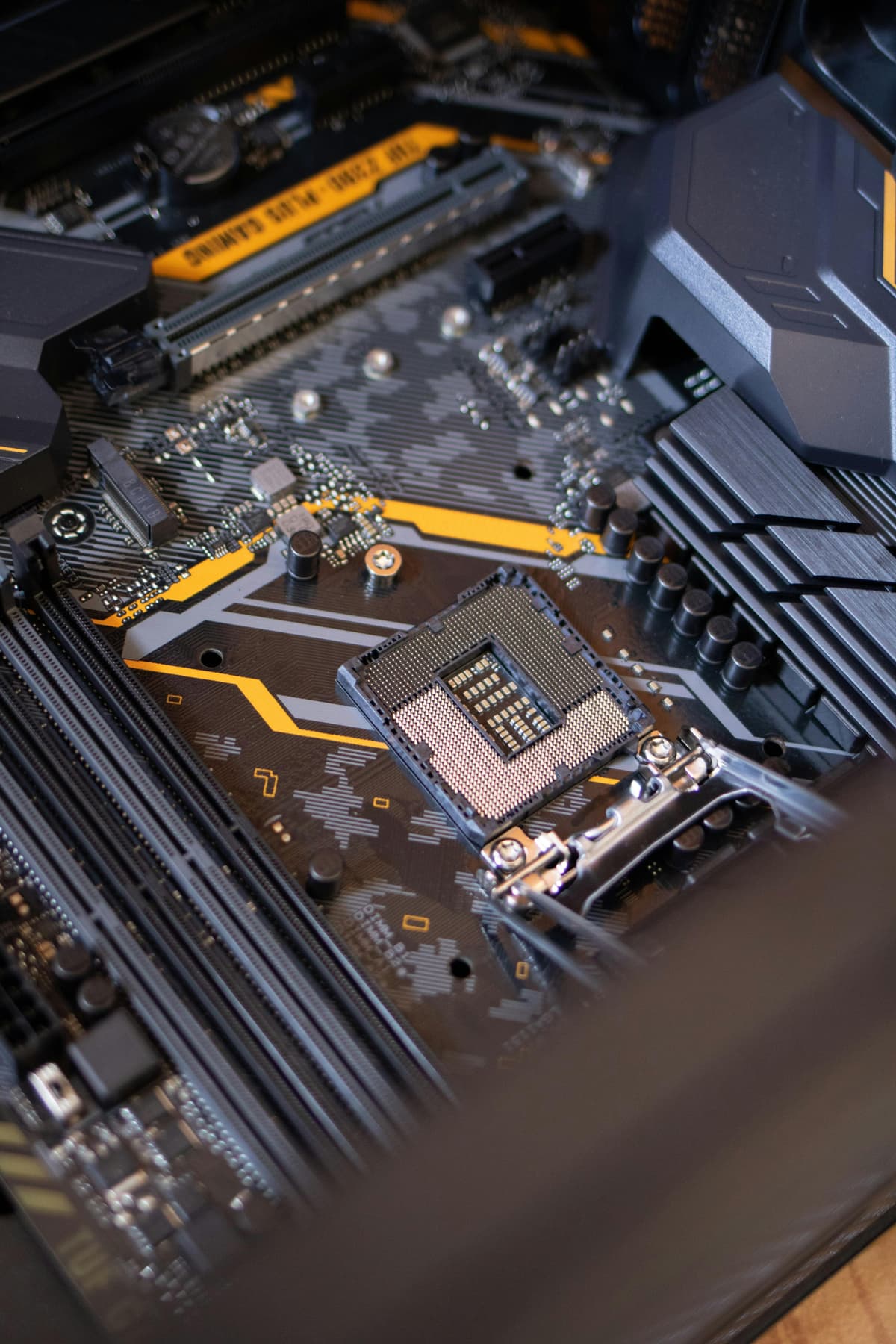
Photo by Pixabay on Pexels

On June 24, 2026, Qualcomm announced it would acquire Modular — the AI infrastructure startup founded by LLVM creator Chris Lattner — in an all-stock deal valued at approximately $3.92 billion. The deal is expected to close in the second half of 2026.

This is not a chip acquisition. Qualcomm already makes chips. This is a software acquisition — and that distinction matters more than the dollar amount suggests.

Modular built the Mojo programming language and the MAX inference engine: a unified platform that lets developers write AI code once and run it across Nvidia, AMD, Intel, Apple Silicon, and Qualcomm hardware without rewriting for each chip. It is, by design, the anti-CUDA — an open, hardware-agnostic compiler and serving stack that breaks the dependency chain that has kept enterprises locked into a single vendor's ecosystem for nearly two decades.

Qualcomm CEO Cristiano Amon framed the move in structural terms: "As agentic AI scales across data centers and edge environments, the industry is moving toward disaggregated, multi-vendor architectures that demand a more open and modern software foundation." The statement landed at Qualcomm's Investor Day, alongside the disclosure that the company expects to begin shipping custom silicon to a leading hyperscaler before the end of 2026.

But the Modular deal is just one piece. Qualcomm is reportedly in advanced talks to acquire Tenstorrent — the RISC-V AI chip startup led by legendary silicon architect Jim Keller — at a valuation between $8 billion and $10 billion. If both deals close, Qualcomm will have committed roughly $14 billion to a single strategic objective: building a full-stack alternative to Nvidia for enterprise AI inference.

Here's what this means for your AI infrastructure strategy, why the software layer matters more than the silicon, and the two frameworks your team needs to evaluate whether Nvidia lock-in is costing you more than you think.


Why Software — Not Silicon — Is the Real Moat

Every previous challenge to Nvidia's dominance has focused on building a better chip. AMD shipped competitive GPUs. Intel launched Gaudi accelerators. Google built TPUs. Amazon designed Trainium and Inferentia. Custom ASIC startups raised billions. None of them made a meaningful dent in Nvidia's market share, which remains at approximately 75% of the AI accelerator market by revenue as of Q1 2026.

The reason is not that the hardware was bad. The reason is CUDA.

CUDA — Nvidia's proprietary parallel computing platform, first released in 2006 — is the software layer that turned GPU hardware dominance into an ecosystem lock-in. Approximately 4 million developers work within the CUDA ecosystem today. The platform includes decades of accumulated libraries (cuDNN for deep learning, cuBLAS for linear algebra, TensorRT for inference optimization), compiler tooling, debugging infrastructure, and pre-optimized frameworks. Code written for CUDA does not run cleanly on a rival chip. Migrating a production AI workload to AMD, Intel, or Qualcomm silicon typically requires significant rewrites, revalidation, and retraining of engineering teams.

This is why enterprises stay on Nvidia even when alternative hardware is cheaper for their specific workload. The switching cost is not the chip. It's the code.

Qualcomm's insight — and the reason it spent $4 billion on Modular rather than on another chip company — is that breaking Nvidia's lock requires attacking the software moat directly. You need a compiler layer that makes non-Nvidia hardware accessible to the existing developer base without forcing them to abandon their code, their tools, or their deployment workflows. That is exactly what Modular built.


What Modular Actually Built

Modular was founded in 2022 by Chris Lattner and Tim Davis. Lattner created LLVM, the compiler infrastructure that underlies most modern programming language toolchains. He also created Apple's Swift programming language and was briefly head of Tesla's Autopilot software program. Davis co-created TensorFlow Lite at Google, enabling machine learning models to run efficiently on lower-power devices. The company raised $250 million at a $1.6 billion valuation just nine months before the acquisition.

Modular's platform has two core components:

Mojo: A systems programming language designed to be a superset of Python while delivering performance comparable to C and Rust. Mojo gives developers the familiar Python syntax they already use for AI development while providing low-level hardware control — SIMD instructions, manual memory management, GPU kernel programming — when they need it. Internal benchmarks have shown up to 100x performance improvements over standard Python for compute-intensive operations.

MAX (Modular Accelerated Xecution): A graph-level AI compiler and inference serving stack that runs models across CPUs, GPUs, and accelerators from different vendors without hardware-specific rewrites. MAX supports 1,000+ models including DeepSeek, Llama, and Kimi out of the box. It provides PyTorch-like model APIs, distributed multi-GPU scaling, and a benchmarking framework that works across both Nvidia and AMD GPUs.

The critical design decision was hardware abstraction at the compiler level. Rather than building wrappers around vendor-specific libraries (the approach that has limited portability projects like AMD's ROCm), Modular built a compiler that generates optimized machine code for each target hardware directly. This means the same model code achieves near-native performance on Nvidia GPUs, AMD GPUs, Apple Silicon, and x86 CPUs — without the developer needing to know or care which hardware is underneath.

For enterprises running inference at scale, this changes the procurement equation entirely. When your AI code is hardware-agnostic, you can choose chips based on cost, availability, power efficiency, and performance for your specific workload — not based on which vendor's software ecosystem your engineering team already knows.


Qualcomm's Full-Stack Strategy: The $14 Billion Bet

The Modular acquisition does not exist in isolation. Qualcomm has been assembling the components of a complete data center AI stack through a series of acquisitions and partnerships over the past year:

Ventana Micro Systems (acquired late 2025): A startup building server CPUs based on the open RISC-V instruction set architecture. This gives Qualcomm a CPU design for data center environments that is not dependent on x86 (Intel/AMD) or Arm licensing terms.

Custom ASIC design services: Qualcomm is in talks with ByteDance to provide custom chip designs for the Chinese tech giant's data center operations, positioning itself as a custom silicon partner for hyperscalers seeking alternatives to Nvidia.

Tenstorrent (reported acquisition, $8–10B): Led by Jim Keller — the architect behind AMD's Zen processor, Apple's A4/A5 chips, and Tesla's Full Self-Driving computer — Tenstorrent has built the Blackhole chip with a novel Tensix core architecture specifically optimized for AI inference. The chip delivers 664 TFLOPS of BF16 performance with 32GB GDDR6 memory, using a tile-based design where each core carries its own local SRAM, avoiding the external memory bottlenecks that make GPUs inefficient for inference workloads. Tenstorrent's open-source TT-Metalium software stack (MIT-licensed) supports PyTorch, JAX, and ONNX model deployment.

Modular (confirmed acquisition, $3.92B): The compiler and inference engine that unifies all of the above under a single developer experience.

The combined strategy is clear: Qualcomm is not trying to out-Nvidia Nvidia on GPUs. It is building an entirely parallel stack — open-standard chips (RISC-V), inference-optimized silicon (Tensix), and a hardware-agnostic software layer (MAX/Mojo) — designed to give enterprises a credible alternative for the workload that actually matters most to their bottom line: inference.


Why Inference Is the Battlefield That Matters

Training large AI models grabs headlines, but inference — actually running those models in production — is where enterprises spend the money.

The global AI inference market is projected to grow from $106 billion in 2025 to $255 billion by 2030, at a CAGR of 19.2%. Edge AI inference alone is growing at 38.6% CAGR, generating $34.7 billion in specialized infrastructure demand. As Deloitte's 2026 technology predictions noted, 2026 is the year when AI computing shifts from being primarily about training to being primarily about inference — deploying models to handle enterprise and consumer queries, prompts, and agentic tasks at scale.

This shift changes the hardware economics dramatically. Training rewards raw compute density — thousands of GPUs running in parallel on massive datasets. Nvidia excels here. Inference rewards efficiency — cost per token, power per query, latency per request. This is where GPUs are often overprovisioned and where alternative architectures can compete on total cost of ownership.

Nvidia still holds a 74% share of the AI inference chip market as of Q1 2026, down from its peak of 87% in 2024. The decline is small but directionally significant. AMD's MI300X/MI325X GPUs offer 20–40% cost savings per token for large model inference. Intel's Gaudi 3 accelerators are available with aggressive discounts on multiple cloud platforms. And the rise of usage-based AI pricing — where enterprises pay per token rather than per seat — makes inference cost optimization a CFO-level priority, not just an engineering concern.

This is the environment Qualcomm is entering. Not with another GPU that has to beat Nvidia on its home turf, but with a complete stack — silicon optimized for inference economics plus software that eliminates the switching cost that has kept enterprises locked in.


Framework #1: AI Infrastructure Vendor Lock-In Assessment

Before you can evaluate whether the Qualcomm-Modular alternative matters for your organization, you need to understand the depth of your current Nvidia dependency. Most enterprises underestimate their lock-in because it accumulates gradually across teams, frameworks, and deployment pipelines.

Use this assessment to score your organization's CUDA dependency on a 0–100 scale. Each dimension is scored 0–20, where higher scores indicate deeper lock-in and greater strategic risk.

Dimension 1: Code-Level Dependency (0–20)

Score Indicator
0–5 All AI code uses framework-level APIs (PyTorch, TensorFlow) with no direct CUDA calls
6–10 Some custom CUDA kernels exist but are isolated to specific optimization layers
11–15 Production inference pipelines depend on TensorRT or cuDNN-specific optimizations
16–20 Core model serving infrastructure uses custom CUDA code that would require full rewrite to port

Dimension 2: Team Expertise Concentration (0–20)

Score Indicator
0–5 AI engineering team has experience across multiple hardware platforms
6–10 Most team members know CUDA but have used alternatives (ROCm, OpenVINO) in prior roles
11–15 Team hiring and training pipelines are CUDA-centric; alternatives would require reskilling
16–20 Critical inference optimization knowledge exists only in CUDA-fluent team members with no cross-training

Dimension 3: Infrastructure Procurement (0–20)

Score Indicator
0–5 Multi-vendor cloud deployments with workloads running on CPU, GPU, and accelerator mix
6–10 Primary cloud provider offers non-Nvidia options; some workloads have been tested on alternatives
11–15 All GPU instances are Nvidia; multi-year committed-use contracts with cloud provider
16–20 On-premise GPU clusters with 3+ year depreciation schedule; hardware refresh locked to Nvidia roadmap

Dimension 4: Tooling and Pipeline Integration (0–20)

Score Indicator
0–5 CI/CD pipelines, monitoring, and profiling tools are hardware-agnostic
6–10 Nvidia-specific profiling (Nsight) used for optimization but not embedded in CI
11–15 Model compilation, optimization, and deployment pipelines hardcoded to TensorRT/Triton
16–20 End-to-end MLOps stack (training, validation, serving, monitoring) depends on Nvidia-specific tooling

Dimension 5: Vendor Relationship and Pricing Power (0–20)

Score Indicator
0–5 Multiple hardware vendors qualified and tested; procurement can shift within one quarter
6–10 Nvidia is preferred vendor but alternatives have been evaluated; no exclusivity commitments
11–15 Enterprise agreement with Nvidia includes volume discounts contingent on purchase commitments
16–20 Strategic partnership with Nvidia includes co-development, early access programs, or joint go-to-market

Interpreting Your Score

Total Score Lock-In Level Action
0–30 Low You have flexibility. Evaluate Qualcomm/Modular and alternatives as they mature.
31–55 Moderate Start a parallel evaluation track. Run inference benchmarks on non-Nvidia hardware using MAX or vLLM.
56–75 High Your switching cost is significant but manageable. Begin a 6-month migration pilot for non-critical inference workloads.
76–100 Critical You are strategically exposed. Any Nvidia supply constraint, pricing change, or export restriction directly impacts operations. Start diversification planning immediately.

Framework #2: Enterprise AI Inference Stack Migration Roadmap

For organizations that score above 55 on the lock-in assessment, this 12-month roadmap provides a structured path toward multi-vendor inference capability. The goal is not to replace Nvidia entirely — it is to ensure you have the ability to run inference workloads on alternative hardware when cost, availability, or risk demands it.

Phase 1: Audit and Baseline (Months 1–2)

Objective: Understand what you're running, where, and at what cost.

  • Catalog all production inference workloads by model, hardware, throughput, and cost per query
  • Identify CUDA-specific code paths: custom kernels, TensorRT optimizations, cuDNN calls
  • Measure current inference cost per million tokens across workloads (input and output separately)
  • Benchmark latency (TTFT, tokens/second) on current Nvidia hardware as your comparison baseline
  • Document which workloads are latency-sensitive (real-time serving) vs. throughput-sensitive (batch processing)

Deliverable: Inference workload inventory with cost, performance, and CUDA dependency classification for each workload.

Phase 2: Parallel Evaluation (Months 3–5)

Objective: Test alternative inference stacks on real workloads without production risk.

  • Deploy Modular MAX or vLLM on non-Nvidia hardware (AMD MI300X instances, Intel Gaudi 3, or Qualcomm Cloud AI when available)
  • Select 2–3 non-critical inference workloads for parallel benchmarking
  • Run identical models on both Nvidia (current stack) and alternative hardware (new stack)
  • Measure: cost per million tokens, latency percentiles (p50, p95, p99), throughput at target concurrency, power consumption
  • Evaluate developer experience: deployment complexity, debugging tools, monitoring integration
  • Test model portability: can the same model artifact deploy to both stacks without modification?

Deliverable: Side-by-side benchmark report with cost-performance comparison and go/no-go recommendation for each tested workload.

Phase 3: Pilot Migration (Months 6–9)

Objective: Move select production inference workloads to alternative hardware.

  • Migrate 1–2 workloads that showed favorable cost-performance in Phase 2 to alternative hardware in production
  • Implement dual-stack serving: route a percentage of inference traffic to new hardware while maintaining Nvidia as fallback
  • Monitor production metrics for 30 days: accuracy, latency, error rates, cost
  • Build operational runbooks for the new stack: deployment, scaling, incident response, model updates
  • Train 2–3 engineers on the alternative platform's debugging and optimization tools

Deliverable: Production-validated alternative inference capability for at least one workload, with operational documentation.

Phase 4: Scale and Optimize (Months 10–12)

Objective: Expand multi-vendor inference to capture cost savings at scale.

  • Extend multi-stack serving to additional workloads based on pilot results
  • Implement intelligent workload routing: automatically direct inference requests to the lowest-cost hardware that meets latency requirements
  • Renegotiate Nvidia contracts with demonstrated alternative capability as procurement leverage
  • Establish a quarterly review cadence: evaluate new hardware (Tenstorrent Blackhole, Qualcomm Cloud AI, next-gen AMD) as it becomes available
  • Set a target: within 18 months, at least 20% of inference workloads should be capable of running on non-Nvidia hardware

Deliverable: Multi-vendor inference architecture with cost optimization routing and ongoing hardware evaluation process.

Migration Decision Matrix

Use this matrix to prioritize which workloads to migrate first:

Workload Characteristic Migrate Early Migrate Later Keep on Nvidia
Latency sensitivity Batch/async processing Near-real-time (<500ms) Ultra-low latency (<50ms)
Model complexity Standard LLM inference Fine-tuned models with custom layers Custom CUDA kernels in serving path
Scale High throughput, cost-dominant Moderate scale Low volume, not cost-sensitive
Business criticality Internal tools, dev/test Customer-facing, non-revenue Revenue-critical, SLA-bound
CUDA dependency Framework-level only (PyTorch) TensorRT-optimized Custom CUDA kernels

What This Means for Nvidia

Nvidia is not in trouble. Its data center revenue hit $193.7 billion in fiscal year 2026 — a 65% increase year over year. The company projects at least $1 trillion in cumulative Blackwell and Rubin chip revenue by the end of 2027. For frontier model training, where raw compute density and NVLink interconnect bandwidth matter most, Nvidia remains the only game in town.

But the inference market is different, and it's where the growth is. As AI pricing shifts from flat-rate subscriptions to usage-based billing, every enterprise is now directly exposed to inference cost per token. The companies that can run the same model on cheaper hardware — without sacrificing quality or latency — will have a structural cost advantage.

Qualcomm's bet is that Modular's compiler layer removes the last barrier to multi-vendor inference. If MAX can deliver on its promise of write-once, run-anywhere AI deployment, the $255 billion inference market stops being a winner-take-all Nvidia story and becomes a competitive market where enterprises choose hardware based on workload economics rather than software lock-in.

That is a $4 billion bet worth watching.


The Bigger Picture: AI Infrastructure Is Unbundling

The Qualcomm-Modular deal is part of a broader trend: the unbundling of AI infrastructure from vertically integrated stacks into modular, interoperable layers. Consider the moves over the past year:

  • OpenAI announced its own custom inference chip (Jalapeño) with Broadcom, targeting 50% cost reduction for inference workloads
  • Dell launched deskside agentic AI appliances that cut cloud costs by 87% by bringing inference on-premise
  • Apple shipped AFM-3, a 20-billion parameter model running entirely on-device, proving that enterprise-grade AI does not require a data center
  • The broader AI cost crisis is driving enterprises to demand hardware choice and cost optimization at the inference layer

The pattern is consistent: inference is decentralizing. It's moving from centralized GPU clouds to a mix of cloud, edge, on-device, and custom silicon — wherever the cost-performance ratio makes the most sense for the specific workload. Modular's compiler layer is the connective tissue that makes this multi-venue inference architecture practical.

For enterprise AI leaders, the strategic implication is clear: the era of single-vendor AI infrastructure is ending. Not because Nvidia's hardware is inferior, but because the economics of inference at scale demand choice. Qualcomm just spent $4 billion to accelerate that choice. Whether or not Qualcomm itself becomes your next inference provider, the pressure it puts on the market benefits every enterprise buyer.

Start your lock-in assessment now. The vendors are moving. Your procurement strategy should too.


Continue Reading

Share:
THE DAILY BRIEF
QualcommModularNvidiaCUDAAI inferencevendor lock-inMojoMAXTenstorrentRISC-Vedge AIenterprise AI infrastructure
Qualcomm Just Spent $4B to Break Nvidia's Software Lock on Enterprise AI

Qualcomm's $3.92 billion acquisition of Modular — maker of the Mojo language and MAX inference engine — is not a chip deal. It's a direct attack on CUDA, the software platform that has locked 4 million developers and their enterprises into Nvidia's ecosystem for nearly two decades. Combined with a reported $8-10 billion Tenstorrent acquisition, Qualcomm is assembling a $14 billion full-stack alternative for the $255 billion AI inference market. Here's how to assess your own Nvidia lock-in and plan a multi-vendor inference strategy.

By Rajesh Beri·June 26, 2026·16 min read

On June 24, 2026, Qualcomm announced it would acquire Modular — the AI infrastructure startup founded by LLVM creator Chris Lattner — in an all-stock deal valued at approximately $3.92 billion. The deal is expected to close in the second half of 2026.

This is not a chip acquisition. Qualcomm already makes chips. This is a software acquisition — and that distinction matters more than the dollar amount suggests.

Modular built the Mojo programming language and the MAX inference engine: a unified platform that lets developers write AI code once and run it across Nvidia, AMD, Intel, Apple Silicon, and Qualcomm hardware without rewriting for each chip. It is, by design, the anti-CUDA — an open, hardware-agnostic compiler and serving stack that breaks the dependency chain that has kept enterprises locked into a single vendor's ecosystem for nearly two decades.

Qualcomm CEO Cristiano Amon framed the move in structural terms: "As agentic AI scales across data centers and edge environments, the industry is moving toward disaggregated, multi-vendor architectures that demand a more open and modern software foundation." The statement landed at Qualcomm's Investor Day, alongside the disclosure that the company expects to begin shipping custom silicon to a leading hyperscaler before the end of 2026.

But the Modular deal is just one piece. Qualcomm is reportedly in advanced talks to acquire Tenstorrent — the RISC-V AI chip startup led by legendary silicon architect Jim Keller — at a valuation between $8 billion and $10 billion. If both deals close, Qualcomm will have committed roughly $14 billion to a single strategic objective: building a full-stack alternative to Nvidia for enterprise AI inference.

Here's what this means for your AI infrastructure strategy, why the software layer matters more than the silicon, and the two frameworks your team needs to evaluate whether Nvidia lock-in is costing you more than you think.


Why Software — Not Silicon — Is the Real Moat

Every previous challenge to Nvidia's dominance has focused on building a better chip. AMD shipped competitive GPUs. Intel launched Gaudi accelerators. Google built TPUs. Amazon designed Trainium and Inferentia. Custom ASIC startups raised billions. None of them made a meaningful dent in Nvidia's market share, which remains at approximately 75% of the AI accelerator market by revenue as of Q1 2026.

The reason is not that the hardware was bad. The reason is CUDA.

CUDA — Nvidia's proprietary parallel computing platform, first released in 2006 — is the software layer that turned GPU hardware dominance into an ecosystem lock-in. Approximately 4 million developers work within the CUDA ecosystem today. The platform includes decades of accumulated libraries (cuDNN for deep learning, cuBLAS for linear algebra, TensorRT for inference optimization), compiler tooling, debugging infrastructure, and pre-optimized frameworks. Code written for CUDA does not run cleanly on a rival chip. Migrating a production AI workload to AMD, Intel, or Qualcomm silicon typically requires significant rewrites, revalidation, and retraining of engineering teams.

This is why enterprises stay on Nvidia even when alternative hardware is cheaper for their specific workload. The switching cost is not the chip. It's the code.

Qualcomm's insight — and the reason it spent $4 billion on Modular rather than on another chip company — is that breaking Nvidia's lock requires attacking the software moat directly. You need a compiler layer that makes non-Nvidia hardware accessible to the existing developer base without forcing them to abandon their code, their tools, or their deployment workflows. That is exactly what Modular built.


What Modular Actually Built

Modular was founded in 2022 by Chris Lattner and Tim Davis. Lattner created LLVM, the compiler infrastructure that underlies most modern programming language toolchains. He also created Apple's Swift programming language and was briefly head of Tesla's Autopilot software program. Davis co-created TensorFlow Lite at Google, enabling machine learning models to run efficiently on lower-power devices. The company raised $250 million at a $1.6 billion valuation just nine months before the acquisition.

Modular's platform has two core components:

Mojo: A systems programming language designed to be a superset of Python while delivering performance comparable to C and Rust. Mojo gives developers the familiar Python syntax they already use for AI development while providing low-level hardware control — SIMD instructions, manual memory management, GPU kernel programming — when they need it. Internal benchmarks have shown up to 100x performance improvements over standard Python for compute-intensive operations.

MAX (Modular Accelerated Xecution): A graph-level AI compiler and inference serving stack that runs models across CPUs, GPUs, and accelerators from different vendors without hardware-specific rewrites. MAX supports 1,000+ models including DeepSeek, Llama, and Kimi out of the box. It provides PyTorch-like model APIs, distributed multi-GPU scaling, and a benchmarking framework that works across both Nvidia and AMD GPUs.

The critical design decision was hardware abstraction at the compiler level. Rather than building wrappers around vendor-specific libraries (the approach that has limited portability projects like AMD's ROCm), Modular built a compiler that generates optimized machine code for each target hardware directly. This means the same model code achieves near-native performance on Nvidia GPUs, AMD GPUs, Apple Silicon, and x86 CPUs — without the developer needing to know or care which hardware is underneath.

For enterprises running inference at scale, this changes the procurement equation entirely. When your AI code is hardware-agnostic, you can choose chips based on cost, availability, power efficiency, and performance for your specific workload — not based on which vendor's software ecosystem your engineering team already knows.


Qualcomm's Full-Stack Strategy: The $14 Billion Bet

The Modular acquisition does not exist in isolation. Qualcomm has been assembling the components of a complete data center AI stack through a series of acquisitions and partnerships over the past year:

Ventana Micro Systems (acquired late 2025): A startup building server CPUs based on the open RISC-V instruction set architecture. This gives Qualcomm a CPU design for data center environments that is not dependent on x86 (Intel/AMD) or Arm licensing terms.

Custom ASIC design services: Qualcomm is in talks with ByteDance to provide custom chip designs for the Chinese tech giant's data center operations, positioning itself as a custom silicon partner for hyperscalers seeking alternatives to Nvidia.

Tenstorrent (reported acquisition, $8–10B): Led by Jim Keller — the architect behind AMD's Zen processor, Apple's A4/A5 chips, and Tesla's Full Self-Driving computer — Tenstorrent has built the Blackhole chip with a novel Tensix core architecture specifically optimized for AI inference. The chip delivers 664 TFLOPS of BF16 performance with 32GB GDDR6 memory, using a tile-based design where each core carries its own local SRAM, avoiding the external memory bottlenecks that make GPUs inefficient for inference workloads. Tenstorrent's open-source TT-Metalium software stack (MIT-licensed) supports PyTorch, JAX, and ONNX model deployment.

Modular (confirmed acquisition, $3.92B): The compiler and inference engine that unifies all of the above under a single developer experience.

The combined strategy is clear: Qualcomm is not trying to out-Nvidia Nvidia on GPUs. It is building an entirely parallel stack — open-standard chips (RISC-V), inference-optimized silicon (Tensix), and a hardware-agnostic software layer (MAX/Mojo) — designed to give enterprises a credible alternative for the workload that actually matters most to their bottom line: inference.


Why Inference Is the Battlefield That Matters

Training large AI models grabs headlines, but inference — actually running those models in production — is where enterprises spend the money.

The global AI inference market is projected to grow from $106 billion in 2025 to $255 billion by 2030, at a CAGR of 19.2%. Edge AI inference alone is growing at 38.6% CAGR, generating $34.7 billion in specialized infrastructure demand. As Deloitte's 2026 technology predictions noted, 2026 is the year when AI computing shifts from being primarily about training to being primarily about inference — deploying models to handle enterprise and consumer queries, prompts, and agentic tasks at scale.

This shift changes the hardware economics dramatically. Training rewards raw compute density — thousands of GPUs running in parallel on massive datasets. Nvidia excels here. Inference rewards efficiency — cost per token, power per query, latency per request. This is where GPUs are often overprovisioned and where alternative architectures can compete on total cost of ownership.

Nvidia still holds a 74% share of the AI inference chip market as of Q1 2026, down from its peak of 87% in 2024. The decline is small but directionally significant. AMD's MI300X/MI325X GPUs offer 20–40% cost savings per token for large model inference. Intel's Gaudi 3 accelerators are available with aggressive discounts on multiple cloud platforms. And the rise of usage-based AI pricing — where enterprises pay per token rather than per seat — makes inference cost optimization a CFO-level priority, not just an engineering concern.

This is the environment Qualcomm is entering. Not with another GPU that has to beat Nvidia on its home turf, but with a complete stack — silicon optimized for inference economics plus software that eliminates the switching cost that has kept enterprises locked in.


Framework #1: AI Infrastructure Vendor Lock-In Assessment

Before you can evaluate whether the Qualcomm-Modular alternative matters for your organization, you need to understand the depth of your current Nvidia dependency. Most enterprises underestimate their lock-in because it accumulates gradually across teams, frameworks, and deployment pipelines.

Use this assessment to score your organization's CUDA dependency on a 0–100 scale. Each dimension is scored 0–20, where higher scores indicate deeper lock-in and greater strategic risk.

Dimension 1: Code-Level Dependency (0–20)

Score Indicator
0–5 All AI code uses framework-level APIs (PyTorch, TensorFlow) with no direct CUDA calls
6–10 Some custom CUDA kernels exist but are isolated to specific optimization layers
11–15 Production inference pipelines depend on TensorRT or cuDNN-specific optimizations
16–20 Core model serving infrastructure uses custom CUDA code that would require full rewrite to port

Dimension 2: Team Expertise Concentration (0–20)

Score Indicator
0–5 AI engineering team has experience across multiple hardware platforms
6–10 Most team members know CUDA but have used alternatives (ROCm, OpenVINO) in prior roles
11–15 Team hiring and training pipelines are CUDA-centric; alternatives would require reskilling
16–20 Critical inference optimization knowledge exists only in CUDA-fluent team members with no cross-training

Dimension 3: Infrastructure Procurement (0–20)

Score Indicator
0–5 Multi-vendor cloud deployments with workloads running on CPU, GPU, and accelerator mix
6–10 Primary cloud provider offers non-Nvidia options; some workloads have been tested on alternatives
11–15 All GPU instances are Nvidia; multi-year committed-use contracts with cloud provider
16–20 On-premise GPU clusters with 3+ year depreciation schedule; hardware refresh locked to Nvidia roadmap

Dimension 4: Tooling and Pipeline Integration (0–20)

Score Indicator
0–5 CI/CD pipelines, monitoring, and profiling tools are hardware-agnostic
6–10 Nvidia-specific profiling (Nsight) used for optimization but not embedded in CI
11–15 Model compilation, optimization, and deployment pipelines hardcoded to TensorRT/Triton
16–20 End-to-end MLOps stack (training, validation, serving, monitoring) depends on Nvidia-specific tooling

Dimension 5: Vendor Relationship and Pricing Power (0–20)

Score Indicator
0–5 Multiple hardware vendors qualified and tested; procurement can shift within one quarter
6–10 Nvidia is preferred vendor but alternatives have been evaluated; no exclusivity commitments
11–15 Enterprise agreement with Nvidia includes volume discounts contingent on purchase commitments
16–20 Strategic partnership with Nvidia includes co-development, early access programs, or joint go-to-market

Interpreting Your Score

Total Score Lock-In Level Action
0–30 Low You have flexibility. Evaluate Qualcomm/Modular and alternatives as they mature.
31–55 Moderate Start a parallel evaluation track. Run inference benchmarks on non-Nvidia hardware using MAX or vLLM.
56–75 High Your switching cost is significant but manageable. Begin a 6-month migration pilot for non-critical inference workloads.
76–100 Critical You are strategically exposed. Any Nvidia supply constraint, pricing change, or export restriction directly impacts operations. Start diversification planning immediately.

Framework #2: Enterprise AI Inference Stack Migration Roadmap

For organizations that score above 55 on the lock-in assessment, this 12-month roadmap provides a structured path toward multi-vendor inference capability. The goal is not to replace Nvidia entirely — it is to ensure you have the ability to run inference workloads on alternative hardware when cost, availability, or risk demands it.

Phase 1: Audit and Baseline (Months 1–2)

Objective: Understand what you're running, where, and at what cost.

  • Catalog all production inference workloads by model, hardware, throughput, and cost per query
  • Identify CUDA-specific code paths: custom kernels, TensorRT optimizations, cuDNN calls
  • Measure current inference cost per million tokens across workloads (input and output separately)
  • Benchmark latency (TTFT, tokens/second) on current Nvidia hardware as your comparison baseline
  • Document which workloads are latency-sensitive (real-time serving) vs. throughput-sensitive (batch processing)

Deliverable: Inference workload inventory with cost, performance, and CUDA dependency classification for each workload.

Phase 2: Parallel Evaluation (Months 3–5)

Objective: Test alternative inference stacks on real workloads without production risk.

  • Deploy Modular MAX or vLLM on non-Nvidia hardware (AMD MI300X instances, Intel Gaudi 3, or Qualcomm Cloud AI when available)
  • Select 2–3 non-critical inference workloads for parallel benchmarking
  • Run identical models on both Nvidia (current stack) and alternative hardware (new stack)
  • Measure: cost per million tokens, latency percentiles (p50, p95, p99), throughput at target concurrency, power consumption
  • Evaluate developer experience: deployment complexity, debugging tools, monitoring integration
  • Test model portability: can the same model artifact deploy to both stacks without modification?

Deliverable: Side-by-side benchmark report with cost-performance comparison and go/no-go recommendation for each tested workload.

Phase 3: Pilot Migration (Months 6–9)

Objective: Move select production inference workloads to alternative hardware.

  • Migrate 1–2 workloads that showed favorable cost-performance in Phase 2 to alternative hardware in production
  • Implement dual-stack serving: route a percentage of inference traffic to new hardware while maintaining Nvidia as fallback
  • Monitor production metrics for 30 days: accuracy, latency, error rates, cost
  • Build operational runbooks for the new stack: deployment, scaling, incident response, model updates
  • Train 2–3 engineers on the alternative platform's debugging and optimization tools

Deliverable: Production-validated alternative inference capability for at least one workload, with operational documentation.

Phase 4: Scale and Optimize (Months 10–12)

Objective: Expand multi-vendor inference to capture cost savings at scale.

  • Extend multi-stack serving to additional workloads based on pilot results
  • Implement intelligent workload routing: automatically direct inference requests to the lowest-cost hardware that meets latency requirements
  • Renegotiate Nvidia contracts with demonstrated alternative capability as procurement leverage
  • Establish a quarterly review cadence: evaluate new hardware (Tenstorrent Blackhole, Qualcomm Cloud AI, next-gen AMD) as it becomes available
  • Set a target: within 18 months, at least 20% of inference workloads should be capable of running on non-Nvidia hardware

Deliverable: Multi-vendor inference architecture with cost optimization routing and ongoing hardware evaluation process.

Migration Decision Matrix

Use this matrix to prioritize which workloads to migrate first:

Workload Characteristic Migrate Early Migrate Later Keep on Nvidia
Latency sensitivity Batch/async processing Near-real-time (<500ms) Ultra-low latency (<50ms)
Model complexity Standard LLM inference Fine-tuned models with custom layers Custom CUDA kernels in serving path
Scale High throughput, cost-dominant Moderate scale Low volume, not cost-sensitive
Business criticality Internal tools, dev/test Customer-facing, non-revenue Revenue-critical, SLA-bound
CUDA dependency Framework-level only (PyTorch) TensorRT-optimized Custom CUDA kernels

What This Means for Nvidia

Nvidia is not in trouble. Its data center revenue hit $193.7 billion in fiscal year 2026 — a 65% increase year over year. The company projects at least $1 trillion in cumulative Blackwell and Rubin chip revenue by the end of 2027. For frontier model training, where raw compute density and NVLink interconnect bandwidth matter most, Nvidia remains the only game in town.

But the inference market is different, and it's where the growth is. As AI pricing shifts from flat-rate subscriptions to usage-based billing, every enterprise is now directly exposed to inference cost per token. The companies that can run the same model on cheaper hardware — without sacrificing quality or latency — will have a structural cost advantage.

Qualcomm's bet is that Modular's compiler layer removes the last barrier to multi-vendor inference. If MAX can deliver on its promise of write-once, run-anywhere AI deployment, the $255 billion inference market stops being a winner-take-all Nvidia story and becomes a competitive market where enterprises choose hardware based on workload economics rather than software lock-in.

That is a $4 billion bet worth watching.


The Bigger Picture: AI Infrastructure Is Unbundling

The Qualcomm-Modular deal is part of a broader trend: the unbundling of AI infrastructure from vertically integrated stacks into modular, interoperable layers. Consider the moves over the past year:

  • OpenAI announced its own custom inference chip (Jalapeño) with Broadcom, targeting 50% cost reduction for inference workloads
  • Dell launched deskside agentic AI appliances that cut cloud costs by 87% by bringing inference on-premise
  • Apple shipped AFM-3, a 20-billion parameter model running entirely on-device, proving that enterprise-grade AI does not require a data center
  • The broader AI cost crisis is driving enterprises to demand hardware choice and cost optimization at the inference layer

The pattern is consistent: inference is decentralizing. It's moving from centralized GPU clouds to a mix of cloud, edge, on-device, and custom silicon — wherever the cost-performance ratio makes the most sense for the specific workload. Modular's compiler layer is the connective tissue that makes this multi-venue inference architecture practical.

For enterprise AI leaders, the strategic implication is clear: the era of single-vendor AI infrastructure is ending. Not because Nvidia's hardware is inferior, but because the economics of inference at scale demand choice. Qualcomm just spent $4 billion to accelerate that choice. Whether or not Qualcomm itself becomes your next inference provider, the pressure it puts on the market benefits every enterprise buyer.

Start your lock-in assessment now. The vendors are moving. Your procurement strategy should too.


Continue Reading

THE DAILY BRIEF

Enterprise AI insights for technology and business leaders, twice weekly.

beri.net

Subscribe at beri.net/subscribe for twice-weekly AI insights delivered to your inbox.

LinkedIn: linkedin.com/in/rberi  |  X: x.com/rajeshberi

© 2026 Rajesh Beri. All rights reserved.

Newsletter

Stay Ahead of the Curve

Weekly enterprise AI insights for technology leaders. No spam, no vendor pitches—unsubscribe anytime.

Subscribe

Related Articles

Enterprise AI

Nvidia's $400M Kumo Bet: LLMs Can't Touch Your Database

Nvidia paid $400M+ for Kumo AI on June 3. Here's why relational foundation models beat LLMs on structured enterprise data — and the CIO decision framework.

June 7, 2026
OpenAI

OpenAI Just Put 150 Engineers Inside Your CFO Office

On May 11, 2026, OpenAI's $4 billion Deployment Company announced the acquisition of Tomoro, pulling 150 forward-deployed engineers (FDEs) into a single OpenAI-controlled enterprise services arm at a $10 billion valuation. Combined with Anthropic's parallel $1.5B services venture nine days earlier, the frontier labs have committed $5.5 billion to a Palantir-style FDE model — and they are pointing it first at the CFO. Why finance is the beachhead, what the data says about the 60% failure rate of finance AI initiatives, and two frameworks every CFO and CIO should run before the next AI services pitch lands on the desk: an FDE Investment ROI Calculator and a CFO AI Readiness Triangle.

May 13, 2026
SAP API policy

SAP Locks AI Agents Out. Salesforce Opens Every API.

SAP just banned third-party AI agents from its APIs. Salesforce just exposed every capability to them. Two opposite enterprise architecture bets.

May 4, 2026
AI Chips

Huawei AI Chip Revenue Hits $12B as Chinese Enterprises Pivot from Nvidia

Huawei expects AI chip revenue to reach $12B in 2026 (up 60% YoY) as ByteDance, Alibaba, and Tencent place massive orders for Ascend 950PR processors—reshaping the enterprise AI chip market and forcing CIOs to reconsider vendor strategies for China operations.

May 1, 2026

Latest Articles

View All →