Nvidia has controlled between 80% and 95% of the data center AI GPU market for the better part of five years. On July 23, 2026, AMD made the most credible case yet that the monopoly is cracking — not with a spec sheet, but with signed customers spending at gigawatt scale.
At its Advancing AI 2026 conference in San Francisco, CEO Lisa Su launched the Helios rack-scale AI system, the MI400 GPU family, and EPYC Venice — the industry's first x86 server CPU on TSMC's 2nm node. More importantly, she did it flanked by commitments from OpenAI (6 gigawatts), Meta (6 gigawatts), Anthropic ($5 billion investment plus 2 gigawatts), and Microsoft Azure as a confirmed Helios buyer. AMD stock traded near $553, more than double its start-of-year price, as analysts raised targets into the $600s and $700s.
For enterprise leaders making GPU infrastructure decisions in a market where Gartner forecasts $2.59 trillion in AI spending for 2026 and IDC projects $497 billion in AI infrastructure alone, the question is no longer whether AMD is viable. It is whether your organization can afford to stay single-vendor.
What AMD Launched at Advancing AI 2026
The two-day event produced four concrete deliverables: a GPU family, a rack-scale system, a server CPU, and a software release. Together, they represent AMD's first attempt at selling a complete, pre-integrated AI infrastructure stack rather than individual accelerators.
The MI400 GPU Family ships as three chips built on CDNA 5 architecture with HBM4 memory:
- MI455X (Helios flagship): 432GB HBM4 per GPU, 19.6 TB/s memory bandwidth, 40 petaflops FP4 inference. This is the chip that goes into Helios.
- MI440X (enterprise): Eight GPUs with a single EPYC Venice CPU in a rack-mounted server for on-premises training, fine-tuning, and inference without cloud dependency.
- MI430X (sovereign AI/HPC): Targets government and research customers who need data residency control, with 288 TFLOPS of hardware FP64 performance.
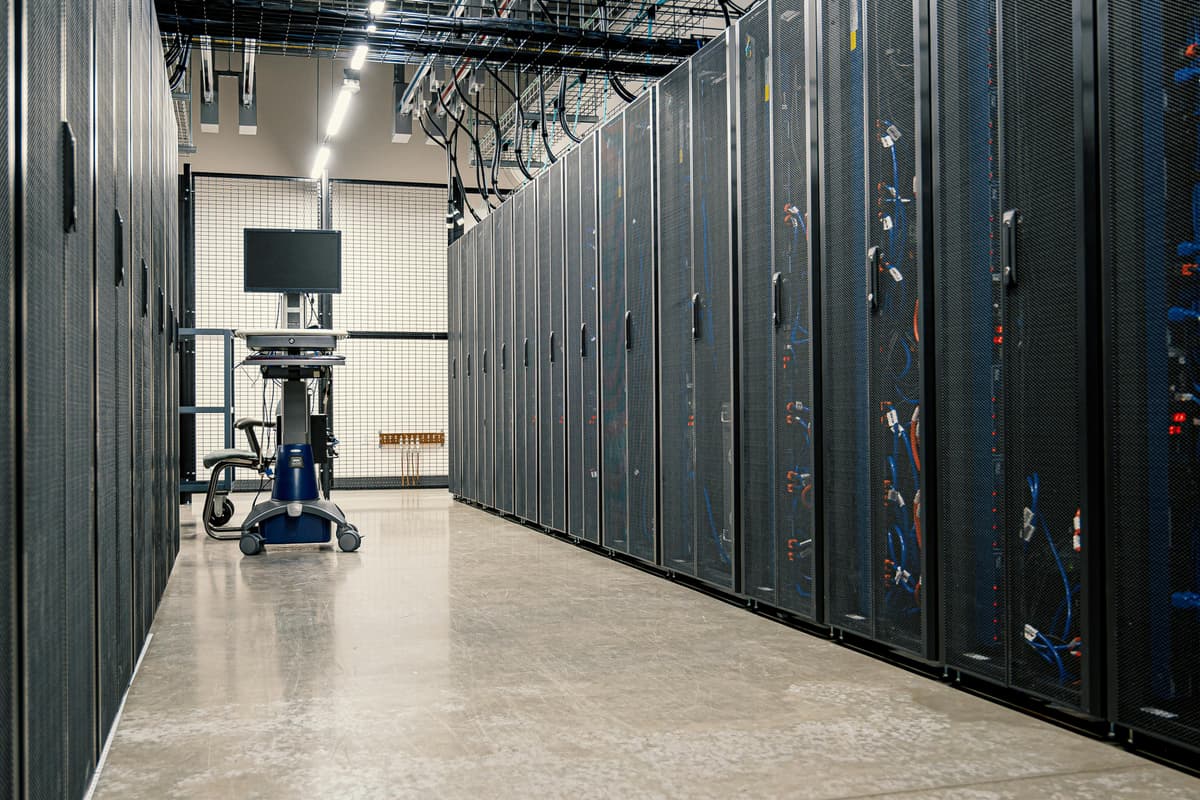
Helios is AMD's first rack-scale system — 72 MI455X GPUs, EPYC Venice CPUs, and Pensando networking silicon in a single chassis delivering 31TB of pooled HBM4, 2.9 exaflops of FP4 inference, and 1.4 exaflops of FP8 training throughput. Price: $5 million to $5.5 million per rack, averaging $5.25 million.
EPYC Venice is the first x86 server chip on TSMC's 2nm process, scaling to 256 cores with roughly 1.7x the throughput of the prior Turin generation. It uses Gate-All-Around nanosheet transistors — a fundamental departure from FinFET — delivering 25-30% power reduction at equivalent performance.
ROCm 7 claims 3.5x the performance of ROCm 6, with deeper integration into vLLM, SGLang, and PyTorch. AMD also introduced ROCm.ai, an AI-assisted development platform that lets coding agents like Claude and Codex understand AMD hardware natively.
Why This Matters
For CTOs and CIOs: The Multi-Vendor Window Is Open
The core enterprise question isn't whether AMD's specs match Nvidia's. It's whether the total cost of ownership justifies adding a second GPU vendor to your infrastructure.
AMD claims Helios delivers 30% more inference tokens per dollar than Nvidia's competing solution. The MI455X carries 50% more HBM4 memory per GPU (432GB vs. Nvidia Rubin's 288GB), which matters for trillion-parameter model inference where memory capacity is the binding constraint. However, Nvidia's Vera Rubin offers higher per-GPU bandwidth (22 TB/s vs. 19.6 TB/s), and independent analyses estimate ROCm still trails CUDA by 20-30% for training workloads.
The UALink open interconnect standard — which AMD co-founded with Intel, Broadcom, Microsoft, Meta, and Google — scales to 1,024 accelerators per fabric versus NVLink's 576 GPU ceiling. For organizations building large inference clusters, this architectural openness matters more than any single-chip benchmark.
For CFOs: The Price Premium Question
Helios costs roughly $5.25 million per rack compared to the Futurum Group's estimate of $3.5 million to $4 million for Nvidia's Vera Rubin — a 30-40% premium. AMD is betting that 50% more memory per GPU and 30% better token economics offset the sticker price. WCCFTech reports AMD is "confident customers will pay the premium" based on total cost of ownership rather than per-rack pricing.
The math works differently depending on workload. For inference-heavy deployments — where memory capacity determines how many models you can serve per rack — Helios's 31TB of pooled HBM4 means fewer racks to serve the same model portfolio. For training-heavy workloads where CUDA maturity still delivers 20-30% better throughput, the Nvidia premium may actually be the cheaper path.
The Anthropic Deal: Software Is the Real Story
AMD announced a strategic partnership with Anthropic: $5 billion equity investment, 2 gigawatts of MI450 GPU deployment in Helios racks starting H1 2027, and — critically — an engineering collaboration to use Claude to accelerate ROCm development.
This is the most consequential announcement of the event. Nvidia's moat has never been hardware; it's been CUDA's 18-year ecosystem head start. Every AI framework, every tutorial, every ML paper with code defaults to CUDA. When AMD chips arrive with comparable specs, the software gap is what kills procurement decisions.
By deploying frontier AI to close that gap — having Claude optimize workloads for Instinct GPUs and accelerate ROCm kernel development — AMD is attacking the problem with the most powerful tool available. Combined with the OpenAI partnership (6GW, 160 million share warrant) and Meta's 6GW commitment, AMD now has three of the world's most sophisticated AI engineering teams actively working to make its hardware viable at scale.
Market Context: The 12-Gigawatt Signal
The customer commitments tell the real story. AMD now has confirmed deployments from:
| Customer | Commitment | Timeline | Details |
|---|---|---|---|
| OpenAI | 6 GW | H2 2026 start | 160M share warrant, multi-generation |
| Meta | 6 GW | H2 2026 start | 1 GW initial Helios deployment |
| Anthropic | 2 GW + $5B investment | H1 2027 start | Claude-ROCm engineering collab |
| Microsoft Azure | Undisclosed | H2 2026 | Frontier model inference |
| Oracle | Undisclosed | H2 2026 | Early Helios adopter |
None of these customers have dropped Nvidia. All are treating AMD as a second source at a moment when GPU allocation remains the primary bottleneck constraining how fast AI labs can train and serve models.
Daniel Newman, CEO of the Futurum Group, told CNBC: "There's a serious case in which AMD does great and can get to 20% and 25%. And by the way, this is hundreds of billions of dollars of revenue." AMD currently holds roughly 4.5% of the data center GPU market.
In Q1 2026, data centers became the majority of AMD's revenue, up 57% year over year. AMD told CNBC it plans to book tens of billions in data center AI revenue starting in 2027, the majority from Helios.
The broader market backdrop reinforces the demand signal. IDC raised its 2026 AI infrastructure forecast to $497 billion, a 56% year-over-year increase. Gartner projects AI-optimized servers will reach $300 billion in 2026, a 49% jump. At these volumes, even a few percentage points of market share shift represent billions in revenue.
Framework #1: AMD Helios vs. Nvidia Decision Matrix
Use this matrix to evaluate which platform fits your infrastructure needs. Score each dimension 1-5 based on your workload profile.
When to Choose AMD Helios
| Dimension | AMD Helios | Nvidia Vera Rubin NVL144 | Key Differentiator |
|---|---|---|---|
| Memory per GPU | 432GB HBM4 | 288GB HBM4 | AMD +50%. Critical for serving multiple large models per rack |
| Rack FP4 inference | 2.9 exaflops | ~2.5 exaflops (est.) | AMD +15% peak. Advantage grows with memory-bound workloads |
| Rack price | $5.0-5.5M | $3.5-4.0M (est.) | Nvidia 30-40% cheaper per rack |
| Tokens per dollar | 30% better (AMD claim) | Baseline | Needs independent verification; AMD's own benchmarks |
| Software ecosystem | ROCm 7 + ROCm.ai | CUDA (18-year lead) | CUDA still leads by 20-30% for training workloads |
| Scale-up interconnect | UALink (open, 1,024 GPUs) | NVLink 5.0 (proprietary, 576 GPUs) | UALink is open standard; NVLink has higher per-link bandwidth |
| Memory bandwidth | 19.6 TB/s per GPU | 22 TB/s per GPU | Nvidia +12%. Matters for bandwidth-bound training |
| CPU integration | EPYC Venice (256 cores, 2nm) | Vera CPU (ARM-based) | AMD x86 compatibility; Nvidia ARM efficiency |
| Vendor lock-in risk | Low (open standards) | High (NVLink, CUDA dependency) | UALink + ROCm vs. NVSwitch + CUDA |
Recommendation by Workload Type
- Inference-heavy (70%+ inference): AMD Helios. Memory capacity advantage means fewer racks to serve large model portfolios. Token economics favor AMD at scale.
- Training-heavy (70%+ training): Nvidia Vera Rubin. CUDA maturity and higher per-GPU bandwidth deliver measurably better training throughput today.
- Mixed workloads: Deploy both. Use Helios for inference clusters and Nvidia for training clusters. This is what OpenAI, Meta, and Microsoft are doing.
- On-premises enterprise: AMD MI440X. Eight-GPU server form factor designed for existing infrastructure without rack-scale commitment.
- Sovereign AI / HPC: AMD MI430X. Data residency control, FP64 performance, government-friendly procurement.
Cost Comparison: 10-Rack Deployment
| Metric | AMD Helios (10 racks) | Nvidia Vera Rubin (10 racks) |
|---|---|---|
| Hardware cost | $52.5M | $37.5M (est.) |
| Total GPUs | 720 | 1,440 (NVL144 config) |
| Total HBM4 | 310 TB | 414 TB |
| FP4 inference | 29 exaflops | ~25 exaflops (est.) |
| Cost per exaflop (FP4) | ~$1.81M | ~$1.50M (est.) |
| Cost per TB HBM4 | ~$169K | ~$91K (est.) |
The raw per-unit economics still favor Nvidia. AMD's value proposition depends on workload-specific token economics and the strategic value of vendor diversification — a factor that doesn't show up in spec sheets but matters enormously when GPU allocation is the bottleneck constraining your AI roadmap.
Framework #2: Enterprise Multi-Vendor GPU Strategy — 12-Month Implementation Timeline
Moving from single-vendor Nvidia to a multi-vendor GPU strategy requires deliberate planning. Here's a phased approach based on what early adopters like Microsoft, Meta, and enterprise Helios customers are deploying.
Phase 1: Assessment and Pilot Planning (Months 1-3)
Objective: Validate AMD viability for your specific workloads without production risk.
- Audit current GPU utilization: identify inference vs. training split across clusters
- Identify 2-3 inference workloads suitable for AMD pilot (memory-bound models are ideal candidates)
- Negotiate AMD evaluation hardware (MI440X for on-premises, cloud instances for testing)
- Benchmark current Nvidia workloads to establish baseline metrics (tokens/second, cost/token, latency)
- Assess ROCm compatibility with your ML framework stack (PyTorch, vLLM, SGLang)
- Identify CUDA-specific dependencies that require porting effort
Success criteria: Benchmark data showing AMD inference performance within 15% of Nvidia for target workloads. ROCm compatibility confirmed for primary frameworks.
Phase 2: Limited Production Deployment (Months 4-6)
Objective: Run AMD hardware in production for non-critical inference workloads.
- Deploy 1-2 AMD racks (MI440X or cloud Helios instances) for inference serving
- Route 10-20% of inference traffic to AMD infrastructure
- Implement workload-aware routing: direct memory-bound models to AMD, bandwidth-bound to Nvidia
- Establish monitoring dashboards comparing AMD vs. Nvidia cost/token, latency, and reliability
- Train infrastructure team on ROCm debugging, profiling, and optimization
- Document migration playbook for each workload type
Success criteria: AMD serving 10-20% of inference traffic at comparable or better cost/token. No SLA degradation. Team operational on both platforms.
Phase 3: Scale and Optimize (Months 7-12)
Objective: Expand AMD footprint to capture token-economics advantage at scale.
- Scale AMD deployment to 30-50% of inference infrastructure
- Evaluate Helios rack-scale for large model serving (if workloads justify $5.25M investment)
- Implement automated failover between AMD and Nvidia clusters
- Negotiate multi-vendor procurement to leverage competitive pricing
- Re-evaluate training workloads on AMD as ROCm matures (track ROCm.ai improvements quarterly)
- Build vendor-agnostic CI/CD pipeline that validates models on both CUDA and ROCm
Success criteria: 30-50% of inference on AMD. Measurable cost reduction vs. all-Nvidia baseline. Procurement leverage established with both vendors.
Key Risks and Mitigations
| Risk | Likelihood | Mitigation |
|---|---|---|
| ROCm performance gap wider than expected | Medium | Start with inference-only (smaller gap); wait for training |
| HBM4 supply constraints delay Helios | Medium | Secure allocation early; cloud instances as bridge |
| CUDA-dependent code requires significant porting | High for custom kernels | Use framework-level abstractions (PyTorch, vLLM) that support both |
| Nvidia retaliatory pricing on dual-source customers | Low | Document competitive bids; multi-year contracts protect pricing |
| Team skill gap on ROCm | High | Budget for training; ROCm.ai reduces debugging overhead |
Case Study: Microsoft Azure's Multi-Vendor Bet
Microsoft's decision to deploy Helios for Azure AI services illustrates the enterprise multi-vendor calculus. Satya Nadella stated: "We are expanding the Azure infrastructure portfolio with AMD Helios to give customers the performance, scale and choice they need."
Microsoft isn't replacing Nvidia — it already deploys Nvidia's GB200 and will adopt Vera Rubin. It's adding AMD as a second source for inference workloads while also deploying its own Maia custom chips. The strategy is threefold: reduce supply concentration risk, create procurement leverage, and match the right silicon to each workload type.
This mirrors a broader hyperscaler pattern. Eight of the top 10 AI companies now run workloads on AMD Instinct GPUs, including OpenAI, Meta, SpaceXAI, and Cohere. None have abandoned Nvidia. All are building optionality into a market where GPU supply constraints remain the binding constraint on AI scaling.
For enterprise IT leaders, the lesson is clear: the hyperscalers have already decided multi-vendor is the right strategy. The question for mid-market enterprises is whether the operational overhead of supporting two GPU ecosystems justifies the cost savings and supply security — a calculation that gets more favorable as ROCm closes the software gap and AMD's token economics deliver on their 30% advantage claim.
What to Do About It
For CIOs and CTOs: Start a multi-vendor evaluation now, even if you're not ready to buy. Request AMD MI440X evaluation hardware or cloud Helios instances from Tensorwave or Vultr. Benchmark your inference workloads on ROCm 7. The data you collect today determines whether you have procurement leverage in 2027 when Helios is in volume production.
For CFOs: Model the total cost of ownership, not just rack price. A $5.25M Helios rack serving 30% more inference tokens per dollar than a $3.75M Nvidia rack may be cheaper in production — but only if your workload is inference-heavy. Request workload-specific TCO analysis from your infrastructure team before approving either vendor's rack-scale purchase.
For Business Leaders: Watch the software gap. AMD's hardware is competitive today. The risk is ROCm's ecosystem maturity. Track three signals: independent MLPerf benchmarks on MI455X (expected Q4 2026), ROCm.ai adoption by your framework vendors, and whether the Anthropic engineering collaboration produces measurable CUDA parity improvements by mid-2027. Those signals determine whether AMD's 4.5% market share becomes 20% — and whether your organization should be riding that wave or waiting for it to arrive.
Want to calculate your own AI ROI? Try our AI ROI Calculator — takes 60 seconds and shows projected savings, payback period, and 3-year ROI.
Continue Reading
- Why Samsung's $648B AI Bet Won't Help Your GPU Shortage Yet
- 54% Had AI Agent Incidents. 86% of GPUs Run Half-Empty.
- 19 Days Dark: The Government Shutdown That Broke Enterprise AI's Single-Vendor Myth
- $9B in 90 Days: Why Every AI Vendor Now Wants Engineers in Your Office
- 9x Growth in 9 Months: ServiceNow's $1B AI Proof Point
- AMD Bought Taalas. Now Name the Model You'd Freeze.