If you license Glass Imaging's camera AI, the company that retunes your next sensor may now belong to one building camera devices of its own. Glass Imaging does not sell a generic filter. It trains a separate neural network for each camera module it supports, so every new sensor, lens or phone generation needs Glass to do that work again. That makes this deal a supply question for every hardware maker using the technology, not just a note about OpenAI's device plans. Before your next module needs tuning, get retraining rights, access to your calibration data and change-of-control terms in writing.
The deal itself is not confirmed. The Wall Street Journal reported on September 14 that OpenAI bought Glass Imaging for more than $300 million. OpenAI did not immediately respond to a request for comment, and neither company has confirmed the purchase publicly. Plan as if the deal will close. Don't assume it already has.
What OpenAI Reportedly Paid For
OpenAI reportedly paid about three times Glass Imaging's last valuation for a small team whose software already ships in phones. According to the WSJ report as summarized by Investing.com, the price is more than $300 million, against a valuation of roughly $100 million in a funding round last year. Glass had raised about $29 million: a $9.3 million extended seed in 2024 and a $20 million Series A in May 2025 led by Insight Partners. Founders Ziv Attar and Tom Bishop are former Apple engineers who led the team that developed Portrait Mode.
A neural image signal processor (ISP) is a neural network that replaces the fixed pipeline turning a camera sensor's raw output into a finished photo. Glass trains one network to do demosaicing, denoising, deblurring and multi-frame fusion together, using RAW image data, instead of running them as separate hand-tuned stages.
It is already in phones you can buy. Honor's 600 series uses it for zoom, and those phones are built around a 200-megapixel main camera. The base Honor 600, launched April 22, 2026, has no telephoto camera, so its zoom comes from software. In September 2025 Glass demonstrated real-time 4K video enhancement on a Snapdragon 8 Elite Gen 5 reference device, running on Qualcomm's Hexagon NPU. Its Series A release named its target platforms as smartphones, drones and wearables.
Now look at the buyer. OpenAI bought Jony Ive's io Products for $6.5 billion in stock in May 2025. Bloomberg reported in July that its first device is a screen-free smart speaker with a camera. It is one of about five products in development, and OpenAI's longer-term plans reportedly include a smartphone replacement and wearables. OpenAI has not disclosed its plans for Glass Imaging.
Compare the two lists: Glass's target markets and OpenAI's device roadmap both include phones and wearables.
Why a Per-Module Model Turns This Into a Supply Problem
With a per-module model, your camera quality depends on the vendor's lab every time your hardware changes, not just on the licence you already signed. Glass says its networks are "tailored specifically to each camera model" and that it works "with OEMs to train and seamlessly deploy" them. SiliconANGLE put it more plainly: "Every module gets its own network." Each network models the specific point spread function, sensor and noise profile of its module.
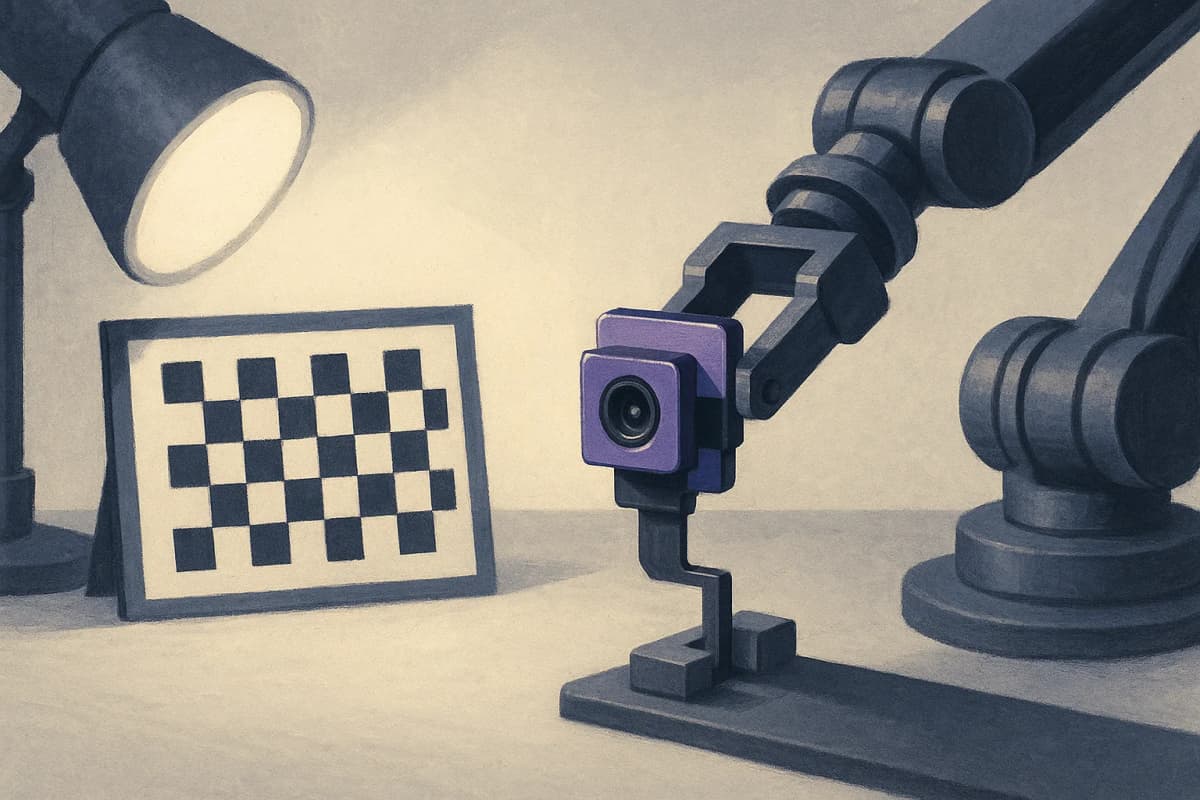
That characterization work is done in Glass's own lab. In 2024 Attar told TechCrunch the company runs training labs with robotics and optical calibration systems that characterize a lens's aberrations. He said getting shippable software for a new device takes between a few hours and a few days, where traditional phone makers spend months tuning image quality with huge teams.
Glass's speed is what you're paying for, and it is also what you now depend on. A conventional tune is slow, but your own imaging team can repeat it. A network trained in someone else's robotic lab, from characterization data captured there, is not something you can take in-house next quarter. The phones already on sale are the smaller risk. The bigger risk is the next sensor.
It is the same trap as Analog Devices buying Alif: your model may port, but your roadmap still depends on who owns the part. And it raises the question from Valsoft's purchase of Square 9: after the owner changes, who pays for the next model?
What Happened to Customers When OpenAI Bought Before?
OpenAI's record is mixed. It has not shut down every company it bought, but in two earlier deals customers lost either the product or the team that built it. Neither was a camera licence, so neither predicts what happens here. Both show how little a continuity statement is worth once the owner changes.
Rockset. OpenAI announced the acquisition on June 21, 2024. Rockset told customers they would "experience no immediate change." In the same notice it said it would "gradually transition current customers off Rockset." The service shut down on September 30, 2024, 101 days after the announcement.
Statsig. When OpenAI bought it for $1.1 billion in September 2025, Statsig wrote that it "will continue to provide our services and invest in our core products." On May 5, 2026, Amplitude took over the Statsig brand, customers and platform, while the Statsig team stayed at OpenAI. Customers kept the product but lost the engineers who built it.
That split is the scenario a neural ISP licensee should plan for. A per-module model is only as useful as the team and the lab that retrain it. Keep the contract with one owner, send the calibration team to another, and you end up holding a licence with nobody to do the work. It is the gap between a continuity promise and a contract that Stilla's customers ran into when Meta bought it. It is also why OpenAI's acqui-hire of Nextslide reached some customers five months late.
The hardware precedent is older. PrimeSense licensed the hardware design and chip used in Microsoft's Kinect, and Apple confirmed buying it for $360 million on November 24, 2013. Months later, OpenNI, the PrimeSense-led 3D sensing framework that claimed 100,000 active developers and whose most high-profile win was the Asus Xtion Pro, was set to close in April 2014, with its forums saying no staff were left to work on it. Occipital kept a fork of OpenNI 2 alive for its Structure Sensor. It could do that only because the code was open source. A trained network and the calibration captures behind it usually are not.
Is There a Case That Nothing Changes?
Yes: OpenAI may have more reason to keep licensing than to stop, and so far nothing says it will stop. The deal is unconfirmed and no plans have been disclosed. OpenAI's first reported device is a speaker, not a phone. The Qualcomm demo shows Glass's software already runs on a mainstream mobile platform, and every licensee's new module gives the lab more real hardware to train against. That is a plausible reason for a new owner to keep the licensing business running. When Statsig changed hands, its customers got a product that is still maintained, not a shutdown.
All of that could be true. None of it is written into your contract. Rockset and Statsig customers both relied on public continuity statements, and neither statement held as written.
Why Your Anti-Assignment Clause May Never Trigger
An anti-assignment clause usually does nothing if the buyer purchases the licensor's shares, because the contract is never assigned. As a Potomac Law note on licensing puts it, "if the stock of a company is purchased by a third party, there is no 'assignment' of the agreement", which is why change of control needs its own clause. The reports so far do not say whether OpenAI is buying Glass Imaging's stock or its assets.
Many licences are written to protect the licensor if the licensee gets acquired, not the other way round. Change-of-control clauses can provide for "automatic termination, consent requirements, or continuation under modified terms", and some add notice obligations. If your agreement follows the usual template, the vendor holds those rights and you don't.
In a per-module licence, three terms matter more than the grant language:
- Retraining as an obligation. Is tuning a new module a committed service at a stated price and turnaround, or a best-efforts statement of work you renegotiate every time?
- Calibration assets. Who owns the RAW captures, the point-spread and noise characterizations of your modules, and the trained weights, and can you get copies?
- Use restrictions. Can the licensor, or its new parent, use data characterizing your modules in its own products?
When Nvidia hired 109 Poolside engineers, no clause in customers' contracts was triggered. You need the language that would have been.
What to Do Before Your Next Module Needs Retuning
This Week:
- Pull every agreement you have with Glass Imaging: licence, statements of work, NDAs and data-handling terms. Have counsel mark the change-of-control, assignment, retraining and data-return language, and write a one-page answer to one question: what happens to your next module if Glass stops taking new work?
- Put a date on your exposure. List every SKU using GlassAI and the date its successor camera module freezes. Your deadline is the freeze date, not the deal's close date.
- Inventory what you sent the vendor: golden-sample modules, RAW captures, lens and sensor specifications. If you don't know what is sitting in their lab, ask in writing today.
This Month:
- Ask Glass for a signed continuity letter. It should cover the support term, retraining for your next module at current pricing and turnaround, and a commitment that data characterizing your modules will not be used in the acquirer's products. Statsig's customers had a blog post, and a blog post is not a contract term.
- Negotiate an exit kit: copies of the trained weights for every module you ship, plus your calibration captures, so another vendor or an internal team could retrain from them. It is the same logic as source code escrow when Tricentis bought Tabnine's technology, applied to a model.
- Price your fallback. Ask your SoC vendor or your own imaging team for a cost and schedule estimate to tune the next module conventionally, so you know what walking away would cost you in quality and in weeks.
Before Your Next Module Freeze:
- Add licensor change-of-control terms to every on-device model licence: notice within a fixed number of days, termination without penalty, a transition-assistance period, and return or deletion of your calibration data. This covers any model trained per device (imaging, audio, sensor fusion), not only Glass.
The Bottom Line
Per-device model licensing changes what "supplier" means. You can second-source a lens or a chip. A per-module neural network is ongoing work from one team in one lab, which makes it closer to an outsourced engineering service than a software licence, and most contracts have not caught up. PrimeSense's licensees found out in 2014 what happens when the owner of your perception technology starts building its own products. They could at least fork the open-source code. A Glass Imaging licensee can't fork a network that was trained in someone else's lab.
The phones already on shelves will keep working. Your next camera needs a contract.
Continue Reading
- Stilla Promised Continuity. Meta Bought It for WhatsApp.
- ADI Is Buying Alif. Your Model Ports. Your Board Doesn't.
- Valsoft Bought Square 9. Who Funds the Next Model?
- Nvidia Hired 109 Poolside Engineers. No Clause Fired.
- Your AI Vendor Joined OpenAI in March. You Heard in August.
- Tricentis Bought Tabnine's Context Engine, Not Your IDE