Why Network Ops Is Your Next AI Bottleneck

93% say network automation is essential for AI. Equinix's new AI-native layer turns weeks of manual config into minutes. What CIOs need to know now.

By Rajesh Beri·April 15, 2026·10 min read
Share:

THE DAILY BRIEF

AI InfrastructureEnterprise NetworkingNetwork AutomationEquinixAI Operations

Why Network Ops Is Your Next AI Bottleneck

93% say network automation is essential for AI. Equinix's new AI-native layer turns weeks of manual config into minutes. What CIOs need to know now.

By Rajesh Beri·April 15, 2026·10 min read

Your AI models are fast. Your network team still files tickets. That gap is about to define who scales AI successfully and who doesn't.

Equinix just launched Fabric Intelligence—an AI-native operational layer that automates network deployment, optimization, and maintenance across multi-cloud and edge environments. The promise: compress deployment timelines from weeks to minutes, eliminate manual configuration bottlenecks, and give AI workloads the adaptive networking infrastructure they actually need.

The stakes are clear. Omdia research shows 93% of organizations say network automation will be essential for keeping pace with future change, and 88% agree that AI itself will be required for effective network automation. Legacy software-defined networking (SDN) wasn't built for the real-time, distributed demands of enterprise AI. Fabric Intelligence is Equinix's answer to that architectural mismatch—and it's available in preview now.

For CIOs, CTOs, and network operations leaders, this raises three immediate questions: Does AI-driven networking actually work at enterprise scale? What does "autonomous network operations" mean when you still need compliance, change control, and governance? And most importantly—when do you move from manual tickets to AI agents managing production infrastructure?

The Network Bottleneck No One Talks About

AI thrives in dynamic, connected environments. Enterprise networks are slow, rigid, and manual.

Here's the reality most enterprises face: You've deployed GPT-4, Claude, or Gemini. You've built agentic workflows. Your data scientists are training custom models. And then your network operations team tells you it'll take three weeks to provision new connections because they need to file tickets, configure routing tables, update firewall rules, and get approvals through change management.

Meanwhile, your AI workloads need:

  • Low-latency connections between data centers, cloud regions, and edge nodes
  • Real-time traffic optimization as inference demand spikes
  • Automated failover when one cloud provider hits capacity
  • Secure, private paths to AI service providers (no public internet exposure)

Legacy network operations can't deliver this. Manual workflows create bottlenecks. Ticket-driven provisioning adds weeks to deployment cycles. And visibility gaps mean you don't know your network is degrading until applications start failing.

Equinix's thesis: Network operations need to become as fast and autonomous as the AI workloads they support. That means AI agents managing networks—not humans filing tickets.

⚠️ The Infrastructure Readiness Gap

Enterprise AI deployments fail for three reasons that have nothing to do with model performance:

  1. Legacy network architectures struggle with unpredictable AI traffic patterns
  2. Manual network operations can't scale at the speed AI demands
  3. Skills gaps mean network teams lack AI/ML operations expertise

Fabric Intelligence targets all three. It automates network ops so teams don't need to scale headcount, abstracts complexity with natural-language interfaces so teams don't need deep API expertise, and uses AI to predict and remediate issues before they impact workloads.

What Fabric Intelligence Actually Does

Equinix Fabric Intelligence is an AI-native control plane for network infrastructure. It sits on top of Equinix's global fabric of 280 data centers across 77 metros and automates how enterprises design, deploy, and manage connectivity across clouds, data centers, and edge environments.

Four components make up the platform:

1. Fabric Super Agent

Natural-language network operations. Instead of navigating complex APIs or web consoles, network teams can manage infrastructure through Slack, Microsoft Teams, or the Equinix Customer Portal using plain English commands.

Example use case: "Deploy a low-latency connection between our AWS us-east-1 region and our on-premise data center in Chicago with automatic failover to Azure."

Fabric Super Agent interprets the request, generates a recommended configuration, deploys the connection, and monitors performance—all without human intervention.

Deployment timeline: Weeks → Minutes.

2. MCP Server (Model Context Protocol)

Direct integration with AI coding assistants. Fabric Intelligence exposes MCP servers that let developers work with network infrastructure from inside their preferred AI agents—Claude Code, OpenAI Codex, GitHub Copilot, Cursor, etc.

Why this matters: Developers can test network configurations, simulate traffic patterns, and deploy connectivity without leaving their development environment. This eliminates context-switching between coding tools and network management consoles.

Target audience: DevOps teams, SREs, infrastructure engineers building AI-native applications.

3. Fabric Application Connect

Private connectivity marketplace for AI services. Instead of routing traffic over the public internet (slow, insecure, unpredictable latency), enterprises can establish dedicated, private connections to AI service providers for inference, training, storage, and security.

Enterprise use case: Connect your on-premise data to OpenAI, Anthropic, Google Vertex AI, or AWS Bedrock without exposing sensitive data to the public internet. This solves compliance requirements (GDPR, HIPAA, FedRAMP) that block many AI deployments.

4. Fabric Insights

AI-powered network monitoring and predictive anomaly detection. Fabric Insights analyzes real-time telemetry to predict network degradation before it impacts applications. It integrates with SIEM platforms (Splunk, Datadog) and feeds insights directly to Fabric Super Agent for automated remediation.

Example: Network latency between your data center and AWS starts trending upward at 2 AM. Fabric Insights predicts a bottleneck, routes traffic through an alternate path, and alerts your team—before users notice degraded AI inference performance.

The Dual-Audience Value Proposition

For CTOs and VPs of Engineering (Technical Perspective)

Legacy SDN vs. AI-Native Networking:

Software-defined networking (SDN) was designed for predictable, scheduled traffic patterns. It works well for traditional enterprise workloads where you can plan capacity weeks in advance.

AI workloads are the opposite:

  • Inference demand spikes unpredictably (viral feature adoption, marketing campaigns, seasonal patterns)
  • Training jobs saturate bandwidth for hours, then go idle
  • Agentic AI systems make millions of API calls across multiple cloud providers
  • Multi-modal models (text + vision + audio) generate massive data transfer

SDN can't adapt fast enough. By the time your network team files a ticket, gets approval, and provisions new capacity, your AI application has already degraded or failed.

Fabric Intelligence shifts from reactive (ticket-driven) to proactive (AI-driven):

  • Predict traffic patterns based on historical telemetry
  • Auto-scale bandwidth before demand hits
  • Route traffic dynamically based on latency, cost, and availability
  • Remediate issues autonomously without human intervention

🔍 Technical Deep Dive: Autonomous vs. Automated

Automated networking = humans define rules, scripts execute them.

Autonomous networking = AI agents observe patterns, predict needs, take action without human input.

Where are we in 2026? HyperFRAME Research says enterprises are in a "supervised autonomy phase"—AI agents handle read-only tasks (incident triage, root-cause analysis) but humans still approve write-access changes. Most organizations won't grant full autonomous control until they've validated AI decision-making in dev/test environments for 6-12 months.

For CIOs and CFOs (Business Perspective)

Manual network operations don't scale. Here's the math:

Your enterprise has 50 AI projects in production. Each project needs 5-10 new network connections per quarter (cloud regions, edge nodes, third-party AI services). That's 250-500 provisioning requests per quarter.

At 2-3 weeks per request (typical ticket-driven workflow), your network team becomes a bottleneck. You either:

  1. Delay AI projects while waiting for network capacity (kills time-to-market)
  2. Hire more network engineers (expensive, slow to onboard, skills gap)
  3. Automate network operations (Fabric Intelligence)

ROI calculation:

  • Manual provisioning: 250 requests × 2 weeks × $150/hour (loaded cost for senior network engineer) = $300,000/quarter just in provisioning labor
  • Fabric Intelligence: Provisioning drops to minutes, engineer time shifts to strategic planning instead of ticket execution
  • Cost avoidance: $1.2M/year + faster time-to-market for AI features

The hidden cost: Every week your AI project waits for network provisioning is a week your competitors are shipping features, capturing market share, and building customer lock-in.

What Enterprises Should Do Now

Immediate Actions (Next 30 Days)

  1. Audit your network provisioning timelines

    • How long does it take to deploy a new cloud connection?
    • How many tickets are in your network ops backlog?
    • What percentage of AI project delays are caused by network bottlenecks?
  2. Register for Fabric Intelligence preview

  3. Map your AI workload connectivity requirements

    • Which AI services do you consume? (OpenAI, Anthropic, Google, AWS, Azure)
    • Where is your training data stored? (on-prem, S3, GCS, Azure Blob)
    • What are your latency requirements for inference? (<50ms, <100ms, <200ms)

Strategic Questions for Your Network Team

Before you commit to AI-driven networking, your network operations team needs to answer:

Governance:

  • What level of autonomous control are we comfortable granting AI agents?
  • Do we require human approval for all production changes, or can AI agents auto-remediate low-risk issues?
  • How do we audit AI-driven network changes for compliance?

Integration:

  • Does Fabric Intelligence integrate with our existing SIEM, observability, and change management tools?
  • Can we migrate from our current SDN vendor (Cisco, VMware NSX, Juniper) without forklift replacement?

Skills:

  • Do our network engineers have the skills to manage AI-driven systems, or do we need training?
  • How do we shift from ticket-driven ops to intent-based ops?

Vendor lock-in:

  • What happens if we need to move workloads off Equinix infrastructure?
  • Can we replicate Fabric Intelligence capabilities with open-source tools or other vendors?

The Competitive Landscape

Equinix isn't the only vendor targeting AI-native networking:

Competitors:

  • Cisco — AI-native data center networking (Nexus Dashboard Fabric Controller with AI insights)
  • VMware NSX — Network virtualization with AI-driven security (NSX Intelligence)
  • Juniper — Mist AI for wireless + wired network automation
  • Arista CloudVision — AI-powered network observability and automation

Equinix's differentiation:

  1. Global footprint — 280 data centers in 77 metros (no other vendor has that physical reach)
  2. Neutral fabric — Connect to any cloud, any AI provider without vendor lock-in
  3. Model Context Protocol — Direct integration with AI coding assistants (unique to Equinix)
  4. Private connectivity marketplace — Pre-integrated with 3,000+ network service providers

What Equinix doesn't solve: On-premise network automation. If your AI workloads run entirely inside your own data centers (not multi-cloud), Fabric Intelligence won't help. You'd be better served by Cisco, Juniper, or Arista.

The Bottom Line

Network operations are about to become the limiting factor in enterprise AI adoption. Your models are fast. Your compute scales. But if it takes three weeks to provision a new connection between your data center and AWS, your AI strategy will fail.

Equinix Fabric Intelligence offers a way out: AI-native networking that automates provisioning, predicts bottlenecks, and adapts to workload demands in real time. The platform is in preview now, which means early adopters can validate it before committing production workloads.

Two questions determine whether this matters for your organization:

  1. Is manual network provisioning slowing down your AI projects? If yes, Fabric Intelligence could eliminate that bottleneck.
  2. Are you ready to trust AI agents with network operations? If no, you'll need a phased approach—start with read-only insights, move to supervised changes, then autonomous remediation.

For CIOs and CTOs: The shift from manual to autonomous networking is inevitable. The only question is whether you lead it or lag behind competitors who do.

For network operations teams: This isn't about replacing you—it's about shifting from ticket execution to strategic infrastructure planning. The teams that embrace AI-driven ops will define the next decade of enterprise networking. The teams that resist will become obsolete.

Next step: Register for preview access, map your AI workload connectivity requirements, and start testing in non-production environments. Autonomous networking is here. The question is whether your enterprise is ready for it.


Sources

  1. Equinix Newsroom: Equinix Accelerates Enterprise AI Workloads with Launch of Fabric Intelligence (April 15, 2026)
  2. Data Center Knowledge: Equinix Pushes AI Into Network Layer With Fabric Intelligence (April 15, 2026)
  3. Omdia Research: Network Automation for AI (cited in Equinix announcement)
  4. HyperFRAME Research: Ron Westfall analysis on autonomous networking readiness (2026)

Continue Reading

THE DAILY BRIEF

Enterprise AI insights for technology and business leaders, twice weekly.

thedailybrief.com

Subscribe at thedailybrief.com/subscribe for weekly AI insights delivered to your inbox.

LinkedIn: linkedin.com/in/rberi  |  X: x.com/rajeshberi

© 2026 Rajesh Beri. All rights reserved.

Why Network Ops Is Your Next AI Bottleneck

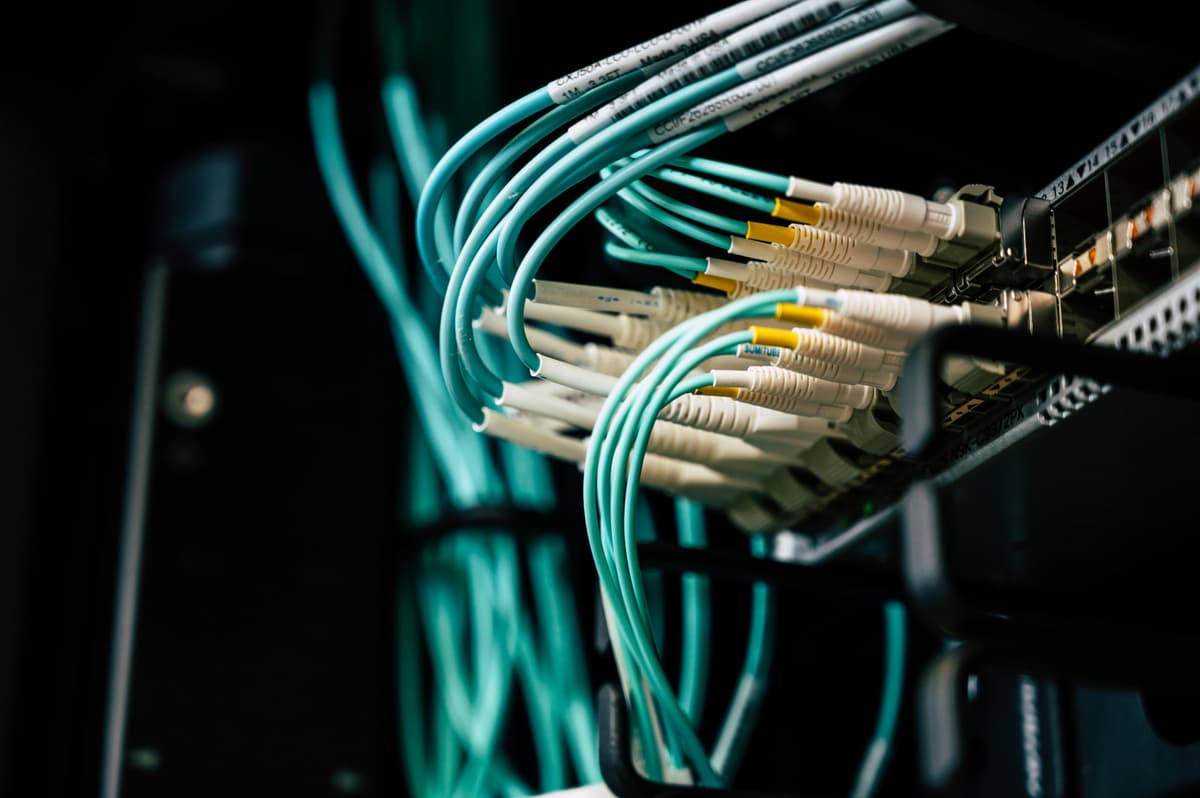
Photo by Mati Mango on Pexels

Your AI models are fast. Your network team still files tickets. That gap is about to define who scales AI successfully and who doesn't.

Equinix just launched Fabric Intelligence—an AI-native operational layer that automates network deployment, optimization, and maintenance across multi-cloud and edge environments. The promise: compress deployment timelines from weeks to minutes, eliminate manual configuration bottlenecks, and give AI workloads the adaptive networking infrastructure they actually need.

The stakes are clear. Omdia research shows 93% of organizations say network automation will be essential for keeping pace with future change, and 88% agree that AI itself will be required for effective network automation. Legacy software-defined networking (SDN) wasn't built for the real-time, distributed demands of enterprise AI. Fabric Intelligence is Equinix's answer to that architectural mismatch—and it's available in preview now.

For CIOs, CTOs, and network operations leaders, this raises three immediate questions: Does AI-driven networking actually work at enterprise scale? What does "autonomous network operations" mean when you still need compliance, change control, and governance? And most importantly—when do you move from manual tickets to AI agents managing production infrastructure?

The Network Bottleneck No One Talks About

AI thrives in dynamic, connected environments. Enterprise networks are slow, rigid, and manual.

Here's the reality most enterprises face: You've deployed GPT-4, Claude, or Gemini. You've built agentic workflows. Your data scientists are training custom models. And then your network operations team tells you it'll take three weeks to provision new connections because they need to file tickets, configure routing tables, update firewall rules, and get approvals through change management.

Meanwhile, your AI workloads need:

  • Low-latency connections between data centers, cloud regions, and edge nodes
  • Real-time traffic optimization as inference demand spikes
  • Automated failover when one cloud provider hits capacity
  • Secure, private paths to AI service providers (no public internet exposure)

Legacy network operations can't deliver this. Manual workflows create bottlenecks. Ticket-driven provisioning adds weeks to deployment cycles. And visibility gaps mean you don't know your network is degrading until applications start failing.

Equinix's thesis: Network operations need to become as fast and autonomous as the AI workloads they support. That means AI agents managing networks—not humans filing tickets.

⚠️ The Infrastructure Readiness Gap

Enterprise AI deployments fail for three reasons that have nothing to do with model performance:

  1. Legacy network architectures struggle with unpredictable AI traffic patterns
  2. Manual network operations can't scale at the speed AI demands
  3. Skills gaps mean network teams lack AI/ML operations expertise

Fabric Intelligence targets all three. It automates network ops so teams don't need to scale headcount, abstracts complexity with natural-language interfaces so teams don't need deep API expertise, and uses AI to predict and remediate issues before they impact workloads.

What Fabric Intelligence Actually Does

Equinix Fabric Intelligence is an AI-native control plane for network infrastructure. It sits on top of Equinix's global fabric of 280 data centers across 77 metros and automates how enterprises design, deploy, and manage connectivity across clouds, data centers, and edge environments.

Four components make up the platform:

1. Fabric Super Agent

Natural-language network operations. Instead of navigating complex APIs or web consoles, network teams can manage infrastructure through Slack, Microsoft Teams, or the Equinix Customer Portal using plain English commands.

Example use case: "Deploy a low-latency connection between our AWS us-east-1 region and our on-premise data center in Chicago with automatic failover to Azure."

Fabric Super Agent interprets the request, generates a recommended configuration, deploys the connection, and monitors performance—all without human intervention.

Deployment timeline: Weeks → Minutes.

2. MCP Server (Model Context Protocol)

Direct integration with AI coding assistants. Fabric Intelligence exposes MCP servers that let developers work with network infrastructure from inside their preferred AI agents—Claude Code, OpenAI Codex, GitHub Copilot, Cursor, etc.

Why this matters: Developers can test network configurations, simulate traffic patterns, and deploy connectivity without leaving their development environment. This eliminates context-switching between coding tools and network management consoles.

Target audience: DevOps teams, SREs, infrastructure engineers building AI-native applications.

3. Fabric Application Connect

Private connectivity marketplace for AI services. Instead of routing traffic over the public internet (slow, insecure, unpredictable latency), enterprises can establish dedicated, private connections to AI service providers for inference, training, storage, and security.

Enterprise use case: Connect your on-premise data to OpenAI, Anthropic, Google Vertex AI, or AWS Bedrock without exposing sensitive data to the public internet. This solves compliance requirements (GDPR, HIPAA, FedRAMP) that block many AI deployments.

4. Fabric Insights

AI-powered network monitoring and predictive anomaly detection. Fabric Insights analyzes real-time telemetry to predict network degradation before it impacts applications. It integrates with SIEM platforms (Splunk, Datadog) and feeds insights directly to Fabric Super Agent for automated remediation.

Example: Network latency between your data center and AWS starts trending upward at 2 AM. Fabric Insights predicts a bottleneck, routes traffic through an alternate path, and alerts your team—before users notice degraded AI inference performance.

The Dual-Audience Value Proposition

For CTOs and VPs of Engineering (Technical Perspective)

Legacy SDN vs. AI-Native Networking:

Software-defined networking (SDN) was designed for predictable, scheduled traffic patterns. It works well for traditional enterprise workloads where you can plan capacity weeks in advance.

AI workloads are the opposite:

  • Inference demand spikes unpredictably (viral feature adoption, marketing campaigns, seasonal patterns)
  • Training jobs saturate bandwidth for hours, then go idle
  • Agentic AI systems make millions of API calls across multiple cloud providers
  • Multi-modal models (text + vision + audio) generate massive data transfer

SDN can't adapt fast enough. By the time your network team files a ticket, gets approval, and provisions new capacity, your AI application has already degraded or failed.

Fabric Intelligence shifts from reactive (ticket-driven) to proactive (AI-driven):

  • Predict traffic patterns based on historical telemetry
  • Auto-scale bandwidth before demand hits
  • Route traffic dynamically based on latency, cost, and availability
  • Remediate issues autonomously without human intervention

🔍 Technical Deep Dive: Autonomous vs. Automated

Automated networking = humans define rules, scripts execute them.

Autonomous networking = AI agents observe patterns, predict needs, take action without human input.

Where are we in 2026? HyperFRAME Research says enterprises are in a "supervised autonomy phase"—AI agents handle read-only tasks (incident triage, root-cause analysis) but humans still approve write-access changes. Most organizations won't grant full autonomous control until they've validated AI decision-making in dev/test environments for 6-12 months.

For CIOs and CFOs (Business Perspective)

Manual network operations don't scale. Here's the math:

Your enterprise has 50 AI projects in production. Each project needs 5-10 new network connections per quarter (cloud regions, edge nodes, third-party AI services). That's 250-500 provisioning requests per quarter.

At 2-3 weeks per request (typical ticket-driven workflow), your network team becomes a bottleneck. You either:

  1. Delay AI projects while waiting for network capacity (kills time-to-market)
  2. Hire more network engineers (expensive, slow to onboard, skills gap)
  3. Automate network operations (Fabric Intelligence)

ROI calculation:

  • Manual provisioning: 250 requests × 2 weeks × $150/hour (loaded cost for senior network engineer) = $300,000/quarter just in provisioning labor
  • Fabric Intelligence: Provisioning drops to minutes, engineer time shifts to strategic planning instead of ticket execution
  • Cost avoidance: $1.2M/year + faster time-to-market for AI features

The hidden cost: Every week your AI project waits for network provisioning is a week your competitors are shipping features, capturing market share, and building customer lock-in.

What Enterprises Should Do Now

Immediate Actions (Next 30 Days)

  1. Audit your network provisioning timelines

    • How long does it take to deploy a new cloud connection?
    • How many tickets are in your network ops backlog?
    • What percentage of AI project delays are caused by network bottlenecks?
  2. Register for Fabric Intelligence preview

  3. Map your AI workload connectivity requirements

    • Which AI services do you consume? (OpenAI, Anthropic, Google, AWS, Azure)
    • Where is your training data stored? (on-prem, S3, GCS, Azure Blob)
    • What are your latency requirements for inference? (<50ms, <100ms, <200ms)

Strategic Questions for Your Network Team

Before you commit to AI-driven networking, your network operations team needs to answer:

Governance:

  • What level of autonomous control are we comfortable granting AI agents?
  • Do we require human approval for all production changes, or can AI agents auto-remediate low-risk issues?
  • How do we audit AI-driven network changes for compliance?

Integration:

  • Does Fabric Intelligence integrate with our existing SIEM, observability, and change management tools?
  • Can we migrate from our current SDN vendor (Cisco, VMware NSX, Juniper) without forklift replacement?

Skills:

  • Do our network engineers have the skills to manage AI-driven systems, or do we need training?
  • How do we shift from ticket-driven ops to intent-based ops?

Vendor lock-in:

  • What happens if we need to move workloads off Equinix infrastructure?
  • Can we replicate Fabric Intelligence capabilities with open-source tools or other vendors?

The Competitive Landscape

Equinix isn't the only vendor targeting AI-native networking:

Competitors:

  • Cisco — AI-native data center networking (Nexus Dashboard Fabric Controller with AI insights)
  • VMware NSX — Network virtualization with AI-driven security (NSX Intelligence)
  • Juniper — Mist AI for wireless + wired network automation
  • Arista CloudVision — AI-powered network observability and automation

Equinix's differentiation:

  1. Global footprint — 280 data centers in 77 metros (no other vendor has that physical reach)
  2. Neutral fabric — Connect to any cloud, any AI provider without vendor lock-in
  3. Model Context Protocol — Direct integration with AI coding assistants (unique to Equinix)
  4. Private connectivity marketplace — Pre-integrated with 3,000+ network service providers

What Equinix doesn't solve: On-premise network automation. If your AI workloads run entirely inside your own data centers (not multi-cloud), Fabric Intelligence won't help. You'd be better served by Cisco, Juniper, or Arista.

The Bottom Line

Network operations are about to become the limiting factor in enterprise AI adoption. Your models are fast. Your compute scales. But if it takes three weeks to provision a new connection between your data center and AWS, your AI strategy will fail.

Equinix Fabric Intelligence offers a way out: AI-native networking that automates provisioning, predicts bottlenecks, and adapts to workload demands in real time. The platform is in preview now, which means early adopters can validate it before committing production workloads.

Two questions determine whether this matters for your organization:

  1. Is manual network provisioning slowing down your AI projects? If yes, Fabric Intelligence could eliminate that bottleneck.
  2. Are you ready to trust AI agents with network operations? If no, you'll need a phased approach—start with read-only insights, move to supervised changes, then autonomous remediation.

For CIOs and CTOs: The shift from manual to autonomous networking is inevitable. The only question is whether you lead it or lag behind competitors who do.

For network operations teams: This isn't about replacing you—it's about shifting from ticket execution to strategic infrastructure planning. The teams that embrace AI-driven ops will define the next decade of enterprise networking. The teams that resist will become obsolete.

Next step: Register for preview access, map your AI workload connectivity requirements, and start testing in non-production environments. Autonomous networking is here. The question is whether your enterprise is ready for it.


Sources

  1. Equinix Newsroom: Equinix Accelerates Enterprise AI Workloads with Launch of Fabric Intelligence (April 15, 2026)
  2. Data Center Knowledge: Equinix Pushes AI Into Network Layer With Fabric Intelligence (April 15, 2026)
  3. Omdia Research: Network Automation for AI (cited in Equinix announcement)
  4. HyperFRAME Research: Ron Westfall analysis on autonomous networking readiness (2026)

Continue Reading

Share:

THE DAILY BRIEF

AI InfrastructureEnterprise NetworkingNetwork AutomationEquinixAI Operations

Why Network Ops Is Your Next AI Bottleneck

93% say network automation is essential for AI. Equinix's new AI-native layer turns weeks of manual config into minutes. What CIOs need to know now.

By Rajesh Beri·April 15, 2026·10 min read

Your AI models are fast. Your network team still files tickets. That gap is about to define who scales AI successfully and who doesn't.

Equinix just launched Fabric Intelligence—an AI-native operational layer that automates network deployment, optimization, and maintenance across multi-cloud and edge environments. The promise: compress deployment timelines from weeks to minutes, eliminate manual configuration bottlenecks, and give AI workloads the adaptive networking infrastructure they actually need.

The stakes are clear. Omdia research shows 93% of organizations say network automation will be essential for keeping pace with future change, and 88% agree that AI itself will be required for effective network automation. Legacy software-defined networking (SDN) wasn't built for the real-time, distributed demands of enterprise AI. Fabric Intelligence is Equinix's answer to that architectural mismatch—and it's available in preview now.

For CIOs, CTOs, and network operations leaders, this raises three immediate questions: Does AI-driven networking actually work at enterprise scale? What does "autonomous network operations" mean when you still need compliance, change control, and governance? And most importantly—when do you move from manual tickets to AI agents managing production infrastructure?

The Network Bottleneck No One Talks About

AI thrives in dynamic, connected environments. Enterprise networks are slow, rigid, and manual.

Here's the reality most enterprises face: You've deployed GPT-4, Claude, or Gemini. You've built agentic workflows. Your data scientists are training custom models. And then your network operations team tells you it'll take three weeks to provision new connections because they need to file tickets, configure routing tables, update firewall rules, and get approvals through change management.

Meanwhile, your AI workloads need:

  • Low-latency connections between data centers, cloud regions, and edge nodes
  • Real-time traffic optimization as inference demand spikes
  • Automated failover when one cloud provider hits capacity
  • Secure, private paths to AI service providers (no public internet exposure)

Legacy network operations can't deliver this. Manual workflows create bottlenecks. Ticket-driven provisioning adds weeks to deployment cycles. And visibility gaps mean you don't know your network is degrading until applications start failing.

Equinix's thesis: Network operations need to become as fast and autonomous as the AI workloads they support. That means AI agents managing networks—not humans filing tickets.

⚠️ The Infrastructure Readiness Gap

Enterprise AI deployments fail for three reasons that have nothing to do with model performance:

  1. Legacy network architectures struggle with unpredictable AI traffic patterns
  2. Manual network operations can't scale at the speed AI demands
  3. Skills gaps mean network teams lack AI/ML operations expertise

Fabric Intelligence targets all three. It automates network ops so teams don't need to scale headcount, abstracts complexity with natural-language interfaces so teams don't need deep API expertise, and uses AI to predict and remediate issues before they impact workloads.

What Fabric Intelligence Actually Does

Equinix Fabric Intelligence is an AI-native control plane for network infrastructure. It sits on top of Equinix's global fabric of 280 data centers across 77 metros and automates how enterprises design, deploy, and manage connectivity across clouds, data centers, and edge environments.

Four components make up the platform:

1. Fabric Super Agent

Natural-language network operations. Instead of navigating complex APIs or web consoles, network teams can manage infrastructure through Slack, Microsoft Teams, or the Equinix Customer Portal using plain English commands.

Example use case: "Deploy a low-latency connection between our AWS us-east-1 region and our on-premise data center in Chicago with automatic failover to Azure."

Fabric Super Agent interprets the request, generates a recommended configuration, deploys the connection, and monitors performance—all without human intervention.

Deployment timeline: Weeks → Minutes.

2. MCP Server (Model Context Protocol)

Direct integration with AI coding assistants. Fabric Intelligence exposes MCP servers that let developers work with network infrastructure from inside their preferred AI agents—Claude Code, OpenAI Codex, GitHub Copilot, Cursor, etc.

Why this matters: Developers can test network configurations, simulate traffic patterns, and deploy connectivity without leaving their development environment. This eliminates context-switching between coding tools and network management consoles.

Target audience: DevOps teams, SREs, infrastructure engineers building AI-native applications.

3. Fabric Application Connect

Private connectivity marketplace for AI services. Instead of routing traffic over the public internet (slow, insecure, unpredictable latency), enterprises can establish dedicated, private connections to AI service providers for inference, training, storage, and security.

Enterprise use case: Connect your on-premise data to OpenAI, Anthropic, Google Vertex AI, or AWS Bedrock without exposing sensitive data to the public internet. This solves compliance requirements (GDPR, HIPAA, FedRAMP) that block many AI deployments.

4. Fabric Insights

AI-powered network monitoring and predictive anomaly detection. Fabric Insights analyzes real-time telemetry to predict network degradation before it impacts applications. It integrates with SIEM platforms (Splunk, Datadog) and feeds insights directly to Fabric Super Agent for automated remediation.

Example: Network latency between your data center and AWS starts trending upward at 2 AM. Fabric Insights predicts a bottleneck, routes traffic through an alternate path, and alerts your team—before users notice degraded AI inference performance.

The Dual-Audience Value Proposition

For CTOs and VPs of Engineering (Technical Perspective)

Legacy SDN vs. AI-Native Networking:

Software-defined networking (SDN) was designed for predictable, scheduled traffic patterns. It works well for traditional enterprise workloads where you can plan capacity weeks in advance.

AI workloads are the opposite:

  • Inference demand spikes unpredictably (viral feature adoption, marketing campaigns, seasonal patterns)
  • Training jobs saturate bandwidth for hours, then go idle
  • Agentic AI systems make millions of API calls across multiple cloud providers
  • Multi-modal models (text + vision + audio) generate massive data transfer

SDN can't adapt fast enough. By the time your network team files a ticket, gets approval, and provisions new capacity, your AI application has already degraded or failed.

Fabric Intelligence shifts from reactive (ticket-driven) to proactive (AI-driven):

  • Predict traffic patterns based on historical telemetry
  • Auto-scale bandwidth before demand hits
  • Route traffic dynamically based on latency, cost, and availability
  • Remediate issues autonomously without human intervention

🔍 Technical Deep Dive: Autonomous vs. Automated

Automated networking = humans define rules, scripts execute them.

Autonomous networking = AI agents observe patterns, predict needs, take action without human input.

Where are we in 2026? HyperFRAME Research says enterprises are in a "supervised autonomy phase"—AI agents handle read-only tasks (incident triage, root-cause analysis) but humans still approve write-access changes. Most organizations won't grant full autonomous control until they've validated AI decision-making in dev/test environments for 6-12 months.

For CIOs and CFOs (Business Perspective)

Manual network operations don't scale. Here's the math:

Your enterprise has 50 AI projects in production. Each project needs 5-10 new network connections per quarter (cloud regions, edge nodes, third-party AI services). That's 250-500 provisioning requests per quarter.

At 2-3 weeks per request (typical ticket-driven workflow), your network team becomes a bottleneck. You either:

  1. Delay AI projects while waiting for network capacity (kills time-to-market)
  2. Hire more network engineers (expensive, slow to onboard, skills gap)
  3. Automate network operations (Fabric Intelligence)

ROI calculation:

  • Manual provisioning: 250 requests × 2 weeks × $150/hour (loaded cost for senior network engineer) = $300,000/quarter just in provisioning labor
  • Fabric Intelligence: Provisioning drops to minutes, engineer time shifts to strategic planning instead of ticket execution
  • Cost avoidance: $1.2M/year + faster time-to-market for AI features

The hidden cost: Every week your AI project waits for network provisioning is a week your competitors are shipping features, capturing market share, and building customer lock-in.

What Enterprises Should Do Now

Immediate Actions (Next 30 Days)

  1. Audit your network provisioning timelines

    • How long does it take to deploy a new cloud connection?
    • How many tickets are in your network ops backlog?
    • What percentage of AI project delays are caused by network bottlenecks?
  2. Register for Fabric Intelligence preview

  3. Map your AI workload connectivity requirements

    • Which AI services do you consume? (OpenAI, Anthropic, Google, AWS, Azure)
    • Where is your training data stored? (on-prem, S3, GCS, Azure Blob)
    • What are your latency requirements for inference? (<50ms, <100ms, <200ms)

Strategic Questions for Your Network Team

Before you commit to AI-driven networking, your network operations team needs to answer:

Governance:

  • What level of autonomous control are we comfortable granting AI agents?
  • Do we require human approval for all production changes, or can AI agents auto-remediate low-risk issues?
  • How do we audit AI-driven network changes for compliance?

Integration:

  • Does Fabric Intelligence integrate with our existing SIEM, observability, and change management tools?
  • Can we migrate from our current SDN vendor (Cisco, VMware NSX, Juniper) without forklift replacement?

Skills:

  • Do our network engineers have the skills to manage AI-driven systems, or do we need training?
  • How do we shift from ticket-driven ops to intent-based ops?

Vendor lock-in:

  • What happens if we need to move workloads off Equinix infrastructure?
  • Can we replicate Fabric Intelligence capabilities with open-source tools or other vendors?

The Competitive Landscape

Equinix isn't the only vendor targeting AI-native networking:

Competitors:

  • Cisco — AI-native data center networking (Nexus Dashboard Fabric Controller with AI insights)
  • VMware NSX — Network virtualization with AI-driven security (NSX Intelligence)
  • Juniper — Mist AI for wireless + wired network automation
  • Arista CloudVision — AI-powered network observability and automation

Equinix's differentiation:

  1. Global footprint — 280 data centers in 77 metros (no other vendor has that physical reach)
  2. Neutral fabric — Connect to any cloud, any AI provider without vendor lock-in
  3. Model Context Protocol — Direct integration with AI coding assistants (unique to Equinix)
  4. Private connectivity marketplace — Pre-integrated with 3,000+ network service providers

What Equinix doesn't solve: On-premise network automation. If your AI workloads run entirely inside your own data centers (not multi-cloud), Fabric Intelligence won't help. You'd be better served by Cisco, Juniper, or Arista.

The Bottom Line

Network operations are about to become the limiting factor in enterprise AI adoption. Your models are fast. Your compute scales. But if it takes three weeks to provision a new connection between your data center and AWS, your AI strategy will fail.

Equinix Fabric Intelligence offers a way out: AI-native networking that automates provisioning, predicts bottlenecks, and adapts to workload demands in real time. The platform is in preview now, which means early adopters can validate it before committing production workloads.

Two questions determine whether this matters for your organization:

  1. Is manual network provisioning slowing down your AI projects? If yes, Fabric Intelligence could eliminate that bottleneck.
  2. Are you ready to trust AI agents with network operations? If no, you'll need a phased approach—start with read-only insights, move to supervised changes, then autonomous remediation.

For CIOs and CTOs: The shift from manual to autonomous networking is inevitable. The only question is whether you lead it or lag behind competitors who do.

For network operations teams: This isn't about replacing you—it's about shifting from ticket execution to strategic infrastructure planning. The teams that embrace AI-driven ops will define the next decade of enterprise networking. The teams that resist will become obsolete.

Next step: Register for preview access, map your AI workload connectivity requirements, and start testing in non-production environments. Autonomous networking is here. The question is whether your enterprise is ready for it.


Sources

  1. Equinix Newsroom: Equinix Accelerates Enterprise AI Workloads with Launch of Fabric Intelligence (April 15, 2026)
  2. Data Center Knowledge: Equinix Pushes AI Into Network Layer With Fabric Intelligence (April 15, 2026)
  3. Omdia Research: Network Automation for AI (cited in Equinix announcement)
  4. HyperFRAME Research: Ron Westfall analysis on autonomous networking readiness (2026)

Continue Reading

THE DAILY BRIEF

Enterprise AI insights for technology and business leaders, twice weekly.

thedailybrief.com

Subscribe at thedailybrief.com/subscribe for weekly AI insights delivered to your inbox.

LinkedIn: linkedin.com/in/rberi  |  X: x.com/rajeshberi

© 2026 Rajesh Beri. All rights reserved.

Newsletter

Stay Ahead of the Curve

Weekly enterprise AI insights for technology leaders. No spam, no vendor pitches—unsubscribe anytime.

Subscribe