AWS Orders 1M NVIDIA GPUs Then Cuts to 500K for Trainium

AWS ordered 1 million Nvidia GPUs but diverted half to custom Trainium chips. Enterprise AI infrastructure strategy reveals the AWS-Nvidia partnership shift and cost implications.

By Rajesh Beri·March 21, 2026·7 min read
Share:

THE DAILY BRIEF

AWSNVIDIACloud StrategyVendor SelectionAI Infrastructure

AWS Orders 1M NVIDIA GPUs Then Cuts to 500K for Trainium

AWS ordered 1 million Nvidia GPUs but diverted half to custom Trainium chips. Enterprise AI infrastructure strategy reveals the AWS-Nvidia partnership shift and cost implications.

By Rajesh Beri·March 21, 2026·7 min read

Amazon Web Services just ordered 1 million NVIDIA GPUs for delivery through 2027.

This isn't just a supply deal. It's AWS admitting that custom chips—Trainium and Inferentia—can't replace NVIDIA entirely.

For enterprises, this validates what many already suspected: you need both.

Custom silicon handles cost-sensitive workloads. NVIDIA handles everything else.

Here's what the AWS-NVIDIA deal means for your AI infrastructure strategy.


The Deal: 1 Million GPUs + The Full Stack

On March 19, NVIDIA VP Ian Buck told Reuters that AWS would receive 1 million GPUs by end of 2027—plus NVIDIA's complete inference stack:

  • Rubin and Blackwell GPU families (training and inference)
  • Groq inference chips (from NVIDIA's $17B Groq licensing deal)
  • Spectrum networking chips (data center fabric)
  • ConnectX and Spectrum X networking gear (first time AWS deploying NVIDIA networking)

Sales start this year. Financial terms weren't disclosed.

But here's the strategic part: AWS is deploying NVIDIA's networking gear.

AWS has spent years perfecting custom networking equipment. Deploying NVIDIA's stack means AWS sees value in end-to-end optimization—not just GPUs.

Buck's quote reveals why:

"Inference is hard. It's wickedly hard. To be the best at inference, it is not a one chip pony. We actually use all seven chips."

Seven chips. Not one GPU. The entire NVIDIA inference stack.

That's the playbook AWS is buying into.


Why AWS Still Needs NVIDIA (Despite Custom Chips)

AWS has invested billions in Trainium (training) and Inferentia (inference)—custom chips designed to reduce dependence on NVIDIA.

Inferentia claims 40% cost reduction vs traditional GPUs. Trainium targets the same workloads as NVIDIA's A100/H100.

So why order 1 million NVIDIA GPUs?

Because custom chips have limits:

1. Flexibility vs Efficiency Trade-Off

When Trainium/Inferentia Work:

  • PyTorch/JAX codebases (standard frameworks)
  • Transformer training at 100+ chip scale
  • Cost-sensitive workloads (inference >$10K/month)
  • AWS-exclusive deployments (no multi-cloud portability needed)

When NVIDIA Is Required:

  • Novel architectures requiring CUDA operations
  • Maximum performance regardless of cost
  • Multi-cloud portability (Azure, GCP, on-prem)
  • Complex reasoning and agentic AI workloads

Introl's AWS silicon guide puts the threshold at $10K/month in inference costs before Trainium migration makes economic sense.

Below that? NVIDIA's flexibility wins.

2. "Important Workloads and Biggest Customers"

Buck's phrasing matters: AWS will use NVIDIA for "important workloads and biggest customers."

Translation: Enterprise buyers driving AWS revenue still demand NVIDIA.

Why? Because CUDA is the standard. Model portability matters. And when you're running production AI at scale, flexibility beats cost optimization.

3. Inference Requires the Full Stack

NVIDIA's "seven-chip" inference stack includes:

  • Vera CPU (host processing)
  • Rubin GPU (core compute)
  • NVLink 6 Switch (inter-GPU communication)
  • ConnectX-9 SuperNIC (networking)
  • BlueField-4 DPU (data processing)
  • Spectrum-6 Ethernet Switch (data center fabric)
  • Groq 3 LPU (low-latency inference accelerator)

AWS custom chips don't replicate this ecosystem. They optimize for specific workloads—not end-to-end inference.

Buck's point: Inference isn't just about the GPU. It's about the entire data center architecture.

AWS is buying that architecture.


The Enterprise Decision Framework: Custom vs NVIDIA

The AWS-NVIDIA deal validates a hybrid strategy:

Workload Type Best Chip Why
Cost-sensitive training AWS Trainium 40% lower cost, PyTorch/JAX support, AWS-native
Performance-critical training NVIDIA Blackwell/Rubin CUDA ecosystem, multi-cloud portability, novel architectures
Commodity inference AWS Inferentia 40% cost reduction, high-throughput/low-latency
Complex reasoning inference NVIDIA Groq + Rubin Agentic AI, long-context reasoning, real-time generation
Multi-cloud deployments NVIDIA (any cloud) Same stack on AWS, Azure, GCP, on-prem

Key insight: AWS isn't replacing NVIDIA. They're segmenting workloads.

  • Trainium/Inferentia handle cost-optimized, standardized workloads.
  • NVIDIA handles performance-critical, flexible, multi-cloud workloads.

For enterprises, this means:

Your AI Infrastructure Checklist:

  1. Map workloads to cost vs performance requirements

    • Training <$10K/month? Start with NVIDIA (flexibility)
    • Inference >$10K/month? Evaluate Trainium/Inferentia
  2. Assess multi-cloud needs

    • Single-cloud AWS? Custom chips viable
    • Multi-cloud or hybrid? NVIDIA required for portability
  3. Evaluate vendor lock-in risk

    • AWS-native architectures lock you into Trainium/Inferentia
    • NVIDIA provides exit strategy (move to Azure/GCP/on-prem)
  4. Factor in ecosystem maturity

    • CUDA has 15+ years of tooling, libraries, community support
    • Trainium/Inferentia require AWS-specific expertise

What This Means for Cloud Strategy

1. Custom Chips Create Competitive Pressure (But Don't Replace NVIDIA)

Every hyperscaler is building custom silicon:

  • AWS: Trainium/Inferentia
  • Google: TPU v5p/v6e
  • Microsoft: Maia 100 (announced 2024)

These chips put pricing pressure on NVIDIA. But they don't replace NVIDIA's ecosystem.

MLQ.ai's research frames the trade-off:

"Custom silicon optimized for specific workloads, offered at lower prices than NVIDIA equivalents. The trade-off: less flexibility."

AWS ordering 1 million NVIDIA GPUs proves flexibility still matters.

2. Inference Is the New Battleground

Training was the first wave. Inference is the second.

NVIDIA's acquisition of Groq ($17B licensing deal) and AWS's deployment of the full seven-chip stack signal where the market is heading:

Real-time, agentic AI requires low-latency, high-throughput inference at scale.

Trainium handles training. Inferentia handles commodity inference. But complex reasoning requires NVIDIA's full stack.

For enterprises, this means:

  • Short-term: NVIDIA dominates inference (Groq, Blackwell, Rubin)
  • Long-term: Hybrid strategies (custom chips for cost, NVIDIA for performance)

3. Networking Matters as Much as Compute

AWS deploying NVIDIA's ConnectX and Spectrum X networking gear is a strategic shift.

Why? Because data movement is the bottleneck at scale.

NVIDIA's NVLink 6 delivers 260 TB/s bandwidth per NVL72 rack—more than the entire internet's bandwidth.

AWS's custom networking couldn't match that. So they're adopting NVIDIA's stack.

For enterprises: Don't optimize GPUs in isolation. Optimize the data center.


The finance leader Perspective: Cost vs Lock-In

finance leader Decision Guide:

Choose AWS Custom Chips If:

  • ✅ Workloads fit PyTorch/JAX (no custom CUDA)
  • ✅ Single-cloud AWS strategy (no multi-cloud plans)
  • ✅ Cost >$10K/month (economics justify migration)
  • ✅ Willing to accept AWS lock-in

Choose NVIDIA If:

  • ✅ Multi-cloud strategy (Azure, GCP, on-prem optionality)
  • ✅ Novel architectures (CUDA required)
  • ✅ Maximum performance (cost secondary)
  • ✅ Vendor diversification (reduce AWS dependency)

Hybrid Strategy (Recommended):

  • Use Trainium/Inferentia for standardized, cost-sensitive workloads
  • Use NVIDIA for performance-critical, multi-cloud workloads
  • Measure TCO across both (including migration costs, expertise, lock-in risk)

Bottom line: AWS's 1 million GPU order proves custom chips are a cost optimization tool—not a NVIDIA replacement.

Enterprises need both.


What to Watch Next

1. Pricing Announcements

NVIDIA didn't disclose deal value. Watch for:

  • AWS pricing for Rubin/Blackwell instances (likely 2H 2026)
  • Competitive pricing from Azure and Google Cloud
  • Trainium vs NVIDIA TCO comparisons from independent analysts

2. Groq Deployment Timeline

NVIDIA's Groq chips (low-latency inference) are new. AWS is the first major cloud deploying them.

Watch for:

  • Performance benchmarks (Groq vs Inferentia vs GPUs)
  • Pricing (will AWS price Groq competitively with Inferentia?)
  • Enterprise case studies (which workloads benefit most from Groq?)

3. Multi-Cloud NVIDIA Deployments

Azure and Google Cloud are also deploying NVIDIA Rubin/Blackwell.

Watch for:

  • Consistency across clouds (can you run the same stack on AWS, Azure, GCP?)
  • Pricing differences (which cloud offers best NVIDIA pricing?)
  • Hybrid cloud strategies (enterprises mixing clouds based on workload)

Continue Reading

THE DAILY BRIEF

Enterprise AI insights for technology and business leaders, twice weekly.

thedailybrief.com

Subscribe at thedailybrief.com/subscribe for weekly AI insights delivered to your inbox.

LinkedIn: linkedin.com/in/rberi  |  X: x.com/rajeshberi

© 2026 Rajesh Beri. All rights reserved.

AWS Orders 1M NVIDIA GPUs Then Cuts to 500K for Trainium

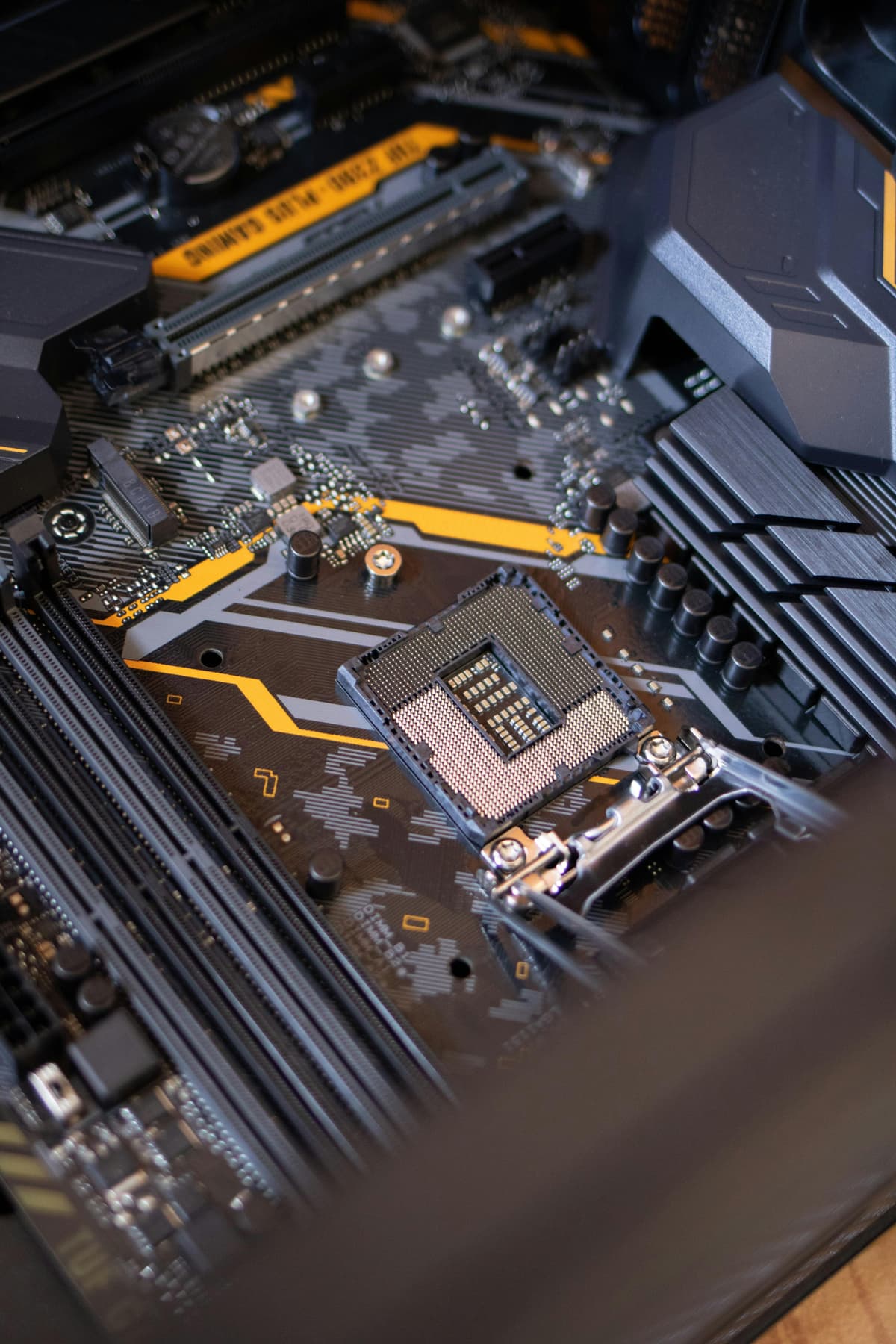
Photo by ThisIsEngineering on Pexels

Amazon Web Services just ordered 1 million NVIDIA GPUs for delivery through 2027.

This isn't just a supply deal. It's AWS admitting that custom chips—Trainium and Inferentia—can't replace NVIDIA entirely.

For enterprises, this validates what many already suspected: you need both.

Custom silicon handles cost-sensitive workloads. NVIDIA handles everything else.

Here's what the AWS-NVIDIA deal means for your AI infrastructure strategy.


The Deal: 1 Million GPUs + The Full Stack

On March 19, NVIDIA VP Ian Buck told Reuters that AWS would receive 1 million GPUs by end of 2027—plus NVIDIA's complete inference stack:

  • Rubin and Blackwell GPU families (training and inference)
  • Groq inference chips (from NVIDIA's $17B Groq licensing deal)
  • Spectrum networking chips (data center fabric)
  • ConnectX and Spectrum X networking gear (first time AWS deploying NVIDIA networking)

Sales start this year. Financial terms weren't disclosed.

But here's the strategic part: AWS is deploying NVIDIA's networking gear.

AWS has spent years perfecting custom networking equipment. Deploying NVIDIA's stack means AWS sees value in end-to-end optimization—not just GPUs.

Buck's quote reveals why:

"Inference is hard. It's wickedly hard. To be the best at inference, it is not a one chip pony. We actually use all seven chips."

Seven chips. Not one GPU. The entire NVIDIA inference stack.

That's the playbook AWS is buying into.


Why AWS Still Needs NVIDIA (Despite Custom Chips)

AWS has invested billions in Trainium (training) and Inferentia (inference)—custom chips designed to reduce dependence on NVIDIA.

Inferentia claims 40% cost reduction vs traditional GPUs. Trainium targets the same workloads as NVIDIA's A100/H100.

So why order 1 million NVIDIA GPUs?

Because custom chips have limits:

1. Flexibility vs Efficiency Trade-Off

When Trainium/Inferentia Work:

  • PyTorch/JAX codebases (standard frameworks)
  • Transformer training at 100+ chip scale
  • Cost-sensitive workloads (inference >$10K/month)
  • AWS-exclusive deployments (no multi-cloud portability needed)

When NVIDIA Is Required:

  • Novel architectures requiring CUDA operations
  • Maximum performance regardless of cost
  • Multi-cloud portability (Azure, GCP, on-prem)
  • Complex reasoning and agentic AI workloads

Introl's AWS silicon guide puts the threshold at $10K/month in inference costs before Trainium migration makes economic sense.

Below that? NVIDIA's flexibility wins.

2. "Important Workloads and Biggest Customers"

Buck's phrasing matters: AWS will use NVIDIA for "important workloads and biggest customers."

Translation: Enterprise buyers driving AWS revenue still demand NVIDIA.

Why? Because CUDA is the standard. Model portability matters. And when you're running production AI at scale, flexibility beats cost optimization.

3. Inference Requires the Full Stack

NVIDIA's "seven-chip" inference stack includes:

  • Vera CPU (host processing)
  • Rubin GPU (core compute)
  • NVLink 6 Switch (inter-GPU communication)
  • ConnectX-9 SuperNIC (networking)
  • BlueField-4 DPU (data processing)
  • Spectrum-6 Ethernet Switch (data center fabric)
  • Groq 3 LPU (low-latency inference accelerator)

AWS custom chips don't replicate this ecosystem. They optimize for specific workloads—not end-to-end inference.

Buck's point: Inference isn't just about the GPU. It's about the entire data center architecture.

AWS is buying that architecture.


The Enterprise Decision Framework: Custom vs NVIDIA

The AWS-NVIDIA deal validates a hybrid strategy:

Workload Type Best Chip Why
Cost-sensitive training AWS Trainium 40% lower cost, PyTorch/JAX support, AWS-native
Performance-critical training NVIDIA Blackwell/Rubin CUDA ecosystem, multi-cloud portability, novel architectures
Commodity inference AWS Inferentia 40% cost reduction, high-throughput/low-latency
Complex reasoning inference NVIDIA Groq + Rubin Agentic AI, long-context reasoning, real-time generation
Multi-cloud deployments NVIDIA (any cloud) Same stack on AWS, Azure, GCP, on-prem

Key insight: AWS isn't replacing NVIDIA. They're segmenting workloads.

  • Trainium/Inferentia handle cost-optimized, standardized workloads.
  • NVIDIA handles performance-critical, flexible, multi-cloud workloads.

For enterprises, this means:

Your AI Infrastructure Checklist:

  1. Map workloads to cost vs performance requirements

    • Training <$10K/month? Start with NVIDIA (flexibility)
    • Inference >$10K/month? Evaluate Trainium/Inferentia
  2. Assess multi-cloud needs

    • Single-cloud AWS? Custom chips viable
    • Multi-cloud or hybrid? NVIDIA required for portability
  3. Evaluate vendor lock-in risk

    • AWS-native architectures lock you into Trainium/Inferentia
    • NVIDIA provides exit strategy (move to Azure/GCP/on-prem)
  4. Factor in ecosystem maturity

    • CUDA has 15+ years of tooling, libraries, community support
    • Trainium/Inferentia require AWS-specific expertise

What This Means for Cloud Strategy

1. Custom Chips Create Competitive Pressure (But Don't Replace NVIDIA)

Every hyperscaler is building custom silicon:

  • AWS: Trainium/Inferentia
  • Google: TPU v5p/v6e
  • Microsoft: Maia 100 (announced 2024)

These chips put pricing pressure on NVIDIA. But they don't replace NVIDIA's ecosystem.

MLQ.ai's research frames the trade-off:

"Custom silicon optimized for specific workloads, offered at lower prices than NVIDIA equivalents. The trade-off: less flexibility."

AWS ordering 1 million NVIDIA GPUs proves flexibility still matters.

2. Inference Is the New Battleground

Training was the first wave. Inference is the second.

NVIDIA's acquisition of Groq ($17B licensing deal) and AWS's deployment of the full seven-chip stack signal where the market is heading:

Real-time, agentic AI requires low-latency, high-throughput inference at scale.

Trainium handles training. Inferentia handles commodity inference. But complex reasoning requires NVIDIA's full stack.

For enterprises, this means:

  • Short-term: NVIDIA dominates inference (Groq, Blackwell, Rubin)
  • Long-term: Hybrid strategies (custom chips for cost, NVIDIA for performance)

3. Networking Matters as Much as Compute

AWS deploying NVIDIA's ConnectX and Spectrum X networking gear is a strategic shift.

Why? Because data movement is the bottleneck at scale.

NVIDIA's NVLink 6 delivers 260 TB/s bandwidth per NVL72 rack—more than the entire internet's bandwidth.

AWS's custom networking couldn't match that. So they're adopting NVIDIA's stack.

For enterprises: Don't optimize GPUs in isolation. Optimize the data center.


The finance leader Perspective: Cost vs Lock-In

finance leader Decision Guide:

Choose AWS Custom Chips If:

  • ✅ Workloads fit PyTorch/JAX (no custom CUDA)
  • ✅ Single-cloud AWS strategy (no multi-cloud plans)
  • ✅ Cost >$10K/month (economics justify migration)
  • ✅ Willing to accept AWS lock-in

Choose NVIDIA If:

  • ✅ Multi-cloud strategy (Azure, GCP, on-prem optionality)
  • ✅ Novel architectures (CUDA required)
  • ✅ Maximum performance (cost secondary)
  • ✅ Vendor diversification (reduce AWS dependency)

Hybrid Strategy (Recommended):

  • Use Trainium/Inferentia for standardized, cost-sensitive workloads
  • Use NVIDIA for performance-critical, multi-cloud workloads
  • Measure TCO across both (including migration costs, expertise, lock-in risk)

Bottom line: AWS's 1 million GPU order proves custom chips are a cost optimization tool—not a NVIDIA replacement.

Enterprises need both.


What to Watch Next

1. Pricing Announcements

NVIDIA didn't disclose deal value. Watch for:

  • AWS pricing for Rubin/Blackwell instances (likely 2H 2026)
  • Competitive pricing from Azure and Google Cloud
  • Trainium vs NVIDIA TCO comparisons from independent analysts

2. Groq Deployment Timeline

NVIDIA's Groq chips (low-latency inference) are new. AWS is the first major cloud deploying them.

Watch for:

  • Performance benchmarks (Groq vs Inferentia vs GPUs)
  • Pricing (will AWS price Groq competitively with Inferentia?)
  • Enterprise case studies (which workloads benefit most from Groq?)

3. Multi-Cloud NVIDIA Deployments

Azure and Google Cloud are also deploying NVIDIA Rubin/Blackwell.

Watch for:

  • Consistency across clouds (can you run the same stack on AWS, Azure, GCP?)
  • Pricing differences (which cloud offers best NVIDIA pricing?)
  • Hybrid cloud strategies (enterprises mixing clouds based on workload)

Continue Reading

Share:

THE DAILY BRIEF

AWSNVIDIACloud StrategyVendor SelectionAI Infrastructure

AWS Orders 1M NVIDIA GPUs Then Cuts to 500K for Trainium

AWS ordered 1 million Nvidia GPUs but diverted half to custom Trainium chips. Enterprise AI infrastructure strategy reveals the AWS-Nvidia partnership shift and cost implications.

By Rajesh Beri·March 21, 2026·7 min read

Amazon Web Services just ordered 1 million NVIDIA GPUs for delivery through 2027.

This isn't just a supply deal. It's AWS admitting that custom chips—Trainium and Inferentia—can't replace NVIDIA entirely.

For enterprises, this validates what many already suspected: you need both.

Custom silicon handles cost-sensitive workloads. NVIDIA handles everything else.

Here's what the AWS-NVIDIA deal means for your AI infrastructure strategy.


The Deal: 1 Million GPUs + The Full Stack

On March 19, NVIDIA VP Ian Buck told Reuters that AWS would receive 1 million GPUs by end of 2027—plus NVIDIA's complete inference stack:

  • Rubin and Blackwell GPU families (training and inference)
  • Groq inference chips (from NVIDIA's $17B Groq licensing deal)
  • Spectrum networking chips (data center fabric)
  • ConnectX and Spectrum X networking gear (first time AWS deploying NVIDIA networking)

Sales start this year. Financial terms weren't disclosed.

But here's the strategic part: AWS is deploying NVIDIA's networking gear.

AWS has spent years perfecting custom networking equipment. Deploying NVIDIA's stack means AWS sees value in end-to-end optimization—not just GPUs.

Buck's quote reveals why:

"Inference is hard. It's wickedly hard. To be the best at inference, it is not a one chip pony. We actually use all seven chips."

Seven chips. Not one GPU. The entire NVIDIA inference stack.

That's the playbook AWS is buying into.


Why AWS Still Needs NVIDIA (Despite Custom Chips)

AWS has invested billions in Trainium (training) and Inferentia (inference)—custom chips designed to reduce dependence on NVIDIA.

Inferentia claims 40% cost reduction vs traditional GPUs. Trainium targets the same workloads as NVIDIA's A100/H100.

So why order 1 million NVIDIA GPUs?

Because custom chips have limits:

1. Flexibility vs Efficiency Trade-Off

When Trainium/Inferentia Work:

  • PyTorch/JAX codebases (standard frameworks)
  • Transformer training at 100+ chip scale
  • Cost-sensitive workloads (inference >$10K/month)
  • AWS-exclusive deployments (no multi-cloud portability needed)

When NVIDIA Is Required:

  • Novel architectures requiring CUDA operations
  • Maximum performance regardless of cost
  • Multi-cloud portability (Azure, GCP, on-prem)
  • Complex reasoning and agentic AI workloads

Introl's AWS silicon guide puts the threshold at $10K/month in inference costs before Trainium migration makes economic sense.

Below that? NVIDIA's flexibility wins.

2. "Important Workloads and Biggest Customers"

Buck's phrasing matters: AWS will use NVIDIA for "important workloads and biggest customers."

Translation: Enterprise buyers driving AWS revenue still demand NVIDIA.

Why? Because CUDA is the standard. Model portability matters. And when you're running production AI at scale, flexibility beats cost optimization.

3. Inference Requires the Full Stack

NVIDIA's "seven-chip" inference stack includes:

  • Vera CPU (host processing)
  • Rubin GPU (core compute)
  • NVLink 6 Switch (inter-GPU communication)
  • ConnectX-9 SuperNIC (networking)
  • BlueField-4 DPU (data processing)
  • Spectrum-6 Ethernet Switch (data center fabric)
  • Groq 3 LPU (low-latency inference accelerator)

AWS custom chips don't replicate this ecosystem. They optimize for specific workloads—not end-to-end inference.

Buck's point: Inference isn't just about the GPU. It's about the entire data center architecture.

AWS is buying that architecture.


The Enterprise Decision Framework: Custom vs NVIDIA

The AWS-NVIDIA deal validates a hybrid strategy:

Workload Type Best Chip Why
Cost-sensitive training AWS Trainium 40% lower cost, PyTorch/JAX support, AWS-native
Performance-critical training NVIDIA Blackwell/Rubin CUDA ecosystem, multi-cloud portability, novel architectures
Commodity inference AWS Inferentia 40% cost reduction, high-throughput/low-latency
Complex reasoning inference NVIDIA Groq + Rubin Agentic AI, long-context reasoning, real-time generation
Multi-cloud deployments NVIDIA (any cloud) Same stack on AWS, Azure, GCP, on-prem

Key insight: AWS isn't replacing NVIDIA. They're segmenting workloads.

  • Trainium/Inferentia handle cost-optimized, standardized workloads.
  • NVIDIA handles performance-critical, flexible, multi-cloud workloads.

For enterprises, this means:

Your AI Infrastructure Checklist:

  1. Map workloads to cost vs performance requirements

    • Training <$10K/month? Start with NVIDIA (flexibility)
    • Inference >$10K/month? Evaluate Trainium/Inferentia
  2. Assess multi-cloud needs

    • Single-cloud AWS? Custom chips viable
    • Multi-cloud or hybrid? NVIDIA required for portability
  3. Evaluate vendor lock-in risk

    • AWS-native architectures lock you into Trainium/Inferentia
    • NVIDIA provides exit strategy (move to Azure/GCP/on-prem)
  4. Factor in ecosystem maturity

    • CUDA has 15+ years of tooling, libraries, community support
    • Trainium/Inferentia require AWS-specific expertise

What This Means for Cloud Strategy

1. Custom Chips Create Competitive Pressure (But Don't Replace NVIDIA)

Every hyperscaler is building custom silicon:

  • AWS: Trainium/Inferentia
  • Google: TPU v5p/v6e
  • Microsoft: Maia 100 (announced 2024)

These chips put pricing pressure on NVIDIA. But they don't replace NVIDIA's ecosystem.

MLQ.ai's research frames the trade-off:

"Custom silicon optimized for specific workloads, offered at lower prices than NVIDIA equivalents. The trade-off: less flexibility."

AWS ordering 1 million NVIDIA GPUs proves flexibility still matters.

2. Inference Is the New Battleground

Training was the first wave. Inference is the second.

NVIDIA's acquisition of Groq ($17B licensing deal) and AWS's deployment of the full seven-chip stack signal where the market is heading:

Real-time, agentic AI requires low-latency, high-throughput inference at scale.

Trainium handles training. Inferentia handles commodity inference. But complex reasoning requires NVIDIA's full stack.

For enterprises, this means:

  • Short-term: NVIDIA dominates inference (Groq, Blackwell, Rubin)
  • Long-term: Hybrid strategies (custom chips for cost, NVIDIA for performance)

3. Networking Matters as Much as Compute

AWS deploying NVIDIA's ConnectX and Spectrum X networking gear is a strategic shift.

Why? Because data movement is the bottleneck at scale.

NVIDIA's NVLink 6 delivers 260 TB/s bandwidth per NVL72 rack—more than the entire internet's bandwidth.

AWS's custom networking couldn't match that. So they're adopting NVIDIA's stack.

For enterprises: Don't optimize GPUs in isolation. Optimize the data center.


The finance leader Perspective: Cost vs Lock-In

finance leader Decision Guide:

Choose AWS Custom Chips If:

  • ✅ Workloads fit PyTorch/JAX (no custom CUDA)
  • ✅ Single-cloud AWS strategy (no multi-cloud plans)
  • ✅ Cost >$10K/month (economics justify migration)
  • ✅ Willing to accept AWS lock-in

Choose NVIDIA If:

  • ✅ Multi-cloud strategy (Azure, GCP, on-prem optionality)
  • ✅ Novel architectures (CUDA required)
  • ✅ Maximum performance (cost secondary)
  • ✅ Vendor diversification (reduce AWS dependency)

Hybrid Strategy (Recommended):

  • Use Trainium/Inferentia for standardized, cost-sensitive workloads
  • Use NVIDIA for performance-critical, multi-cloud workloads
  • Measure TCO across both (including migration costs, expertise, lock-in risk)

Bottom line: AWS's 1 million GPU order proves custom chips are a cost optimization tool—not a NVIDIA replacement.

Enterprises need both.


What to Watch Next

1. Pricing Announcements

NVIDIA didn't disclose deal value. Watch for:

  • AWS pricing for Rubin/Blackwell instances (likely 2H 2026)
  • Competitive pricing from Azure and Google Cloud
  • Trainium vs NVIDIA TCO comparisons from independent analysts

2. Groq Deployment Timeline

NVIDIA's Groq chips (low-latency inference) are new. AWS is the first major cloud deploying them.

Watch for:

  • Performance benchmarks (Groq vs Inferentia vs GPUs)
  • Pricing (will AWS price Groq competitively with Inferentia?)
  • Enterprise case studies (which workloads benefit most from Groq?)

3. Multi-Cloud NVIDIA Deployments

Azure and Google Cloud are also deploying NVIDIA Rubin/Blackwell.

Watch for:

  • Consistency across clouds (can you run the same stack on AWS, Azure, GCP?)
  • Pricing differences (which cloud offers best NVIDIA pricing?)
  • Hybrid cloud strategies (enterprises mixing clouds based on workload)

Continue Reading

THE DAILY BRIEF

Enterprise AI insights for technology and business leaders, twice weekly.

thedailybrief.com

Subscribe at thedailybrief.com/subscribe for weekly AI insights delivered to your inbox.

LinkedIn: linkedin.com/in/rberi  |  X: x.com/rajeshberi

© 2026 Rajesh Beri. All rights reserved.

Newsletter

Stay Ahead of the Curve

Weekly enterprise AI insights for technology leaders. No spam, no vendor pitches—unsubscribe anytime.

Subscribe

Latest Articles

View All →