If you have kept your most sensitive workloads off OpenAI's API, Private Inference is the first OpenAI product built for that problem, and it is not ready to carry them yet. It is an alpha running with a small group of customers. OpenAI has published no GA date, no price, no list of supported models and no description of how a customer verifies the isolation. Fill in the interest form if you want a seat. Keep zero data retention, a confidential GPU cloud or another vendor's customer-storage option as the production answer for 2027 budgeting.
Sam Altman announced the test on X on November 25, according to The Next Web, writing that "stronger privacy protections will make frontier AI useful for a lot more work, and business privacy is important for a healthy ecosystem." OpenAI's own Private Intelligence page lists the product as "Private Inference (Alpha)" and says it "combines confidential computing with strict controls designed to protect your prompts and responses while the model processes them."
What OpenAI Private Inference Actually Is
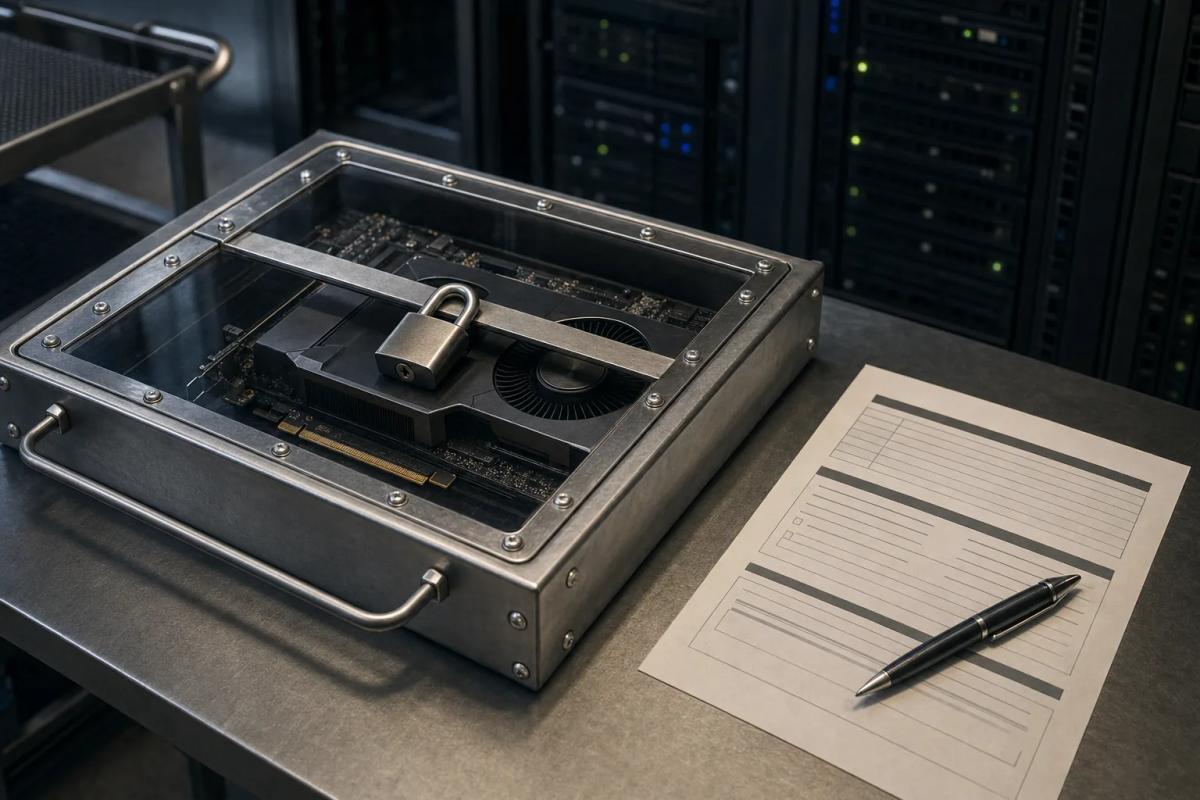
Private Inference is OpenAI's confidential-computing tier: your prompt and the model's reply are meant to sit inside hardware-isolated memory while the model runs, so OpenAI's own operators cannot read them mid-processing. Confidential computing is the practice of running a workload inside a trusted execution environment (TEE), a CPU or GPU enclave whose memory is encrypted and whose software can prove its identity to a remote party through a signed measurement called an attestation.
It sits inside a package OpenAI calls Private Intelligence. The other half is Zero Data Retention with Private Safety Processing. The interest form lets you register for either or both, and describes Private Safety Processing as enabling "automated safety reviews without giving OpenAI personnel access to the underlying content."
The two solve different problems. Channel Insider puts it cleanly: ZDR stops OpenAI from keeping prompts and responses after processing, while Private Inference protects them during processing. ZDR is a retention promise enforced by policy. Private Inference is an access control enforced, in principle, by hardware.
What OpenAI Has Not Said Yet
What is missing covers the questions your security review will ask first. Channel Insider reports that OpenAI "has not disclosed supported models, pricing or a launch timeline." Banking News AI adds that no customer names were given, and notes that "a pilot gives no track record yet."
The status label is not even consistent. OpenAI's business page says "Alpha" in one place and shows "API Preview" in a diagram; the interest form says "in preview." When VentureBeat covered the DevDay unveiling on September 29, Private Inference was described as "coming this fall," and the article said OpenAI "has so far disclosed comparatively little" about which models and endpoints are covered, whether ChatGPT Enterprise is included, which TEE hardware runs it and what customers can attest.
None of the pages we read names the GPU or CPU enclave technology, the attestation service, the published measurements or a third-party audit of the system. OpenAI's page points to SOC 2 Type 2 and ISO certifications, but those cover the company's controls in general. They do not tell you that a specific inference node runs the code OpenAI says it runs.
OpenAI is "securing additional confidential computing capacity to support a much larger rollout," Channel Insider reports, citing the OpenAI employee Altman pointed interested companies to. No date came with that.
How OpenAI's Approach Compares With Microsoft, Apple and Google
The industry has done this before, and the earlier attempts set a bar for disclosure that OpenAI has not met yet. Three prior designs matter for your evaluation.
Microsoft, 2024. Azure put confidential inferencing for Azure OpenAI Whisper into preview on September 24, 2024. The post spells out the stack: confidential VMs on AMD SEV-SNP CPUs paired with NVIDIA H100 GPUs in confidential-computing mode, prompts encrypted through an Oblivious HTTP proxy, and gateways obtaining decryption keys by presenting attestation evidence from Microsoft Azure Attestation. Microsoft claimed data in the TEE is protected from "privileged Microsoft code such as our virtualization host operating system and Hyper-V hypervisor." It launched on one speech model, with a stated latency cost.
Apple, 2024. Apple's Private Cloud Compute design, published June 10, 2024, set the transparency standard. Apple committed to publish software images of every production build for security research, to record every code measurement in an append-only transparency log, and to have devices send data only to nodes that attest to running publicly listed software. That is the property you want: an outsider can check that the code is what the vendor says it is.
Google, 2025. Google hired NCC Group to review its Private AI Compute system. NCC's public report page, dated November 11, 2025, describes an architecture review in April and May 2025 and component reviews from June to September, covering attestation and encryption between front-end services and model serving, by ten consultants over 100 person-days.
Set against those, OpenAI has published a sentence. That can change quickly, and an alpha is the stage where vendors usually hold back documentation. Steel-manning OpenAI: Microsoft's first confidential offering also shipped on a single model, and nobody expected a whitepaper on day one. But an enterprise buyer should not treat "confidential computing" as a property until the vendor publishes how you verify it.
Why a TEE Alone Will Not Settle Your Risk Review
Hardware isolation narrows who can read a prompt during inference; it does nothing for what happens before and after. This site covered the cautionary case on November 11: NEAR AI said an SGLang remote-code-execution flaw may have exposed confidential requests, even though the requests ran inside TEEs. The enclave protected memory; it did not protect against a bug in the inference server running inside it.
Agents make the boundary harder to draw. In The Register's August coverage of OpenAI's zero-retention pledge, Johns Hopkins computer science professor Matthew Green is quoted saying "private inference isn't private enough," arguing that agents with tool access leave gaps it does not cover. If your agent sends retrieved records to a search tool, a code sandbox or a third-party MCP server, the TEE protects only one hop.
Then there is safety review. A vendor that cannot read your prompts still has to detect abuse. OpenAI's answer is Private Safety Processing, and VentureBeat's reading of its documentation says flagged content is encrypted into customer-controlled storage (S3, Azure Blob or Google Cloud Storage) and reviewed in what OpenAI calls a "hardware-attested safety runtime." The same documentation gives those records a 30-day time-to-live in your bucket, which means you must keep the storage, permissions and key authorization in place for that window. Reports differ on exactly how flagged content is handled under Private Inference specifically, so treat that interaction as unconfirmed until OpenAI documents it.
Where This Leaves Your Current Options
For production in the next two quarters, the options you already have are better documented than OpenAI's alpha. Our buyer's guide to confidential GPU inference on Azure, Google and AWS covers the hardware routes where you control the attestation. Our comparison of zero data retention across OpenAI, Anthropic, Azure, Bedrock and Vertex lists the exclusions in each vendor's ZDR terms.
On the Anthropic side, Enterprise Frontier Safeguards moves Claude Fable prompts and replies to your own storage, also in beta, and solves the retention problem a different way. Our August piece on why Fable 5 needed retention on and how OpenAI's Private Safety Processing answered it explains why both vendors ended up building safety review around customer-held data.
Private Inference may end up the strongest of these for OpenAI-model workloads, because it targets the in-use window that ZDR does not touch. OpenAI has not yet published anything that lets you test that.
What Regulated Buyers Should Do About Private Inference
This Week:
- Fill in the Private Intelligence interest form if you have a workload that is blocked today only by in-processing access. Pick "Both" if you also want ZDR with Private Safety Processing, so you hear about either.
- Write down the one workload you would move if Private Inference were proven, with its data class and the control your CISO says is missing. That turns a vague interest into a test case for the alpha.
This Month:
- Send OpenAI five questions in writing before you join the alpha. Which TEE hardware runs it (CPU and GPU)? Who operates the attestation service, and can you verify attestation reports yourself? Are the software measurements published or logged anywhere you can check? Has a third party reviewed it, and will the report be public, as NCC's was for Google? How does Private Safety Processing handle flagged content under Private Inference, and where does that content live?
- Ask whether Private Inference covers the models and endpoints you actually use, including agent and tool-calling paths, and whether ChatGPT Enterprise is in scope.
Before Your 2027 Renewal:
- Keep your current production controls (ZDR, a confidential GPU deployment you attest yourself, or customer-storage safety review) in the contract and budget. Do not drop one on the strength of an alpha.
- If OpenAI publishes measurements and an audit before your renewal, re-score Private Inference against Azure's attested Whisper design and Apple's transparency log. If it has not, renew on what you have.
The Bottom Line
Confidential inference is going the way cloud key management went, where a vendor's promise only became a control buyers relied on once customers could check it. Microsoft and Apple reached the second stage in 2024 by publishing their attestation chains, and Google added an outside review in 2025. OpenAI announced a test this week with a sentence of description and a sign-up form.
Ask for the attestation design before you ask for a seat.
Continue Reading
- Azure, Google and AWS Compared for Confidential GPU Inference
- EFS Moves Claude Fable Prompts and Replies to Your Storage
- NEAR AI Says SGLang RCE May Have Exposed Confidential Requests
- Use Bedrock's None Mode to Enforce Zero Data Retention
- Fable 5 Needs Retention On. ZDR Was Never Zero.
- Rotate OpenRouter Secrets After Dragos Finds Prompt Leaks
- Test Your PyTorch Workloads on Ironwood Before Choosing TPU 8tx