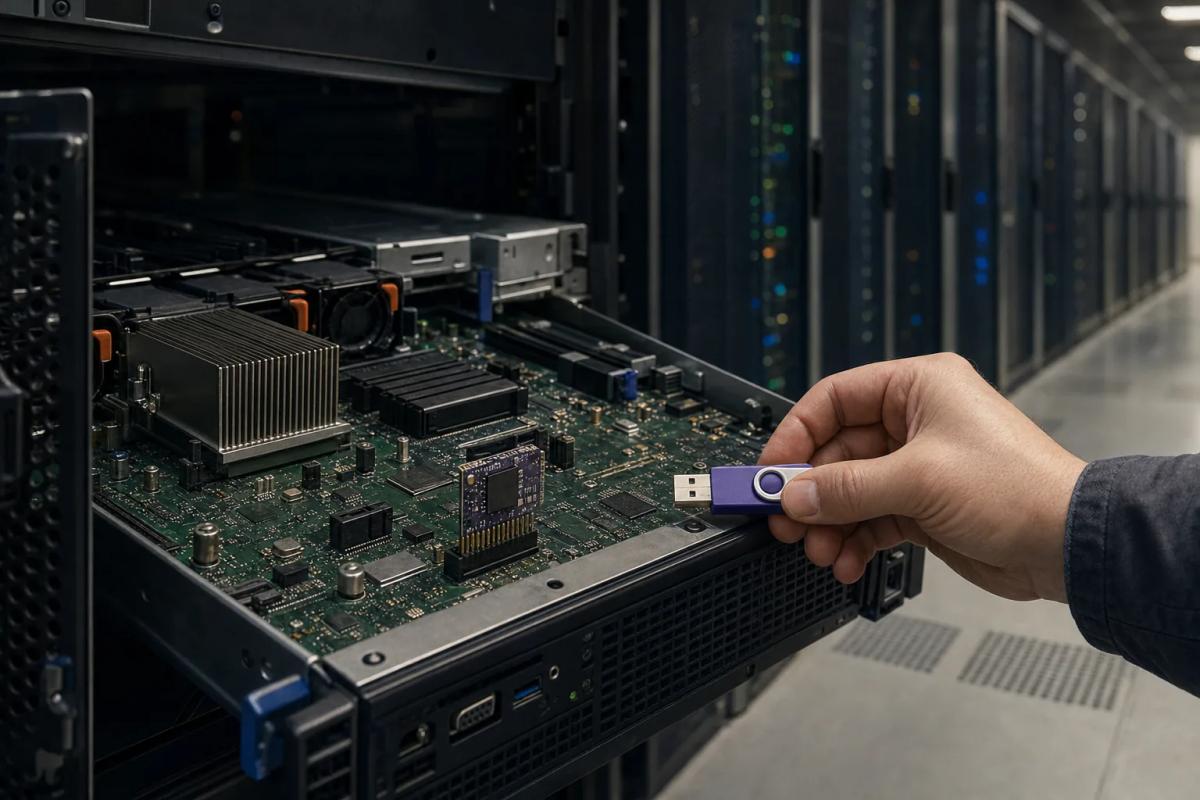
Shirudo, the open-source runtime OpenAI and Cisco released on November 23, can block an exploit on a running Linux host while you wait for the patch, but you cannot run it in production this quarter. The project's own FAQ says it is pre-release with "no stable releases or supported release branches." Every protected host needs a bpf-next kernel carrying extra patches and a TPM 2.0, and on that host Cilium, Tetragon and Falco's eBPF driver cannot load their programs. Put Shirudo in a lab and in your patch-window planning now. Keep it off your fleet until a kernel you already support can run it.
The pitch is aimed at a real gap. AI tools now find and weaponize bugs faster than change control can ship fixes, and we covered both halves of that this month: attackers turning patch diffs into working exploits, and emergency PHP patching that took NSA systems offline. Cisco calls Shirudo an industry first: a vendor-backed attempt to cover the days in between with code an agent writes.
What Shirudo Does on a Running Host
Shirudo loads small, signed programs into a running Linux system to block one exploit path without a restart. The project calls these programs shields or "upatches." OpenAI's announcement describes the loop: a shield is generated (for example by Codex), tested, approved by an operator, and deployed while the service keeps running. OpenAI says shields "are cryptographically signed and verified before loading," and that a TPM keeps a record of protections being loaded or removed. Greg Brockman framed the problem in one line: "finding a bug today doesn't mean you can patch every system tomorrow."
Cisco's launch post, written by Jeetu Patel, lays out the intended workflow in more detail. Agents scan code and vendor disclosures, trace a vulnerability to the affected assets, write a targeted shield and check that it stops the exploit while the service still runs. The shield "graduates to active blocking when the evidence says it's safe" and "retires when the real patch lands."
The mechanics come from Isovalent, the Cilium company Cisco owns. Isovalent's post says Shirudo "has its roots in Tetragon, rewritten for the agentic era." Tetragon is Isovalent's eBPF tool for security observability and in-kernel enforcement, driven by human-written tracing policies. Shirudo drops the policy language and expects an agent to write the code. It ships as a one-shot CLI with no resident daemon; shields travel as signed .bee packages through an OCI registry, and the FAQ says signing uses ML-DSA-87 only. The code on GitHub is BSD-2-Clause, with the BPF programs dual-licensed BSD/GPL.
eBPF, for readers who have not met it, is a Linux facility that lets small verified programs watch or block kernel operations without loading a kernel module or rebooting.
The Java4Shell Demo Ran as JVM Bytecode
The headline demo ran as Java bytecode inside the JVM, outside eBPF entirely. OpenAI says a Codex-generated shield added an input check to Java's Base64 decoder, attached it to a running Elasticsearch process and blocked a Java4Shell exploit with no restart. Isovalent's write-up gives the details: the test ran on Elasticsearch 9.5.5, and the Java mitigation is bytecode that "injects into any Java application," logged as a guard on java.util.Base64$Decoder.decode0.
That matters for scoping a pilot. The GitHub repository lists two kinds of upatch: BPF upatches at kernel hooks and Java upatches for application code. It names no other language runtime. If your exposed services are Python, Node or Go, the application-layer half of the demo does not apply to them yet, and you are left with what a kernel hook can see.
Cisco also says agent-written code "has already" detected and blocked exploits for a PHP flaw that "reportedly affected an estimated 70% of global websites," alongside Java4Shell. The Hacker News describes the Java4Shell result as a controlled experiment. Neither company has published results from a customer fleet.
What a Host Needs Before Shirudo Will Run
A protected host needs a custom kernel, a TPM 2.0 and a modern systemd boot chain, and there is no fallback for any of them. The system requirements page puts it bluntly: "shirudo has no compatibility mode and no fallback for an older kernel," and a missing requirement "fails the build, shirudo init or the load."
- Kernel. A bpf-next kernel with the signed-loader ABI. The docs give no minimum release number; the test kernel reports
7.4.0-rc1-bpf-next+. On top of that sit required patches, including atpm_commandLSM hook, anmm_read_accessLSM hook, BPF LSM xattr reads and, on x86-64, an ftrace commit. The docs name no distribution kernel that carries them, so assume you would build and maintain your own. - TPM. "There is no mode without a TPM." The host needs TPM 2.0 at
/dev/tpmrm0with a SHA-256 PCR bank and a free NV index. - Boot chain. systemd 256 or newer, a dracut initrd, a unified kernel image booted through systemd-stub, and two
keyring_unsealedboot parameters. - Operator host. OpenSSL 3.5 or newer and clang/LLVM 23 with the BPF target. The docs note that "Debian unstable, Fedora 45 and apt.llvm.org ship clang 23."
- Architectures. CI tests x86-64 and the test VM also runs on arm64; the FAQ says "no riscv64 target has booted yet."
The repository's README sums it up: "Production targets require a Linux kernel with the signed-loader ABI and shirudo's kernel patches, plus a TPM 2.0." The quickstart VM gets around the hardware by using a software TPM, which is fine for a lab and tells you nothing about your fleet.
What Stops Working on a Host Where Shirudo Enforces
Anything else on the host that loads its own BPF stops working. Once Shirudo initializes, only signed loaders may load BPF programs, and the interoperability page lists the casualties:
- Cilium: "The agent cannot create its maps or load its programs, so the datapath does not come up." A Kubernetes node using Cilium as its CNI cannot be an enforcing target.
- Tetragon and Falco's eBPF driver: "Cannot load their programs." Falco's kernel-module driver is not gated.
- bcc and bpftrace: fail at their first map creation or program load, so incident responders lose their usual tracing tools on that host.
- systemd: BPF-based unit settings such as
IPAddressAllow,IPAddressDenyandRestrictFileSystemsare not applied. That one deserves attention because the unit settings fail with only a log line from systemd. - Crash handling and containers: hibernation is refused, kexec and kdump fail, and container cgroup device programs fail to load.
The FAQ's answer on Cilium, Falco and bpftrace is "Not as they are." Their logic could be rewritten as signed upatches, which means re-platforming your network and runtime security stack around Shirudo before you can protect the same host with it. The docs' own advice is to "plan a target as a host where only signed upatches run BPF."
The cost side is small. The overhead page, measured on one 4-vCPU test VM, reports background timers at "0.71 % of one vCPU," 3.2 microseconds of BPF time added to a fork and exec, and about half a second to load or unload a small upatch, most of it the TPM register extension. The page warns that "Other CPUs, kernels, disks and TPMs give other numbers," and that Shirudo limits neither how many programs a upatch brings nor how often they run. A badly written agent shield could cost far more than the baseline.
How Shirudo Changes Your Patch Window
Shirudo adds a third option between "patch now and risk the outage" and "wait for the tested patch and stay exposed." The FAQ is clear that it does not replace patching: "Does shirudo replace kernel updates? No." A upatch covers the time until the machine runs a fixed kernel.
The closest precedent is kernel livepatching. The kernel's livepatch documentation describes redirecting function calls to fix critical functions without a reboot, using a consistency model that merged two vendor projects, kGraft and kpatch. Livepatch swaps in fixed code that a distribution vendor wrote and tested. Shirudo blocks the exploit path with code your operator's agent wrote this week. The two can coexist: the interoperability page says to sign every module a target loads, "livepatch modules included," with a key the kernel trusts. It also warns that a signed module "runs as kernel code outside every shirudo check."
That second difference is the governance question. Your change board has rules for vendor patches. It probably has none for kernel-level blocking code generated by a model, reviewed by one operator and signed with a key that sits on an operator host. Cisco's answer is evidence gates: a shield blocks only once tests show it is safe. You still have to decide who reads that evidence, how long a shield may stay live and who owns its removal.
Read the security claim carefully too. Cisco's press release says the host can verify a shield "even if an attacker has gained administrator access." The FAQ is narrower: root without the signing key cannot load unsigned BPF, but root with a way into the kernel itself "goes around every check made in that kernel." The signing key becomes one of the most valuable secrets you hold, and it belongs in the same tier as your code-signing keys.
The strongest case for moving early is the speed gap. When Claude produced a root exploit for a Linux TCP bug before Ubuntu shipped a fix, the defender's options were to wait or mitigate by hand. A tested, signed, retirable shield is a better answer than a hand-edited sysctl at 2 a.m. The prerequisites mean that answer arrives for most fleets only after a distribution kernel supports it.
The Bigger Picture
Agents that write defensive code are following agents that write offensive code by a few months. OpenAI's own testing found GPT-6 Cyber produced no wins on fully hardened targets, which is an argument for hardening, and Shirudo is a hardening tool that happens to be agent-written. What decides its value is plumbing: signed loaders landing upstream, distribution kernels carrying them and TPMs that are actually reachable on your VMs. Cisco calls Shirudo "the first of many projects." Treat it as an early look at how your patch process may run in 2027, and budget the platform work that would let you use it.
What to Do Before Your Next Patch Window
This Week:
- Have one platform engineer boot the project's quickstart VM and load the sample upatch. Record what it took, because that is the cheapest read on operational effort you will get.
- List which host classes already run their own BPF: Cilium nodes, Falco or Tetragon sensors, systemd units using
IPAddressAllow. Mark them as out of scope for any Shirudo pilot. - Put the December 15 deep-dive webinar that OpenAI and Cisco announced on your security architect's calendar, with a written question list on kernel support and distribution plans.
This Month:
- Check whether your standard VM images and bare-metal builds expose TPM 2.0 at
/dev/tpmrm0. That one fact decides whether a pilot is possible on your own infrastructure. - Draft the change-control rule for agent-generated mitigations: who approves a shield, what test evidence they read, the maximum time a shield stays live and who retires it when the patch ships.
- Pull your actual exposure window from the last quarter: days from a CISA KEV listing to a fully patched fleet, by host class. That number tells you where a shield would have helped.
Before 2027 Planning:
- Ask your Linux distribution vendor, in writing, whether it plans to ship the signed-loader ABI and the LSM hooks Shirudo needs, and on what release.
- Decide where a Shirudo signing key would live and who could use it, before anyone generates one.
Get the VM booted before you put Shirudo on a roadmap.
Continue Reading
- DNI Says PHP Patch Changes Left NSA Systems Offline
- Google Finds Attackers Turning Patch Diffs Into Working Exploits
- Linux CVE-2026-98432 Has No Ubuntu Fix After Claude's Root Exploit
- Codex Runs Stdio MCP Servers Outside Its Sandbox by Default
- GPT-6 Cyber Tests Found No Wins on Fully Hardened Targets
- Cairn's AI Agents Found and Exploited a MONAI Label Zero-Day