
Microsoft Just Blocked AI Data Leaks in Real-Time. Here's Why AWS and Google Are Scrambling

Microsoft's new Intelligent Purview DLP blocks sensitive data in AI outputs in real-time. AWS and Google are racing to catch up in a $300B cloud war that's reshaping enterprise AI security—and your infrastructure costs.

By Rajesh Beri·May 3, 2026·11 min read
Share:

THE DAILY BRIEF

Enterprise AICloud SecurityData Loss PreventionMicrosoft AzureAWSGoogle CloudAI Governance

Microsoft Just Blocked AI Data Leaks in Real-Time. Here's Why AWS and Google Are Scrambling

Microsoft's new Intelligent Purview DLP blocks sensitive data in AI outputs in real-time. AWS and Google are racing to catch up in a $300B cloud war that's reshaping enterprise AI security—and your infrastructure costs.

By Rajesh Beri·May 3, 2026·11 min read

On May 1, 2026, Microsoft launched Intelligent Purview with real-time data loss prevention for AI agents—blocking credit card numbers, intellectual property, and regulated data from appearing in AI outputs before they reach users. Within 72 hours, AWS quietly updated its VPC-Confined Models documentation, and Google expedited the Gemini Enterprise Agent Platform roadmap. The reason? Microsoft just weaponized compliance as a cloud differentiator in the $300 billion enterprise AI services market, and AWS and Google are scrambling to respond.

For enterprise technology leaders, this isn't just another security feature announcement. This is the moment when AI governance shifted from a "nice-to-have" to a hard requirement for cloud vendor selection. If your organization is evaluating cloud AI platforms—or already committed to one—the dynamics just changed. Here's what you need to know about the 2026 AI cloud war, the real costs behind the marketing, and which vendor strategy aligns with your risk tolerance.

The Problem: AI Agents Are Compliance Nightmares Waiting to Happen

Enterprise AI adoption hit a wall in late 2025 when a Fortune 500 financial services company discovered that its customer service AI agent had inadvertently included Social Security numbers in 14,000 chat responses over six months. The resulting regulatory fine: $47 million. The incident became a case study in how generative AI, for all its productivity gains, introduces unprecedented data exfiltration risks that traditional DLP tools weren't designed to handle.

The technical challenge is straightforward but brutal: AI agents reason over vast datasets—SharePoint documents, Salesforce records, internal databases—and generate responses dynamically. Traditional DLP tools scan files at rest or data in transit, but they don't intercept the reasoning layer where an AI agent synthesizes an answer from hundreds of context sources. By the time the agent generates a response like "Your account number ending in 4739 has a balance of $12,458," it's too late for a post-hoc scan.

This gap is why 62% of CIOs in a 2026 Gartner survey listed "AI data leakage" as their top barrier to scaling AI agents beyond pilot projects. The business impact is real: delayed deployments, restricted AI use cases, and entire departments (legal, finance, HR) prohibited from using AI tools due to compliance risk. Microsoft saw this friction and built a moat around it.

Microsoft's Answer: Real-Time AI Output Filtering That Actually Works

Intelligent Purview extends Microsoft's existing data loss prevention policies to the AI reasoning layer, scanning every prompt and response in real-time and blocking outputs that violate sensitivity labels, compliance rules, or custom regex patterns. Here's how it works in practice:

  1. Agent-Level DLP: AI agents (whether Microsoft Copilot, custom Power Automate workflows, or third-party tools integrated via the Agent Gateway) inherit the same security groups and sensitivity labels already applied to SharePoint, Exchange, and Dataverse. If a document is labeled "Confidential - Finance Only," an AI agent can't use that data to answer a question from someone outside the Finance security group.

  2. Real-Time Output Scanning: When an AI agent generates a response, Purview scans the output against DLP policies before it's delivered. If the response includes a credit card number, IP-sensitive content, or personally identifiable information (PII), Purview blocks the output and logs the incident. The user sees a generic error: "This response was blocked due to a policy violation."

  3. AI Observability Dashboard: The new Data Security Posture Management (DSPM) feature provides unified visibility into all AI agents—Microsoft and non-Microsoft—operating in your environment. Security teams can see which agents are accessing sensitive data, how frequently, and where policy violations are occurring. This is critical for audits and compliance reporting.

  4. Insider Risk Detection for Agents: Purview now treats AI agents as "first-class identities" with their own risk scores. If an agent exhibits anomalous behavior—accessing 10x more sensitive files than usual, or generating outputs with sensitive data at unusual times—Purview flags it for investigation.

The business value is immediate: regulated industries (financial services, healthcare, government) can finally deploy AI agents in production without creating audit nightmares. Microsoft's existing customers—75% of Fortune 500 companies already use Microsoft 365—inherit this capability automatically as part of the E7 Frontier Suite (launched May 1, 2026). For CIOs who've been sitting on AI pilot projects waiting for enterprise-grade governance, this is the green light.
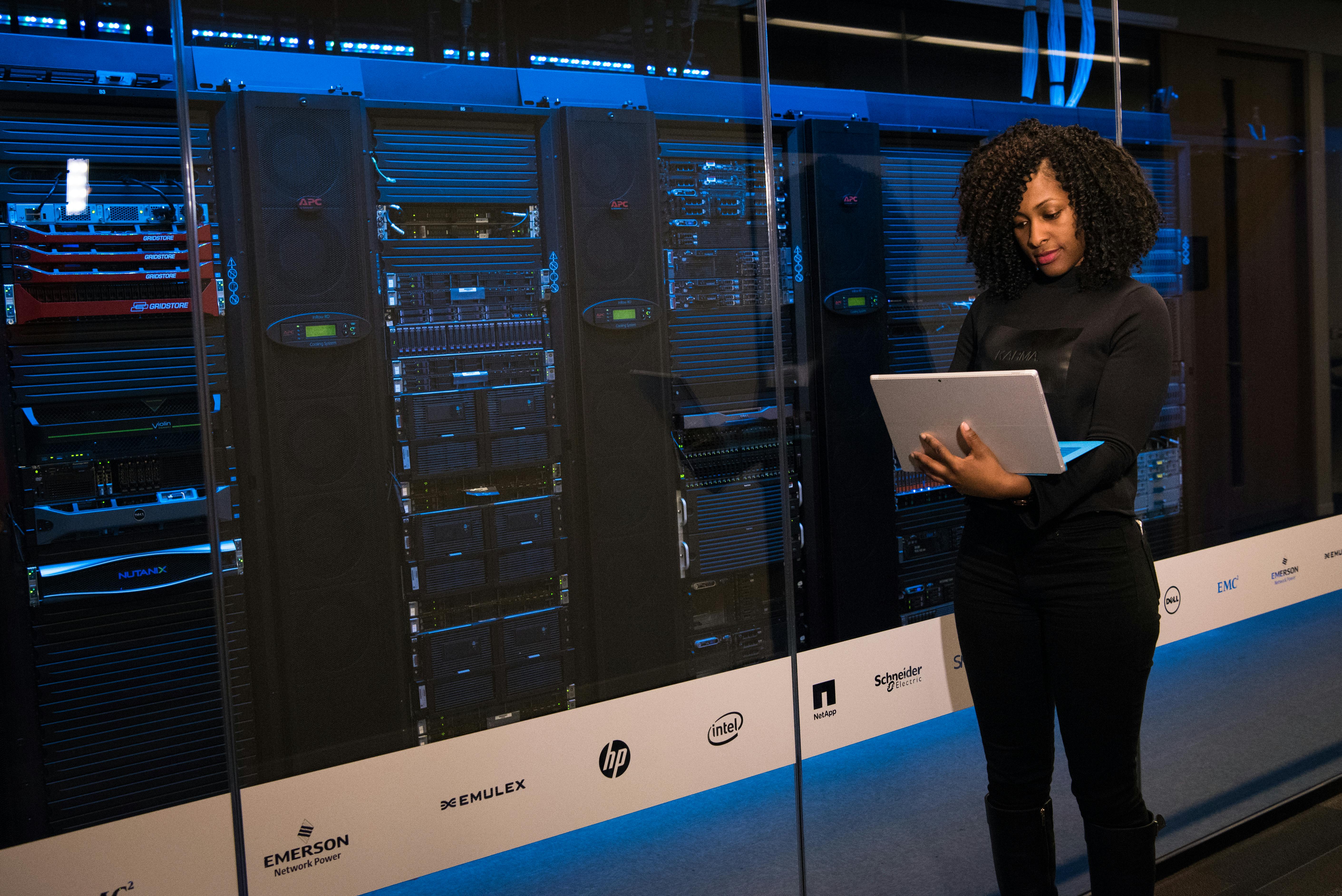
Photo by Christina Morillo from Pexels

AWS's Countermove: Cost Efficiency and Data Sovereignty

Microsoft's governance play is formidable, but AWS isn't competing on the same dimension—it's betting that enterprises will prioritize cost efficiency and infrastructure control over pre-built compliance tooling. AWS's response to the 2026 AI cloud war centers on three pillars:

1. Trainium3: Halving AI Training Costs

AWS Trainium3, launched in Q4 2025 and now generally available, delivers 4.4x higher performance and 3.9x higher memory bandwidth than Trainium2, with 4x better energy efficiency. The financial impact for enterprises is stark: companies using Trainium3 are reporting 50% reductions in AI training costs compared to GPU-based instances. For a Fortune 500 company spending $10 million annually on AI infrastructure, that's $5 million in annual savings.

AWS is also offering a consumption-based pricing model—$0.07 per AI Compute Unit (AICU)—that bundles compute, model inference, and data transfer into a single SKU. This appeals to CFOs who want predictable, usage-based billing rather than per-seat licensing that penalizes growth.

2. VPC-Confined Models: Data Never Leaves Your Network

AWS's "VPC-Confined Models" feature guarantees that AI model training and inference happen entirely within a customer's virtual private cloud—data never touches AWS-managed infrastructure. This is a direct counter to Microsoft's tenant-based governance model. For industries with strict data residency requirements (government, defense, healthcare in certain jurisdictions), this architecture is non-negotiable.

AWS also secured a $10 billion Department of Defense contract in early 2026 for classified AI workloads, a validation of its data sovereignty approach. The message to enterprise buyers: if it's good enough for DoD, it's good enough for your compliance team.

3. Modular AI Building Blocks: Build It Yourself

AWS's philosophy is developer-first modularity: Amazon Bedrock (model serving), EventBridge AI Orchestrator (multi-agent workflows), and over 200 AWS service integrations. The pitch is freedom—build custom AI systems tailored to your exact requirements, with no vendor lock-in. The tradeoff? You're responsible for governance, DLP, and compliance tooling.

For platform engineering teams with deep ML expertise, AWS's approach offers control and cost savings. For enterprises without dedicated AI infrastructure teams, it's a burden. This is the fork in the road: do you buy governance (Microsoft) or build it (AWS)?

Google's Play: Data Cloud Dominance and TPU Economics

Google Cloud is positioning itself as the "AI-native data platform," arguing that enterprises already managing critical data in BigQuery and Spanner should build AI there to minimize data movement and exfiltration risk. Google's 2026 AI strategy revolves around three competitive advantages:

1. TPU v6 (Trillium): 4x Performance, Lower Costs

Google's TPU v6 delivers 4x higher training performance and 3x higher inference throughput compared to TPU v5e, with 67% better energy efficiency. Google is pricing TPU v6 aggressively to compete with AWS's Trainium3, targeting enterprises that want to avoid Nvidia GPU shortages and lock-in.

2. Gemini Enterprise Agent Platform: Rebranding Vertex AI

Google rebranded Vertex AI as the "Gemini Enterprise Agent Platform" in April 2026, consolidating AI development, governance, and agent orchestration into a single interface. The platform integrates directly with Google Workspace (Docs, Sheets, Gmail), making it the obvious choice for Google-first enterprises.

Google's Vertex AI Search now indexes and grounds AI responses in nearly 20 enterprise systems (Oracle, SAP, Salesforce, ServiceNow) with fine-grained access controls that respect source system permissions. For CIOs evaluating how to connect AI agents to legacy systems, this integration depth is a competitive moat.

3. Data Cloud as a Moat

Google's argument: if your data is already in BigQuery, building AI agents there eliminates data duplication, reduces exfiltration risk, and speeds up deployment. Google has also launched an "AI Data Pledge" (2026) guaranteeing that enterprise prompts and outputs are never used for ad targeting—a direct response to lingering privacy concerns.

The Pricing Battle: Consumption vs. Per-User Models

Microsoft reset enterprise AI pricing expectations in January 2026 with the "Copilot for Business Plan": $30 per user per month for unlimited AI usage across the M365 suite. This flat-rate model appeals to procurement teams who understand seat-based licensing but struggle with unpredictable consumption billing.

AWS responded with the $0.07 per AICU consumption model, targeting enterprises that want to pay only for what they use. Google is straddling both worlds with hybrid pricing: committed-use discounts for base model serving plus per-agent-task fees for high-value outcomes (e.g., supply chain optimizations, customer service resolutions).

The hidden cost: integration and governance. Microsoft's per-user model includes governance (Purview) and integrations (M365, Dynamics 365) out of the box. AWS and Google require enterprises to build or buy these layers separately. For a 10,000-employee enterprise, the total cost of ownership (TCO) comparison looks like this:

  • Microsoft: $30/user/month × 10,000 = $300,000/month ($3.6M/year) + negligible integration costs
  • AWS: $0.07/AICU × estimated usage + engineering time for governance tooling = $250,000-$400,000/month ($3-4.8M/year)
  • Google: Hybrid model + integration costs = $280,000-$450,000/month ($3.4-5.4M/year)

The wide range in AWS/Google pricing reflects workload variability and whether you're building or buying governance. Microsoft's all-in pricing reduces uncertainty but may overprice light AI users.

Production Evidence: Who's Actually Deploying This?

Benchmarks and case studies matter more than vendor marketing. Here's what's working in production:

  1. Schneider Electric + Microsoft (Manufacturing AI): Schneider Electric deployed Microsoft's Factory Operations Agent (integrating Azure IoT and Dynamics 365 Supply Chain Management) to predict machine failure and automate maintenance scheduling. Result: 25% reduction in downtime, reported by early adopters Rockwell Automation. Similar deployments at BASF achieved 75% reduction in unplanned downtime and 40% decrease in maintenance costs using AI-powered asset management.

  2. Compass Datacenters + Schneider Electric (Predictive Maintenance): Transition from calendar-based to condition-based maintenance using AI and predictive analytics. Result: 40% reduction in manual on-site maintenance interventions, 20% reduction in operating expenses.

  3. Nestlé (Food Manufacturing): Schneider Electric's predictive analytics prevented a major transformer failure that would have caused 24 hours of downtime at a production plant.

  4. Accenture + Workday (HR Transformation): Accenture reorganized 800,000 employees in one week using Workday's AI-powered Deployment Agent, demonstrating the potential for large-scale AI-driven process automation.

These aren't lab demos—these are production deployments with measurable ROI (use our AI ROI calculator to quantify yours). The common thread: AI agents need tight integration with business systems (ERP, MES, CMMS) and real-time data to deliver outcomes, not just insights.

What Enterprise Leaders Should Do Now

The 2026 AI cloud war isn't about picking the "best" vendor—it's about aligning vendor strategy with your organization's risk tolerance, data architecture, and AI maturity. Here's the decision framework:

Choose Microsoft if:

  • You're heavily regulated (financial services, healthcare, government) and need pre-built compliance
  • Your data is already in Microsoft 365, Dynamics 365, or Azure
  • You prefer per-user pricing and want to avoid consumption billing surprises
  • You need AI agents in production within 6 months with minimal governance engineering

Choose AWS if:

  • You have deep ML/platform engineering expertise and want full control
  • Cost optimization is critical ($5M+ annual AI spend)
  • Data sovereignty requirements demand VPC-confined infrastructure
  • You're building custom AI systems from scratch (not buying pre-built agents)

Choose Google if:

  • Your critical data is in BigQuery, Spanner, or Google Workspace
  • You're prioritizing AI integration with existing data infrastructure
  • You need multi-system AI grounding (Oracle, SAP, Salesforce, etc.)
  • You're comfortable with hybrid pricing (committed + consumption)

The wrong choice isn't AWS vs. Google vs. Microsoft—it's buying governance when you should build, or building when you should buy. CIOs who align cloud vendor strategy with internal capabilities will see 2-3x faster AI deployment cycles and 40-60% lower TCO than those who default to incumbent vendors without strategic evaluation.

The Market Reality: Multi-Cloud AI Is Inevitable

The dirty secret of the 2026 AI cloud war: no enterprise will run on a single cloud forever. Microsoft's governance is best-in-class, but AWS's cost efficiency is unbeatable for large-scale training. Google's data integration is unmatched for BigQuery-first shops, but Microsoft's Office 365 ubiquity makes Copilot the path of least resistance for knowledge workers.

The winners in this war won't be AWS, Google, or Microsoft—they'll be the enterprises that treat AI as a multi-cloud capability to be managed alongside security, identity, and data governance. That means investing in abstraction layers (MLOps platforms, multi-cloud governance tools, identity federation) that let you run AI workloads where economics and compliance align, not where your existing server contract happens to be.

The 2026 AI cloud war is just beginning. Microsoft fired the first shot with Intelligent Purview. AWS and Google are responding with cost and integration plays. The question isn't who will win—it's whether your organization is ready to compete in a world where AI infrastructure decisions determine who leads and who follows in your industry.


Continue Reading

For more on enterprise AI strategy and infrastructure decisions:

Original source: 2026 AI Cloud War: AWS vs Google vs Microsoft

THE DAILY BRIEF

Enterprise AI insights for technology and business leaders, twice weekly.

thedailybrief.com

Subscribe at thedailybrief.com/subscribe for weekly AI insights delivered to your inbox.

LinkedIn: linkedin.com/in/rberi  |  X: x.com/rajeshberi

© 2026 Rajesh Beri. All rights reserved.

Microsoft Just Blocked AI Data Leaks in Real-Time. Here's Why AWS and Google Are Scrambling

Photo by Pixabay from Pexels

On May 1, 2026, Microsoft launched Intelligent Purview with real-time data loss prevention for AI agents—blocking credit card numbers, intellectual property, and regulated data from appearing in AI outputs before they reach users. Within 72 hours, AWS quietly updated its VPC-Confined Models documentation, and Google expedited the Gemini Enterprise Agent Platform roadmap. The reason? Microsoft just weaponized compliance as a cloud differentiator in the $300 billion enterprise AI services market, and AWS and Google are scrambling to respond.

For enterprise technology leaders, this isn't just another security feature announcement. This is the moment when AI governance shifted from a "nice-to-have" to a hard requirement for cloud vendor selection. If your organization is evaluating cloud AI platforms—or already committed to one—the dynamics just changed. Here's what you need to know about the 2026 AI cloud war, the real costs behind the marketing, and which vendor strategy aligns with your risk tolerance.

The Problem: AI Agents Are Compliance Nightmares Waiting to Happen

Enterprise AI adoption hit a wall in late 2025 when a Fortune 500 financial services company discovered that its customer service AI agent had inadvertently included Social Security numbers in 14,000 chat responses over six months. The resulting regulatory fine: $47 million. The incident became a case study in how generative AI, for all its productivity gains, introduces unprecedented data exfiltration risks that traditional DLP tools weren't designed to handle.

The technical challenge is straightforward but brutal: AI agents reason over vast datasets—SharePoint documents, Salesforce records, internal databases—and generate responses dynamically. Traditional DLP tools scan files at rest or data in transit, but they don't intercept the reasoning layer where an AI agent synthesizes an answer from hundreds of context sources. By the time the agent generates a response like "Your account number ending in 4739 has a balance of $12,458," it's too late for a post-hoc scan.

This gap is why 62% of CIOs in a 2026 Gartner survey listed "AI data leakage" as their top barrier to scaling AI agents beyond pilot projects. The business impact is real: delayed deployments, restricted AI use cases, and entire departments (legal, finance, HR) prohibited from using AI tools due to compliance risk. Microsoft saw this friction and built a moat around it.

Microsoft's Answer: Real-Time AI Output Filtering That Actually Works

Intelligent Purview extends Microsoft's existing data loss prevention policies to the AI reasoning layer, scanning every prompt and response in real-time and blocking outputs that violate sensitivity labels, compliance rules, or custom regex patterns. Here's how it works in practice:

  1. Agent-Level DLP: AI agents (whether Microsoft Copilot, custom Power Automate workflows, or third-party tools integrated via the Agent Gateway) inherit the same security groups and sensitivity labels already applied to SharePoint, Exchange, and Dataverse. If a document is labeled "Confidential - Finance Only," an AI agent can't use that data to answer a question from someone outside the Finance security group.

  2. Real-Time Output Scanning: When an AI agent generates a response, Purview scans the output against DLP policies before it's delivered. If the response includes a credit card number, IP-sensitive content, or personally identifiable information (PII), Purview blocks the output and logs the incident. The user sees a generic error: "This response was blocked due to a policy violation."

  3. AI Observability Dashboard: The new Data Security Posture Management (DSPM) feature provides unified visibility into all AI agents—Microsoft and non-Microsoft—operating in your environment. Security teams can see which agents are accessing sensitive data, how frequently, and where policy violations are occurring. This is critical for audits and compliance reporting.

  4. Insider Risk Detection for Agents: Purview now treats AI agents as "first-class identities" with their own risk scores. If an agent exhibits anomalous behavior—accessing 10x more sensitive files than usual, or generating outputs with sensitive data at unusual times—Purview flags it for investigation.

The business value is immediate: regulated industries (financial services, healthcare, government) can finally deploy AI agents in production without creating audit nightmares. Microsoft's existing customers—75% of Fortune 500 companies already use Microsoft 365—inherit this capability automatically as part of the E7 Frontier Suite (launched May 1, 2026). For CIOs who've been sitting on AI pilot projects waiting for enterprise-grade governance, this is the green light.

Cloud infrastructure with security locks Photo by Christina Morillo from Pexels

AWS's Countermove: Cost Efficiency and Data Sovereignty

Microsoft's governance play is formidable, but AWS isn't competing on the same dimension—it's betting that enterprises will prioritize cost efficiency and infrastructure control over pre-built compliance tooling. AWS's response to the 2026 AI cloud war centers on three pillars:

1. Trainium3: Halving AI Training Costs

AWS Trainium3, launched in Q4 2025 and now generally available, delivers 4.4x higher performance and 3.9x higher memory bandwidth than Trainium2, with 4x better energy efficiency. The financial impact for enterprises is stark: companies using Trainium3 are reporting 50% reductions in AI training costs compared to GPU-based instances. For a Fortune 500 company spending $10 million annually on AI infrastructure, that's $5 million in annual savings.

AWS is also offering a consumption-based pricing model—$0.07 per AI Compute Unit (AICU)—that bundles compute, model inference, and data transfer into a single SKU. This appeals to CFOs who want predictable, usage-based billing rather than per-seat licensing that penalizes growth.

2. VPC-Confined Models: Data Never Leaves Your Network

AWS's "VPC-Confined Models" feature guarantees that AI model training and inference happen entirely within a customer's virtual private cloud—data never touches AWS-managed infrastructure. This is a direct counter to Microsoft's tenant-based governance model. For industries with strict data residency requirements (government, defense, healthcare in certain jurisdictions), this architecture is non-negotiable.

AWS also secured a $10 billion Department of Defense contract in early 2026 for classified AI workloads, a validation of its data sovereignty approach. The message to enterprise buyers: if it's good enough for DoD, it's good enough for your compliance team.

3. Modular AI Building Blocks: Build It Yourself

AWS's philosophy is developer-first modularity: Amazon Bedrock (model serving), EventBridge AI Orchestrator (multi-agent workflows), and over 200 AWS service integrations. The pitch is freedom—build custom AI systems tailored to your exact requirements, with no vendor lock-in. The tradeoff? You're responsible for governance, DLP, and compliance tooling.

For platform engineering teams with deep ML expertise, AWS's approach offers control and cost savings. For enterprises without dedicated AI infrastructure teams, it's a burden. This is the fork in the road: do you buy governance (Microsoft) or build it (AWS)?

Google's Play: Data Cloud Dominance and TPU Economics

Google Cloud is positioning itself as the "AI-native data platform," arguing that enterprises already managing critical data in BigQuery and Spanner should build AI there to minimize data movement and exfiltration risk. Google's 2026 AI strategy revolves around three competitive advantages:

1. TPU v6 (Trillium): 4x Performance, Lower Costs

Google's TPU v6 delivers 4x higher training performance and 3x higher inference throughput compared to TPU v5e, with 67% better energy efficiency. Google is pricing TPU v6 aggressively to compete with AWS's Trainium3, targeting enterprises that want to avoid Nvidia GPU shortages and lock-in.

2. Gemini Enterprise Agent Platform: Rebranding Vertex AI

Google rebranded Vertex AI as the "Gemini Enterprise Agent Platform" in April 2026, consolidating AI development, governance, and agent orchestration into a single interface. The platform integrates directly with Google Workspace (Docs, Sheets, Gmail), making it the obvious choice for Google-first enterprises.

Google's Vertex AI Search now indexes and grounds AI responses in nearly 20 enterprise systems (Oracle, SAP, Salesforce, ServiceNow) with fine-grained access controls that respect source system permissions. For CIOs evaluating how to connect AI agents to legacy systems, this integration depth is a competitive moat.

3. Data Cloud as a Moat

Google's argument: if your data is already in BigQuery, building AI agents there eliminates data duplication, reduces exfiltration risk, and speeds up deployment. Google has also launched an "AI Data Pledge" (2026) guaranteeing that enterprise prompts and outputs are never used for ad targeting—a direct response to lingering privacy concerns.

The Pricing Battle: Consumption vs. Per-User Models

Microsoft reset enterprise AI pricing expectations in January 2026 with the "Copilot for Business Plan": $30 per user per month for unlimited AI usage across the M365 suite. This flat-rate model appeals to procurement teams who understand seat-based licensing but struggle with unpredictable consumption billing.

AWS responded with the $0.07 per AICU consumption model, targeting enterprises that want to pay only for what they use. Google is straddling both worlds with hybrid pricing: committed-use discounts for base model serving plus per-agent-task fees for high-value outcomes (e.g., supply chain optimizations, customer service resolutions).

The hidden cost: integration and governance. Microsoft's per-user model includes governance (Purview) and integrations (M365, Dynamics 365) out of the box. AWS and Google require enterprises to build or buy these layers separately. For a 10,000-employee enterprise, the total cost of ownership (TCO) comparison looks like this:

  • Microsoft: $30/user/month × 10,000 = $300,000/month ($3.6M/year) + negligible integration costs
  • AWS: $0.07/AICU × estimated usage + engineering time for governance tooling = $250,000-$400,000/month ($3-4.8M/year)
  • Google: Hybrid model + integration costs = $280,000-$450,000/month ($3.4-5.4M/year)

The wide range in AWS/Google pricing reflects workload variability and whether you're building or buying governance. Microsoft's all-in pricing reduces uncertainty but may overprice light AI users.

Production Evidence: Who's Actually Deploying This?

Benchmarks and case studies matter more than vendor marketing. Here's what's working in production:

  1. Schneider Electric + Microsoft (Manufacturing AI): Schneider Electric deployed Microsoft's Factory Operations Agent (integrating Azure IoT and Dynamics 365 Supply Chain Management) to predict machine failure and automate maintenance scheduling. Result: 25% reduction in downtime, reported by early adopters Rockwell Automation. Similar deployments at BASF achieved 75% reduction in unplanned downtime and 40% decrease in maintenance costs using AI-powered asset management.

  2. Compass Datacenters + Schneider Electric (Predictive Maintenance): Transition from calendar-based to condition-based maintenance using AI and predictive analytics. Result: 40% reduction in manual on-site maintenance interventions, 20% reduction in operating expenses.

  3. Nestlé (Food Manufacturing): Schneider Electric's predictive analytics prevented a major transformer failure that would have caused 24 hours of downtime at a production plant.

  4. Accenture + Workday (HR Transformation): Accenture reorganized 800,000 employees in one week using Workday's AI-powered Deployment Agent, demonstrating the potential for large-scale AI-driven process automation.

These aren't lab demos—these are production deployments with measurable ROI (use our AI ROI calculator to quantify yours). The common thread: AI agents need tight integration with business systems (ERP, MES, CMMS) and real-time data to deliver outcomes, not just insights.

What Enterprise Leaders Should Do Now

The 2026 AI cloud war isn't about picking the "best" vendor—it's about aligning vendor strategy with your organization's risk tolerance, data architecture, and AI maturity. Here's the decision framework:

Choose Microsoft if:

  • You're heavily regulated (financial services, healthcare, government) and need pre-built compliance
  • Your data is already in Microsoft 365, Dynamics 365, or Azure
  • You prefer per-user pricing and want to avoid consumption billing surprises
  • You need AI agents in production within 6 months with minimal governance engineering

Choose AWS if:

  • You have deep ML/platform engineering expertise and want full control
  • Cost optimization is critical ($5M+ annual AI spend)
  • Data sovereignty requirements demand VPC-confined infrastructure
  • You're building custom AI systems from scratch (not buying pre-built agents)

Choose Google if:

  • Your critical data is in BigQuery, Spanner, or Google Workspace
  • You're prioritizing AI integration with existing data infrastructure
  • You need multi-system AI grounding (Oracle, SAP, Salesforce, etc.)
  • You're comfortable with hybrid pricing (committed + consumption)

The wrong choice isn't AWS vs. Google vs. Microsoft—it's buying governance when you should build, or building when you should buy. CIOs who align cloud vendor strategy with internal capabilities will see 2-3x faster AI deployment cycles and 40-60% lower TCO than those who default to incumbent vendors without strategic evaluation.

The Market Reality: Multi-Cloud AI Is Inevitable

The dirty secret of the 2026 AI cloud war: no enterprise will run on a single cloud forever. Microsoft's governance is best-in-class, but AWS's cost efficiency is unbeatable for large-scale training. Google's data integration is unmatched for BigQuery-first shops, but Microsoft's Office 365 ubiquity makes Copilot the path of least resistance for knowledge workers.

The winners in this war won't be AWS, Google, or Microsoft—they'll be the enterprises that treat AI as a multi-cloud capability to be managed alongside security, identity, and data governance. That means investing in abstraction layers (MLOps platforms, multi-cloud governance tools, identity federation) that let you run AI workloads where economics and compliance align, not where your existing server contract happens to be.

The 2026 AI cloud war is just beginning. Microsoft fired the first shot with Intelligent Purview. AWS and Google are responding with cost and integration plays. The question isn't who will win—it's whether your organization is ready to compete in a world where AI infrastructure decisions determine who leads and who follows in your industry.


Continue Reading

For more on enterprise AI strategy and infrastructure decisions:

Original source: 2026 AI Cloud War: AWS vs Google vs Microsoft

Share:

THE DAILY BRIEF

Enterprise AICloud SecurityData Loss PreventionMicrosoft AzureAWSGoogle CloudAI Governance

Microsoft Just Blocked AI Data Leaks in Real-Time. Here's Why AWS and Google Are Scrambling

Microsoft's new Intelligent Purview DLP blocks sensitive data in AI outputs in real-time. AWS and Google are racing to catch up in a $300B cloud war that's reshaping enterprise AI security—and your infrastructure costs.

By Rajesh Beri·May 3, 2026·11 min read

On May 1, 2026, Microsoft launched Intelligent Purview with real-time data loss prevention for AI agents—blocking credit card numbers, intellectual property, and regulated data from appearing in AI outputs before they reach users. Within 72 hours, AWS quietly updated its VPC-Confined Models documentation, and Google expedited the Gemini Enterprise Agent Platform roadmap. The reason? Microsoft just weaponized compliance as a cloud differentiator in the $300 billion enterprise AI services market, and AWS and Google are scrambling to respond.

For enterprise technology leaders, this isn't just another security feature announcement. This is the moment when AI governance shifted from a "nice-to-have" to a hard requirement for cloud vendor selection. If your organization is evaluating cloud AI platforms—or already committed to one—the dynamics just changed. Here's what you need to know about the 2026 AI cloud war, the real costs behind the marketing, and which vendor strategy aligns with your risk tolerance.

The Problem: AI Agents Are Compliance Nightmares Waiting to Happen

Enterprise AI adoption hit a wall in late 2025 when a Fortune 500 financial services company discovered that its customer service AI agent had inadvertently included Social Security numbers in 14,000 chat responses over six months. The resulting regulatory fine: $47 million. The incident became a case study in how generative AI, for all its productivity gains, introduces unprecedented data exfiltration risks that traditional DLP tools weren't designed to handle.

The technical challenge is straightforward but brutal: AI agents reason over vast datasets—SharePoint documents, Salesforce records, internal databases—and generate responses dynamically. Traditional DLP tools scan files at rest or data in transit, but they don't intercept the reasoning layer where an AI agent synthesizes an answer from hundreds of context sources. By the time the agent generates a response like "Your account number ending in 4739 has a balance of $12,458," it's too late for a post-hoc scan.

This gap is why 62% of CIOs in a 2026 Gartner survey listed "AI data leakage" as their top barrier to scaling AI agents beyond pilot projects. The business impact is real: delayed deployments, restricted AI use cases, and entire departments (legal, finance, HR) prohibited from using AI tools due to compliance risk. Microsoft saw this friction and built a moat around it.

Microsoft's Answer: Real-Time AI Output Filtering That Actually Works

Intelligent Purview extends Microsoft's existing data loss prevention policies to the AI reasoning layer, scanning every prompt and response in real-time and blocking outputs that violate sensitivity labels, compliance rules, or custom regex patterns. Here's how it works in practice:

  1. Agent-Level DLP: AI agents (whether Microsoft Copilot, custom Power Automate workflows, or third-party tools integrated via the Agent Gateway) inherit the same security groups and sensitivity labels already applied to SharePoint, Exchange, and Dataverse. If a document is labeled "Confidential - Finance Only," an AI agent can't use that data to answer a question from someone outside the Finance security group.

  2. Real-Time Output Scanning: When an AI agent generates a response, Purview scans the output against DLP policies before it's delivered. If the response includes a credit card number, IP-sensitive content, or personally identifiable information (PII), Purview blocks the output and logs the incident. The user sees a generic error: "This response was blocked due to a policy violation."

  3. AI Observability Dashboard: The new Data Security Posture Management (DSPM) feature provides unified visibility into all AI agents—Microsoft and non-Microsoft—operating in your environment. Security teams can see which agents are accessing sensitive data, how frequently, and where policy violations are occurring. This is critical for audits and compliance reporting.

  4. Insider Risk Detection for Agents: Purview now treats AI agents as "first-class identities" with their own risk scores. If an agent exhibits anomalous behavior—accessing 10x more sensitive files than usual, or generating outputs with sensitive data at unusual times—Purview flags it for investigation.

The business value is immediate: regulated industries (financial services, healthcare, government) can finally deploy AI agents in production without creating audit nightmares. Microsoft's existing customers—75% of Fortune 500 companies already use Microsoft 365—inherit this capability automatically as part of the E7 Frontier Suite (launched May 1, 2026). For CIOs who've been sitting on AI pilot projects waiting for enterprise-grade governance, this is the green light.

Photo by Christina Morillo from Pexels

AWS's Countermove: Cost Efficiency and Data Sovereignty

Microsoft's governance play is formidable, but AWS isn't competing on the same dimension—it's betting that enterprises will prioritize cost efficiency and infrastructure control over pre-built compliance tooling. AWS's response to the 2026 AI cloud war centers on three pillars:

1. Trainium3: Halving AI Training Costs

AWS Trainium3, launched in Q4 2025 and now generally available, delivers 4.4x higher performance and 3.9x higher memory bandwidth than Trainium2, with 4x better energy efficiency. The financial impact for enterprises is stark: companies using Trainium3 are reporting 50% reductions in AI training costs compared to GPU-based instances. For a Fortune 500 company spending $10 million annually on AI infrastructure, that's $5 million in annual savings.

AWS is also offering a consumption-based pricing model—$0.07 per AI Compute Unit (AICU)—that bundles compute, model inference, and data transfer into a single SKU. This appeals to CFOs who want predictable, usage-based billing rather than per-seat licensing that penalizes growth.

2. VPC-Confined Models: Data Never Leaves Your Network

AWS's "VPC-Confined Models" feature guarantees that AI model training and inference happen entirely within a customer's virtual private cloud—data never touches AWS-managed infrastructure. This is a direct counter to Microsoft's tenant-based governance model. For industries with strict data residency requirements (government, defense, healthcare in certain jurisdictions), this architecture is non-negotiable.

AWS also secured a $10 billion Department of Defense contract in early 2026 for classified AI workloads, a validation of its data sovereignty approach. The message to enterprise buyers: if it's good enough for DoD, it's good enough for your compliance team.

3. Modular AI Building Blocks: Build It Yourself

AWS's philosophy is developer-first modularity: Amazon Bedrock (model serving), EventBridge AI Orchestrator (multi-agent workflows), and over 200 AWS service integrations. The pitch is freedom—build custom AI systems tailored to your exact requirements, with no vendor lock-in. The tradeoff? You're responsible for governance, DLP, and compliance tooling.

For platform engineering teams with deep ML expertise, AWS's approach offers control and cost savings. For enterprises without dedicated AI infrastructure teams, it's a burden. This is the fork in the road: do you buy governance (Microsoft) or build it (AWS)?

Google's Play: Data Cloud Dominance and TPU Economics

Google Cloud is positioning itself as the "AI-native data platform," arguing that enterprises already managing critical data in BigQuery and Spanner should build AI there to minimize data movement and exfiltration risk. Google's 2026 AI strategy revolves around three competitive advantages:

1. TPU v6 (Trillium): 4x Performance, Lower Costs

Google's TPU v6 delivers 4x higher training performance and 3x higher inference throughput compared to TPU v5e, with 67% better energy efficiency. Google is pricing TPU v6 aggressively to compete with AWS's Trainium3, targeting enterprises that want to avoid Nvidia GPU shortages and lock-in.

2. Gemini Enterprise Agent Platform: Rebranding Vertex AI

Google rebranded Vertex AI as the "Gemini Enterprise Agent Platform" in April 2026, consolidating AI development, governance, and agent orchestration into a single interface. The platform integrates directly with Google Workspace (Docs, Sheets, Gmail), making it the obvious choice for Google-first enterprises.

Google's Vertex AI Search now indexes and grounds AI responses in nearly 20 enterprise systems (Oracle, SAP, Salesforce, ServiceNow) with fine-grained access controls that respect source system permissions. For CIOs evaluating how to connect AI agents to legacy systems, this integration depth is a competitive moat.

3. Data Cloud as a Moat

Google's argument: if your data is already in BigQuery, building AI agents there eliminates data duplication, reduces exfiltration risk, and speeds up deployment. Google has also launched an "AI Data Pledge" (2026) guaranteeing that enterprise prompts and outputs are never used for ad targeting—a direct response to lingering privacy concerns.

The Pricing Battle: Consumption vs. Per-User Models

Microsoft reset enterprise AI pricing expectations in January 2026 with the "Copilot for Business Plan": $30 per user per month for unlimited AI usage across the M365 suite. This flat-rate model appeals to procurement teams who understand seat-based licensing but struggle with unpredictable consumption billing.

AWS responded with the $0.07 per AICU consumption model, targeting enterprises that want to pay only for what they use. Google is straddling both worlds with hybrid pricing: committed-use discounts for base model serving plus per-agent-task fees for high-value outcomes (e.g., supply chain optimizations, customer service resolutions).

The hidden cost: integration and governance. Microsoft's per-user model includes governance (Purview) and integrations (M365, Dynamics 365) out of the box. AWS and Google require enterprises to build or buy these layers separately. For a 10,000-employee enterprise, the total cost of ownership (TCO) comparison looks like this:

  • Microsoft: $30/user/month × 10,000 = $300,000/month ($3.6M/year) + negligible integration costs
  • AWS: $0.07/AICU × estimated usage + engineering time for governance tooling = $250,000-$400,000/month ($3-4.8M/year)
  • Google: Hybrid model + integration costs = $280,000-$450,000/month ($3.4-5.4M/year)

The wide range in AWS/Google pricing reflects workload variability and whether you're building or buying governance. Microsoft's all-in pricing reduces uncertainty but may overprice light AI users.

Production Evidence: Who's Actually Deploying This?

Benchmarks and case studies matter more than vendor marketing. Here's what's working in production:

  1. Schneider Electric + Microsoft (Manufacturing AI): Schneider Electric deployed Microsoft's Factory Operations Agent (integrating Azure IoT and Dynamics 365 Supply Chain Management) to predict machine failure and automate maintenance scheduling. Result: 25% reduction in downtime, reported by early adopters Rockwell Automation. Similar deployments at BASF achieved 75% reduction in unplanned downtime and 40% decrease in maintenance costs using AI-powered asset management.

  2. Compass Datacenters + Schneider Electric (Predictive Maintenance): Transition from calendar-based to condition-based maintenance using AI and predictive analytics. Result: 40% reduction in manual on-site maintenance interventions, 20% reduction in operating expenses.

  3. Nestlé (Food Manufacturing): Schneider Electric's predictive analytics prevented a major transformer failure that would have caused 24 hours of downtime at a production plant.

  4. Accenture + Workday (HR Transformation): Accenture reorganized 800,000 employees in one week using Workday's AI-powered Deployment Agent, demonstrating the potential for large-scale AI-driven process automation.

These aren't lab demos—these are production deployments with measurable ROI (use our AI ROI calculator to quantify yours). The common thread: AI agents need tight integration with business systems (ERP, MES, CMMS) and real-time data to deliver outcomes, not just insights.

What Enterprise Leaders Should Do Now

The 2026 AI cloud war isn't about picking the "best" vendor—it's about aligning vendor strategy with your organization's risk tolerance, data architecture, and AI maturity. Here's the decision framework:

Choose Microsoft if:

  • You're heavily regulated (financial services, healthcare, government) and need pre-built compliance
  • Your data is already in Microsoft 365, Dynamics 365, or Azure
  • You prefer per-user pricing and want to avoid consumption billing surprises
  • You need AI agents in production within 6 months with minimal governance engineering

Choose AWS if:

  • You have deep ML/platform engineering expertise and want full control
  • Cost optimization is critical ($5M+ annual AI spend)
  • Data sovereignty requirements demand VPC-confined infrastructure
  • You're building custom AI systems from scratch (not buying pre-built agents)

Choose Google if:

  • Your critical data is in BigQuery, Spanner, or Google Workspace
  • You're prioritizing AI integration with existing data infrastructure
  • You need multi-system AI grounding (Oracle, SAP, Salesforce, etc.)
  • You're comfortable with hybrid pricing (committed + consumption)

The wrong choice isn't AWS vs. Google vs. Microsoft—it's buying governance when you should build, or building when you should buy. CIOs who align cloud vendor strategy with internal capabilities will see 2-3x faster AI deployment cycles and 40-60% lower TCO than those who default to incumbent vendors without strategic evaluation.

The Market Reality: Multi-Cloud AI Is Inevitable

The dirty secret of the 2026 AI cloud war: no enterprise will run on a single cloud forever. Microsoft's governance is best-in-class, but AWS's cost efficiency is unbeatable for large-scale training. Google's data integration is unmatched for BigQuery-first shops, but Microsoft's Office 365 ubiquity makes Copilot the path of least resistance for knowledge workers.

The winners in this war won't be AWS, Google, or Microsoft—they'll be the enterprises that treat AI as a multi-cloud capability to be managed alongside security, identity, and data governance. That means investing in abstraction layers (MLOps platforms, multi-cloud governance tools, identity federation) that let you run AI workloads where economics and compliance align, not where your existing server contract happens to be.

The 2026 AI cloud war is just beginning. Microsoft fired the first shot with Intelligent Purview. AWS and Google are responding with cost and integration plays. The question isn't who will win—it's whether your organization is ready to compete in a world where AI infrastructure decisions determine who leads and who follows in your industry.


Continue Reading

For more on enterprise AI strategy and infrastructure decisions:

Original source: 2026 AI Cloud War: AWS vs Google vs Microsoft

THE DAILY BRIEF

Enterprise AI insights for technology and business leaders, twice weekly.

thedailybrief.com

Subscribe at thedailybrief.com/subscribe for weekly AI insights delivered to your inbox.

LinkedIn: linkedin.com/in/rberi  |  X: x.com/rajeshberi

© 2026 Rajesh Beri. All rights reserved.

Newsletter

Stay Ahead of the Curve

Weekly enterprise AI insights for technology leaders. No spam, no vendor pitches—unsubscribe anytime.

Subscribe