On March 24, 2026, Arm announced its AGI CPU, marking the company's first direct entry into chip manufacturing after decades of licensing intellectual property to partners. Targeting a $1 trillion agentic AI market, Arm projects $15 billion revenue from AI chips by 2031 with 50% gross margins. Early customers include Meta Platforms, OpenAI, and SAP. Citi analysts called it "the most significant shift in the company's history," with Arm's stock jumping 16% on the announcement.
The manufacturing shift matters because it positions Arm to compete directly with Intel, AMD, and custom chip programs from Amazon (Graviton), Microsoft (Maia), and Google (TPU). For enterprise IT leaders, this creates a new decision point: buy Arm's energy-efficient inference chips, invest $500M-$1B in custom silicon over 2-3 years, or stick with established Intel/AMD architectures at higher power costs.
What Arm's AGI CPU Actually Delivers
Arm's AGI CPU targets agentic AI workloads, specifically inference operations where AI agents execute decisions based on pre-trained models. Unlike training chips optimized for massive parallel compute, inference chips prioritize energy efficiency, low latency, and throughput for real-time decision-making across millions of concurrent requests.
The chip uses TSMC's 3nm manufacturing process, currently the most advanced commercial node available. Smaller transistors enable higher performance per watt, critical for data centers where energy costs represent 20-30% of total cost of ownership. Arm claims competitive pricing against Intel and AMD without disclosing specific figures, suggesting pricing will undercut x86 alternatives on a performance-per-watt basis.
Arm AGI CPU Key Metrics
- Revenue target: $15B by 2031 (part of $25B total AI revenue)
- Gross margin: 50% (vs 30-40% for traditional chip manufacturing)
- Market opportunity: $1T agentic AI market, $100B+ serviceable addressable market
- Early customers: Meta Platforms, OpenAI, SAP
- Manufacturing: TSMC 3nm process node
- Availability: H2 2026 (second half of 2026)
- Stock impact: +16% on announcement day
Arm's serviceable addressable market (SAM) for agentic AI CPUs exceeds $100 billion, a subset of the broader $1 trillion agentic AI infrastructure market. This assumes Arm captures 10-15% market share against incumbent x86 chips and custom silicon, a conservative estimate given Arm's dominance in mobile and edge computing where energy efficiency drives adoption.
Availability in H2 2026 gives Arm a 12-18 month window before competitors respond with dedicated agentic AI chip offerings. Intel and AMD currently position server CPUs for general-purpose AI workloads without specialized agentic optimizations. Custom chip programs from hyperscalers take 2-3 years from design to production, creating a moat for Arm's first-mover advantage in this segment.
Build vs Buy: The $500M-$1B Custom Chip Decision
Arm's AGI CPU launch forces enterprises to re-evaluate custom chip strategies. Developing custom silicon requires $500 million to $1 billion in upfront investment plus 2-3 years of design, validation, and manufacturing ramp. For all but the largest tech companies, this timeline and cost create prohibitive barriers.
Custom chips offer control over architecture, optimization for proprietary algorithms, and differentiation from competitors using commodity hardware. But they lock enterprises into multi-year roadmaps with limited flexibility to adapt to changing AI workloads. If agentic AI architectures evolve faster than 2-3 year chip development cycles, custom silicon risks obsolescence before reaching production.
Arm's competitively priced AGI CPU with H2 2026 availability provides an alternative: deploy proven silicon immediately, avoid $500M-$1B development costs, and leverage Arm's ecosystem for software compatibility. The trade-off is losing architectural control and accepting Arm's roadmap priorities, which may not align perfectly with specific enterprise needs.
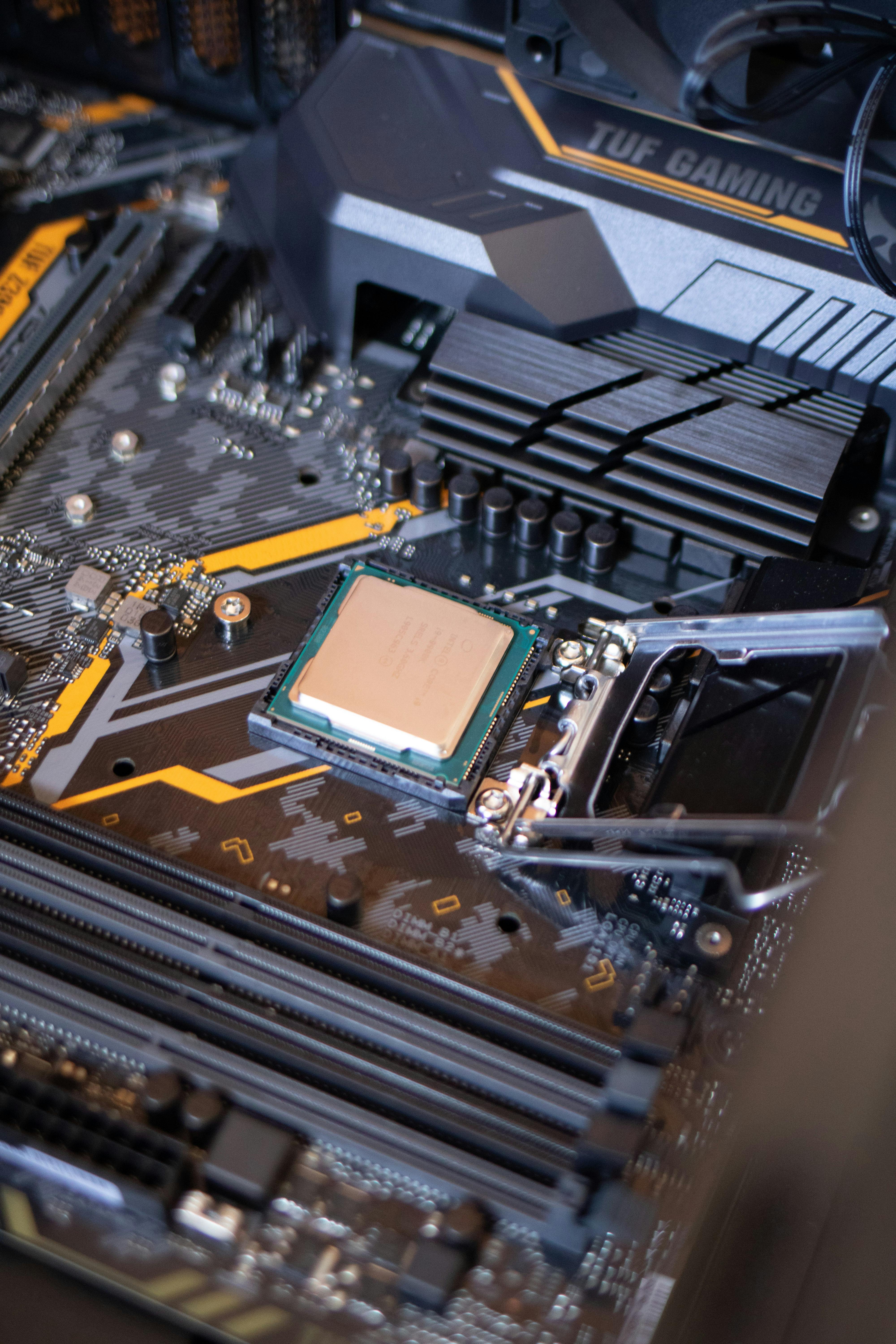
Photo by Ithalu Dominguez on Pexels
For CFOs evaluating chip strategy ROI, the math favors Arm for most enterprises. At $15 billion revenue by 2031, Arm demonstrates credible scale and staying power as a chip supplier. The 50% gross margin indicates sustainable business model supporting long-term roadmap investment. Meta, OpenAI, and SAP validation provides proof of enterprise demand and technical viability.
The build vs buy calculation shifts based on enterprise scale. Companies processing billions of AI inferences daily with highly specialized workloads may justify custom chip investment. Mid-size enterprises with standard agentic AI requirements lack the volume to amortize $500M-$1B development costs and should default to commercial chips like Arm's AGI CPU.
Intel/AMD Competition: Energy Efficiency as Procurement Criteria
Arm positions its AGI CPU against Intel and AMD's server processors on energy efficiency, arguing that lower power consumption reduces total cost of ownership despite potentially higher chip acquisition costs. If Arm chips consume 40-50% less power than x86 alternatives for equivalent inference throughput, enterprises save on electricity, cooling, and data center capacity.
Intel and AMD respond with their own AI-optimized offerings: Intel's Xeon processors with AI accelerators and AMD's EPYC chips with integrated AI engines. These solutions leverage established x86 ecosystems, extensive software compatibility, and proven enterprise support infrastructure. For IT teams with deep x86 expertise and existing x86-based infrastructure, migration to Arm creates retraining costs and compatibility risks.
The energy efficiency argument matters most in power-constrained environments. Data centers approaching power limits can deploy more AI inference capacity per watt with Arm chips, deferring or avoiding expensive electrical infrastructure upgrades. For enterprises with abundant cheap power, energy efficiency provides smaller ROI and may not justify switching from established x86 platforms.
Procurement teams evaluating Arm vs Intel/AMD must benchmark total cost of ownership including chip acquisition, power consumption, cooling, software migration, and operational support. Arm's energy advantage shows up in OpEx (ongoing power costs), while x86 incumbents minimize CapEx (upfront migration and retraining costs). The crossover depends on deployment scale and power pricing.
Cloud Provider Conflict: Arm Competes With Graviton, Maia, and Custom Google Chips
Arm's shift to direct chip manufacturing creates strategic tension with cloud providers who built custom Arm-based chips: Amazon Graviton, Microsoft Maia (future variants), and Google's potential Arm offerings. These hyperscalers license Arm's instruction set architecture to design proprietary chips optimized for their cloud services.
Now Arm competes with its own customers. If enterprises adopt Arm AGI CPUs through cloud providers, AWS/Azure/GCP must decide whether to offer Arm's chips alongside their own custom silicon. Offering both expands customer choice and captures enterprises wanting Arm without custom development. But it validates a competitor and potentially cannibalizes sales of proprietary chips where hyperscalers capture higher margins.
For enterprise IT teams, this conflict creates procurement complexity. If your preferred cloud provider does not offer Arm AGI CPUs due to competitive conflicts, deploying Arm requires switching clouds or adopting multi-cloud architecture. If providers offer Arm chips but prioritize their own custom silicon through pricing or feature availability, enterprises face suboptimal Arm integration.
The most likely outcome is selective availability. AWS may offer Arm AGI CPUs where Graviton does not compete directly, such as specialized agentic AI instances. Microsoft and Google may adopt similar strategies, creating a fragmented landscape where Arm availability varies by cloud provider and instance type. Enterprises must verify Arm chip availability on their cloud platform before committing to Arm-based architectures.
What CIOs, CTOs, and CFOs Should Do This Week
Audit current AI infrastructure spending on inference workloads. Identify what percentage of AI budget goes toward inference compute, power consumption, and data center capacity. If inference costs represent 30-50% of total AI spending and power constraints limit deployment scale, Arm's energy-efficient chips warrant evaluation.
For enterprises considering custom chip development, reassess business case against Arm AGI CPU economics. If custom chip ROI depends on amortizing $500M-$1B over 3-5 years, calculate whether Arm's competitively priced chips with H2 2026 availability deliver faster payback through immediate deployment and avoided development costs.
Evaluate Arm ecosystem readiness across software, tooling, and operational expertise. If development teams lack Arm experience or critical applications lack Arm-native support, migration costs may exceed energy efficiency savings. Conduct pilot deployments with non-critical workloads to validate compatibility before committing production systems.
For cloud-dependent enterprises, confirm Arm AGI CPU availability on your cloud platform roadmap. Contact AWS, Azure, or GCP account teams to understand whether they plan to offer Arm chips, on what timeline, and how pricing and performance compare to existing instance types. If Arm availability is uncertain, evaluate multi-cloud strategies to access Arm chips through alternative providers.
For companies with existing Arm investments in mobile or edge computing, assess migration path to Arm-based data center infrastructure. Enterprises with Arm development expertise and Arm-native applications gain faster time-to-value from Arm AGI CPUs compared to organizations starting from zero Arm experience.
The Arm AGI CPU launch demonstrates that AI chip competition is expanding beyond NVIDIA GPUs to include energy-efficient inference processors targeting agentic AI workloads. The question for every enterprise: does Arm's build vs buy economic advantage justify adopting a new chip architecture, or do Intel/AMD incumbency benefits outweigh energy efficiency gains?
Want to calculate your own AI ROI? Try our AI ROI Calculator — takes 60 seconds and shows projected savings, payback period, and 3-year ROI.