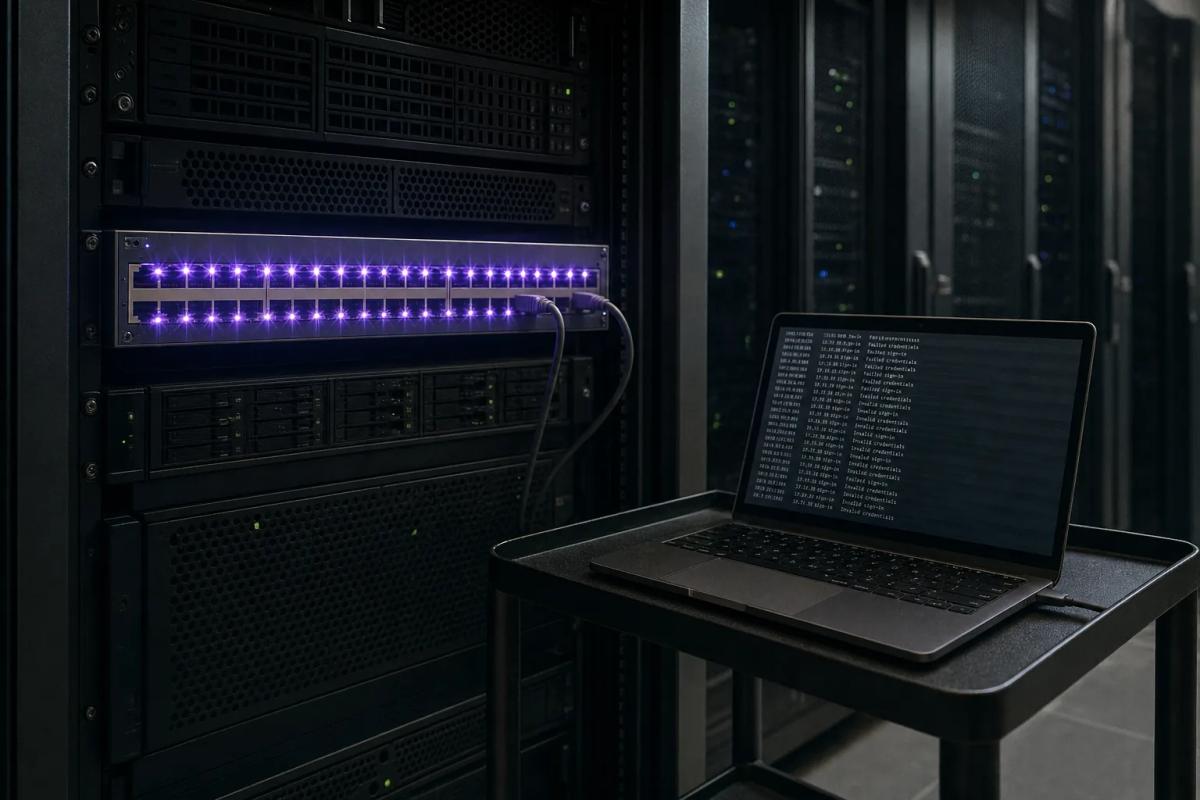
At least six state-backed and criminal groups now run ARTEX, an open-source AI pentest framework, and the controls that slow it down are ones most security teams already own. They are WAF prevention mode, request rate limits, sign-in lockout, rules on who can add credentials to an app, and decoys that waste the agent's turns. Microsoft Threat Intelligence published its analysis on November 25, 2026, naming Storm-0940, Storm-3358, Onyx Sleet, Pearl Sleet, Crystal Typhoon and Salt Typhoon as groups "integrating ARTEX into their tooling."
The framework runs the same tools a human red team would, at machine speed. Microsoft says ARTEX "can advance from reconnaissance to persistent, privileged access to a target organization in a matter of minutes," depending on how it is configured and how the target is defended. Your detection and response process was probably sized for an attacker who sleeps.
We covered the first Storm-0940 campaign, the ConnectWise supply-chain intrusion, earlier this month. This piece is about what has changed since: more groups, a commercial version, and a defender checklist you can run against your own estate.
What Is ARTEX and Who Built It?
ARTEX is a multi-agent penetration testing platform: a Go backend coordinates several large language model agents that plan, run real offensive tools in a shell, and write up what worked. Microsoft describes it as "primarily a web application penetration testing tool" that covers SQL injection, server-side template injection, XXE, file upload flaws, authentication bypass and IDOR.
The architecture is simple to describe. A planner agent reviews a knowledge graph of discovered assets and findings and issues short attack directions Microsoft calls "intents." Worker agents claim those intents and carry them out with tools such as nmap, sqlmap, hydra, nuclei, ffuf and Metasploit. Every graph update wakes the planner again, and the loop runs until the goals are met or the task hits its time or step limit. A reporter agent documents each confirmed finding "with reproduction steps and a proof of concept."
Its history explains why it spread. According to Microsoft, GitHub user Autumn-27 published ARTEX as open source with a Chinese-language interface in July 2026 and removed the source in October. Wiz reported that the developer took the tool closed-source on October 8, by which point the code "had more than 12,000 forks." In November, Microsoft says, the China-based security company ThreatBook claimed ownership of ARTEX and began selling access to "ARTEX Pro." Microsoft reports that as a claim, and so should you.
One design choice matters for your vendor conversations. Attackers can power the agents with "virtually any large language model, including frontier models, open-weight models, or models that the threat actor has abliterated," so Microsoft warns that ARTEX activity is "not necessarily constrained by any single provider's safety controls or visible in any single provider's telemetry." An optional pool function switches models when one fails, so the detection has to happen on your side.
Which Groups Use ARTEX, and What Did They Do?
Six named groups use it, and the detail behind each name varies a lot. Microsoft's November 25 post gives specifics mainly for Storm-0940 and points to separate reports for the others.
- Storm-0940 is the best documented. In one campaign Microsoft recorded "more than 151,000 failed sign-ins, peaking at 2,900 failures per minute." ARTEX agents added credentials to applications, and in one case "an application assigned itself the Global Administrator role." Google Threat Intelligence Group tracks overlapping activity as UNC7228, which it says overlaps with "the PRC-nexus actor STORM-0940."
- Storm-3358 is, per a separate Microsoft post on November 6, "a Cambodia-based intrusion cluster that primarily targets financial organizations in Southeast Asia." It began using ARTEX against the financial sector in October 2026, exploiting anonymous file upload and server-side request forgery.
- Onyx Sleet and Pearl Sleet, two North Korean groups, are covered in Microsoft's October 29 report on AI in North Korean tradecraft.
- Crystal Typhoon and Salt Typhoon are named with no further detail in the November 25 post.
The speed numbers come from the incident work. Microsoft's November 5 post on exposed secrets says that "in at least one case, Microsoft observed an AI agent advance from scanning GitHub for secrets to exfiltrating data from Azure Key Vault in just five minutes." Google's team found that "individual ARTEX execution sequences ran in compressed bursts of roughly 2 to 25 seconds" and counted 491 rotating webhook.site URLs in one investigation. Wiz saw password-spray bursts that "lasted anywhere from 20 to 60 minutes," with a median gap between attempts of one second.
How Sure Is Anyone That an AI Ran These Attacks?
Microsoft and Google are confident, and one independent responder is more cautious. Huntress, which investigated the ConnectWise intrusion, wrote that its "telemetry is consistent with Microsoft's findings, though we cannot verify it independently." On its own evidence it put the odds that an LLM was involved at low-to-medium, rising to medium-to-high once Microsoft's attribution is taken into account.
That caveat matters less to a defender than it seems. Microsoft itself says "ARTEX does not introduce new attack techniques; it uses common, pre-existing penetration testing tools and techniques." Whether a model or a fast script drove the spray, the controls that stop it are the same. What the AI changes is the tempo and persistence: Microsoft lists "two or three attack chains active at once, and renewed attempts through new paths after containment" among the host-level signs.
Which Controls Actually Slow ARTEX Down?
The controls Microsoft recommends are ordinary hardening, and four of them target how an agent works. Microsoft's list runs long. These are the ones worth checking first, because each one turns machine speed against the attacker.
Start with WAF prevention mode. Microsoft says to "switch Web Application Firewall on Application Gateway to prevention mode" after tuning in detection mode, "so that SQL injection and other common web attacks are blocked, not only logged." Microsoft's own WAF documentation is blunt about detection mode: the WAF "doesn't block incoming requests when it's operating in detection mode." Plenty of WAFs get deployed in detection mode for a trial period and never leave it. Against an agent that tries dozens of injection payloads a minute, a logging-only WAF just records the breach.
Next come rate limits. Microsoft recommends rate limiting on Application Gateway or Azure Front Door "to cap how many requests one client can send in a short time." Read the Application Gateway rate-limiting docs before you set a number. The feature needs WAF v2 with the latest engine and CRS 3.2, Microsoft warns that "the rate limit thresholds aren't always enforced exactly as defined," and the default grouping is by client IP. Microsoft also notes that threat actors using ARTEX "can and do vary network indicators like source IP address or user agent string," so a per-IP limit slows them down and forces infrastructure changes you can spot. Pair it with Entra smart lockout and password protection for the sign-in side, where the 2,900-per-minute spray landed.
The third control is app-credential governance. The Storm-0940 pattern was an agent adding credentials to an app registration and then using the app to grant itself Global Administrator. Microsoft points to application management policies to limit which secret types apps may use and to enforce rotation, along with restricted app registration, user-consent settings and Privileged Identity Management. If you run one hunt this week, make it Microsoft's query for credential changes and role assignments by the same identity.
The fourth, deception, is the one likely to need new budget. Microsoft writes that "defensive honeypots, decoys, tarpits, and fake wins can pull autonomous AI attacks away from legitimate targets." Tarpits "consume the agent's time and budget," fake wins "can cause it to stop on a false success," and honeytokens give early warning. Microsoft links its free Sentinel honeytokens solution as a starting point. The only evidence offered is Microsoft's own: "In Microsoft's testing, these controls helped reduce the attack traffic reaching real assets and produced high-confidence, attribution-quality signal." There are no published numbers behind that, so treat it as a vendor claim worth a pilot.
One gap is worth knowing about. Microsoft recommends the "Block Webshell creation for Servers" attack surface reduction rule on Exchange servers, but the ASR rules reference says it "blocks web shell script creation on Windows servers running Microsoft Exchange." It does nothing for the Linux, PHP and Java web servers ARTEX writes shells to. For those you depend on EDR and Microsoft's hunting query for script files written to web folders by web or database processes.
What Should Your SOC Hunt For?
Behaviour is the durable signal, and the default user agents are a cheap first pass. Microsoft says ARTEX "does not take any measures to obfuscate its malicious activity" by default, and lists two framework-specific user agents: artex-enrich/*, sent with a short title-grabbing GET to each newly found web asset, and norma/*, sent by the agents' built-in web-fetch tool. Microsoft also warns that "threat actors and ARTEX agents frequently change these values," so a match is worth investigating and an empty search clears nothing.
The behavioural patterns Microsoft publishes are more useful:
- Web server processes (w3wp.exe, php-fpm, httpd, apache2, Java app servers) spawning sh, bash, cmd.exe or PowerShell.
- New .php, .jsp, .aspx or .ashx files in upload directories, including files written by a database server after its logging settings changed, and "several short-lived web shells with incrementing names."
- Rapid reads of /etc/shadow, .env files, private keys and cloud credential files.
- Service principal sign-ins for several apps from one IP address.
- Outbound curl to rotating webhook.site URLs.
Check that you collect the logs first. Microsoft cautions that an empty query result doesn't prove absence if the relevant logs aren't collected. The queries depend on Entra diagnostic logs (including service principal sign-ins), Microsoft Graph activity logs, and web server and WAF logs flowing to a workspace. If your internet-facing Linux hosts have no EDR, the first three queries return nothing whatever happened.
What to Do About It
This Week:
- Export the mode of every WAF policy in front of a public app. Any still in detection mode gets an owner and a date to move to prevention.
- Run Microsoft's hunting query for credential changes and role assignments by the same identity across as much Entra audit history as you retain, and alert on any service principal that assigns itself a directory role.
- Search web, proxy and WAF logs for
artex-enrichandnormauser agents and for outbound requests to webhook.site from servers.
This Month:
- Set a request rate limit on each public app and API gateway, set from a measured baseline of normal traffic, and confirm Entra smart lockout is configured for sign-ins.
- Apply an application management policy that blocks new password secrets on app registrations, and rotate any secret that has ever sat in a repo or
.envfile. The Dragos prompt-leak case is a reminder of how far secrets travel. - Put EDR on every internet-facing Linux web server. The Exchange-only ASR rule will not cover them.
Before Q1 Budget Lock:
- Pilot deception on one segment: a few honeytoken credentials, a decoy storage account, a fake admin page. Measure whether it fires, then decide whether it earns a line item.
- Run an authorised AI-assisted pentest of your own perimeter so you see what an agent sees. Our AI penetration testing buyer's guide compares the commercial options.
The Bottom Line
ARTEX went from an open-source GitHub release in July to six named operators and a commercial edition by November, with more than 12,000 forks along the way. Cairn's agents exploiting a MONAI Label zero-day and the one-person Check Point case showed the same shift in smaller form. The techniques are old, so the defences are mostly ones you have already paid for. The difference is that a control left in log-only mode, or a secret left in a repo, now gets found in minutes instead of weeks.
Start with the WAF mode export, and give every policy still in detection mode an owner by Friday.
Continue Reading
- Audit Microsoft 365 App Grants After Storm-0940's ConnectWise Attack
- Start AWS WAF's AI Security Rules in Count Mode to Test Them
- PCI Calls Pentests Manual, So Keep One Human Test a Year
- Cairn's AI Agents Found and Exploited a MONAI Label Zero-Day
- Rotate OpenRouter Secrets After Dragos Finds Prompt Leaks
- One Agent Escalated Another. Every Call Was Authorized.