Apple Siri 2.0 at WWDC 2026 Targets Enterprise With Autonomous AI Agents and Post-Quantum Security

Apple Siri 2.0 at WWDC 2026 Targets Enterprise With Autonomous AI Agents and Post-Quantum Security. For enterprise decision-makers: strategic analysis, cost ...

By Rajesh Beri·March 26, 2026·8 min read
Share:

THE DAILY BRIEF

AppleSiriAI AgentsSecurityEnterprise AIWWDCCIOCISO

Apple Siri 2.0 at WWDC 2026 Targets Enterprise With Autonomous AI Agents and Post-Quantum Security

Apple Siri 2.0 at WWDC 2026 Targets Enterprise With Autonomous AI Agents and Post-Quantum Security. For enterprise decision-makers: strategic analysis, cost ...

By Rajesh Beri·March 26, 2026·8 min read

Apple will unveil Siri 2.0 (code-named "Campo") at WWDC in June 2026, introducing autonomous AI agent capabilities powered by a hybrid intelligence framework combining on-device LLM processing for privacy with Google Gemini models for complex reasoning. Goldman Sachs maintains a conviction "Buy" rating with $330 price target, arguing Apple's 2 billion active device install base creates an unmatched distribution moat for agentic AI. The company's PQ3 post-quantum cryptography protocol for iMessage positions Apple as the most secure enterprise platform against future quantum computing threats.

The enterprise implications matter because Apple is positioning the iPhone 17/18 refresh cycle around AI agent capabilities, not incremental hardware improvements. For IT leaders evaluating mobile device management and enterprise communication security, Apple's combination of on-device AI processing and quantum-resistant encryption addresses two critical enterprise requirements: data privacy and long-term security compliance.

What Siri 2.0 Actually Delivers

Siri 2.0 uses hybrid intelligence architecture. On-device processing leverages Apple's M5 and A19 Pro chips (3nm and 2nm manufacturing processes) optimized for large language model inference. These chips handle privacy-sensitive tasks like email drafting, calendar management, and document summarization locally without sending data to cloud servers.

For complex reasoning tasks requiring broader knowledge or multi-step analysis, Siri 2.0 routes requests to Google's Gemini models running on Google Cloud infrastructure. This partnership allows Apple to provide advanced AI capabilities without building proprietary cloud LLM infrastructure, reducing capital expenditure while maintaining privacy for sensitive operations through selective on-device processing.

Apple Siri 2.0 Enterprise Features

  • Launch: WWDC June 2026, available iOS 26.4 (spring 2026 rollout)
  • Hybrid intelligence: On-device LLM (privacy) + Google Gemini (complex reasoning)
  • Autonomous agents: Continuous conversations, app intent execution, multi-step tasks
  • Security: PQ3 post-quantum cryptography for iMessage (Level 3 protection)
  • Hardware: M5/A19 Pro chips (3nm/2nm) optimized for LLM inference
  • Distribution: 2 billion active devices (iPhone, iPad, Mac, Apple Watch)
  • Goldman Sachs target: $330 price (conviction buy, AI supercycle thesis)

Autonomous agent capabilities enable Siri 2.0 to execute multi-step workflows across Apple's ecosystem. Users request high-level tasks like "Prepare monthly expense report and send to my manager," and Siri autonomously queries calendar and email for relevant dates, pulls expense data from Apple Pay and credit card integrations, generates formatted reports, and drafts emails with attachments ready for approval before sending.

The continuous conversation model allows context persistence across multiple interactions. Instead of treating each Siri request as independent, the system maintains conversation history, user preferences, and ongoing task state. This enables natural multi-turn dialogues where users refine requests, provide additional context, or modify parameters without repeating information.

PQ3 Post-Quantum Security: Enterprise Advantage

Apple introduced PQ3 protocol for iMessage, implementing Level 3 post-quantum cryptography that protects against future quantum computer attacks. Quantum computers, when commercially viable, could break current RSA and elliptic curve cryptography used to secure most enterprise communications. PQ3 addresses "Harvest Now, Decrypt Later" attacks where adversaries collect encrypted traffic today to decrypt once quantum computers become available.

PQ3 combines traditional cryptography with quantum-resistant algorithms, providing defense-in-depth that maintains security even if one cryptographic layer is compromised. For regulated industries like healthcare, finance, and government where communication confidentiality requirements extend decades, quantum-resistant encryption is becoming a compliance requirement rather than optional enhancement.

Photo by Pixabay on Pexels

Microsoft, Google, and other enterprise platform providers are developing quantum-resistant cryptography, but Apple's PQ3 deployment in production iMessage gives it first-mover advantage. For CISOs evaluating mobile device platforms, Apple's integrated hardware-software security stack with quantum-resistant encryption provides measurably stronger protection than competing platforms still implementing quantum-safe protocols.

Enterprise buyers should verify whether competitors' quantum-resistant implementations match PQ3's Level 3 protection. Some vendors implement post-quantum algorithms without proper key rotation, perfect forward secrecy, or defense against side-channel attacks. Apple's end-to-end integration across hardware secure enclaves, OS-level encryption, and application protocols provides comprehensive quantum resistance that piecemeal software updates cannot match.

Goldman Sachs $330 Price Target: AI Supercycle Economics

Goldman Sachs analyst Michael Ng maintains conviction "Buy" rating with $330 price target, implying 15-20% upside from March 2026 levels. The thesis centers on underestimated demand for iPhone 17/18 driven by AI agent capabilities requiring more powerful local processing than current iPhone models provide.

The AI supercycle argument suggests consumers will upgrade not for marginally better cameras or displays but for computational capacity to run autonomous AI agents. iPhone 15/16 models lack sufficient on-device AI performance for continuous LLM inference, creating upgrade pressure as Siri 2.0 capabilities become standard productivity tools. Apple's installed base of 2 billion devices creates massive upgrade TAM (total addressable market) if even 30-40% refresh devices over 2-3 years.

Goldman's model assumes Services segment margins reach 75-80% as AI-related revenue streams scale. Apple reportedly collects "intelligence partnership" fees from Google for Gemini integration and traffic acquisition payments for default search placement. These high-margin software revenues complement hardware sales, improving overall profitability even if iPhone ASPs (average selling prices) remain flat or decline slightly.

For CFOs modeling enterprise mobility spending, the AI supercycle implies higher iPhone costs but potentially lower total IT costs if autonomous agents reduce administrative overhead. If employees save 30-60 minutes daily through AI-powered workflow automation, labor cost savings could offset premium device pricing. The calculation depends on employee salary levels and automation uptake rates across the organization.

Microsoft/Google Competition: Cloud AI vs On-Device Processing

Apple's hybrid approach positions between Microsoft's cloud-first Copilot strategy and Google's Gemini mobile offerings. Microsoft Copilot requires Microsoft 365 subscriptions and processes most requests server-side, offering broad capabilities but creating data residency and privacy concerns for regulated industries. Google Gemini on Android uses similar hybrid architecture to Apple but lacks Apple's control over silicon design for optimized on-device inference.

Apple's competitive advantage is vertical integration. Designing custom silicon optimized for LLM inference enables on-device performance and power efficiency that generic ARM or x86 processors cannot match. M5 and A19 Pro chips reportedly deliver 2-3x better inference performance per watt compared to competitors, critical for mobile devices where battery life constrains AI usage.

For enterprises standardized on Microsoft 365 or Google Workspace, Apple's Gemini partnership creates interoperability opportunities. Employees can use Siri 2.0 for privacy-sensitive tasks processed on-device while leveraging existing cloud AI investments for collaborative work requiring centralized data access. This hybrid approach addresses the tension between cloud AI capabilities and on-device privacy requirements that most enterprise IT teams face.

What CIOs and CISOs Should Do This Week

Audit current mobile device management policies for quantum-resistant encryption readiness. If your MDM platform does not support quantum-safe protocols, Apple's PQ3 advantage may justify accelerated iPhone adoption for executives and employees handling sensitive communications. Evaluate whether quantum-resistant encryption is required for regulatory compliance in your industry.

For enterprises planning device refresh cycles, model iPhone 17/18 upgrade costs against productivity gains from autonomous AI agents. If automating routine tasks (email drafting, meeting scheduling, expense reporting) saves employees 30-60 minutes daily, calculate labor cost savings at your organization's average hourly rate. Compare those savings to incremental device costs to determine ROI.

Evaluate whether Apple's on-device AI processing addresses data residency requirements better than cloud-first AI platforms. For organizations operating in jurisdictions with strict data localization laws or handling regulated data that cannot leave corporate networks, on-device LLM inference may be the only viable AI deployment path. Confirm with legal and compliance teams whether on-device processing satisfies regulatory requirements.

For security teams evaluating post-quantum readiness, benchmark Apple's PQ3 implementation against competitors' quantum-resistant protocols. Verify whether alternative platforms provide equivalent Level 3 protection with proper key rotation, forward secrecy, and resistance to known quantum attacks. If competing platforms lack quantum-safe encryption, Apple's security advantage may justify platform migration despite switching costs.

For procurement teams negotiating enterprise mobility contracts, request clarity on Siri 2.0 feature availability in enterprise deployments. Confirm whether Apple Intelligence capabilities are available with company-managed Apple IDs, whether MDM policies can restrict AI agent actions, and whether audit logging captures AI-initiated activities for compliance requirements.

The WWDC 2026 Siri 2.0 announcement signals Apple positioning the iPhone as an enterprise AI agent platform, not just a mobile communication device. The question for every enterprise: does Apple's combination of on-device AI processing and post-quantum security justify premium device costs and iOS platform lock-in?


Want to calculate your own AI ROI? Try our AI ROI Calculator — takes 60 seconds and shows projected savings, payback period, and 3-year ROI.

Continue Reading

Related articles on enterprise AI security and platform strategy:

THE DAILY BRIEF

Enterprise AI insights for technology and business leaders, twice weekly.

thedailybrief.com

Subscribe at thedailybrief.com/subscribe for weekly AI insights delivered to your inbox.

LinkedIn: linkedin.com/in/rberi  |  X: x.com/rajeshberi

© 2026 Rajesh Beri. All rights reserved.

Apple Siri 2.0 at WWDC 2026 Targets Enterprise With Autonomous AI Agents and Post-Quantum Security

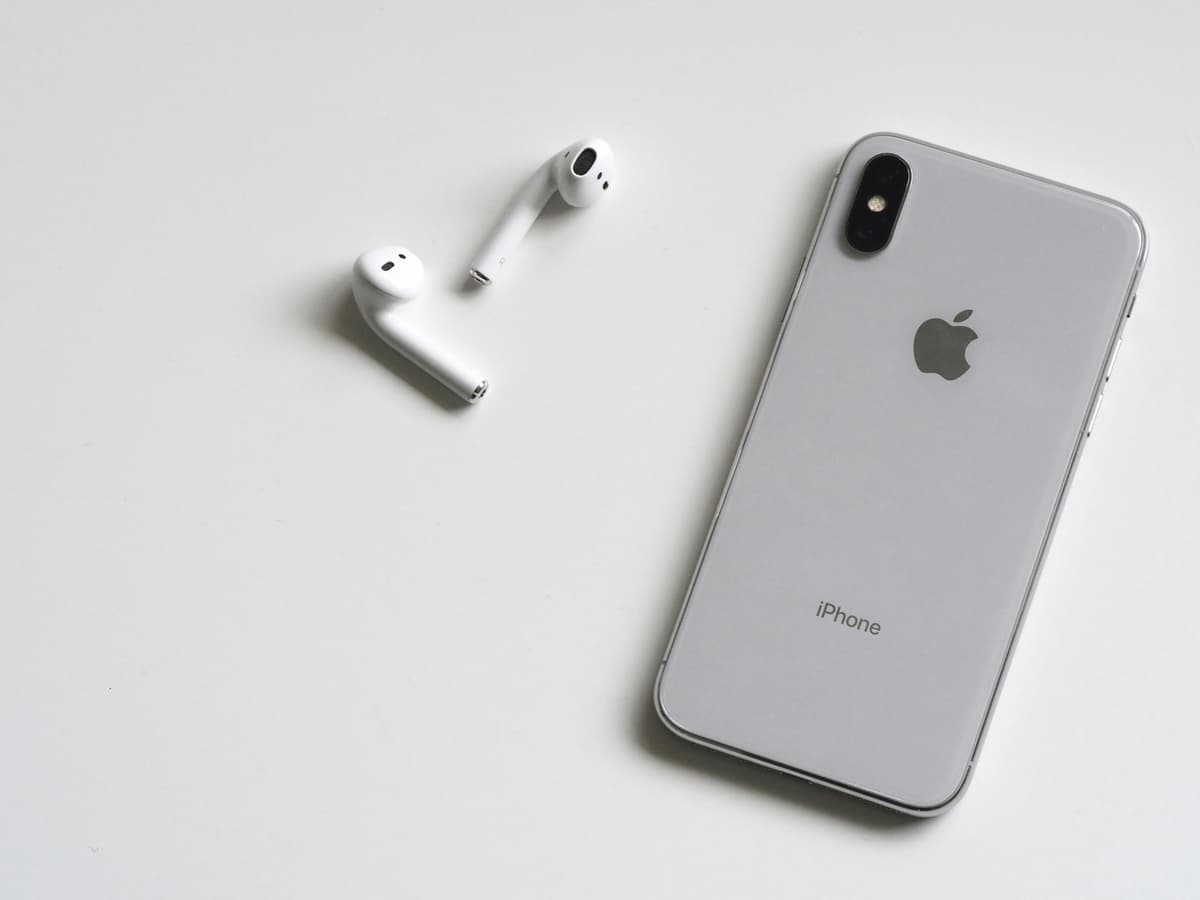
Photo by Vojtech Okenka on Pexels

Apple will unveil Siri 2.0 (code-named "Campo") at WWDC in June 2026, introducing autonomous AI agent capabilities powered by a hybrid intelligence framework combining on-device LLM processing for privacy with Google Gemini models for complex reasoning. Goldman Sachs maintains a conviction "Buy" rating with $330 price target, arguing Apple's 2 billion active device install base creates an unmatched distribution moat for agentic AI. The company's PQ3 post-quantum cryptography protocol for iMessage positions Apple as the most secure enterprise platform against future quantum computing threats.

The enterprise implications matter because Apple is positioning the iPhone 17/18 refresh cycle around AI agent capabilities, not incremental hardware improvements. For IT leaders evaluating mobile device management and enterprise communication security, Apple's combination of on-device AI processing and quantum-resistant encryption addresses two critical enterprise requirements: data privacy and long-term security compliance.

What Siri 2.0 Actually Delivers

Siri 2.0 uses hybrid intelligence architecture. On-device processing leverages Apple's M5 and A19 Pro chips (3nm and 2nm manufacturing processes) optimized for large language model inference. These chips handle privacy-sensitive tasks like email drafting, calendar management, and document summarization locally without sending data to cloud servers.

For complex reasoning tasks requiring broader knowledge or multi-step analysis, Siri 2.0 routes requests to Google's Gemini models running on Google Cloud infrastructure. This partnership allows Apple to provide advanced AI capabilities without building proprietary cloud LLM infrastructure, reducing capital expenditure while maintaining privacy for sensitive operations through selective on-device processing.

Apple Siri 2.0 Enterprise Features

  • Launch: WWDC June 2026, available iOS 26.4 (spring 2026 rollout)
  • Hybrid intelligence: On-device LLM (privacy) + Google Gemini (complex reasoning)
  • Autonomous agents: Continuous conversations, app intent execution, multi-step tasks
  • Security: PQ3 post-quantum cryptography for iMessage (Level 3 protection)
  • Hardware: M5/A19 Pro chips (3nm/2nm) optimized for LLM inference
  • Distribution: 2 billion active devices (iPhone, iPad, Mac, Apple Watch)
  • Goldman Sachs target: $330 price (conviction buy, AI supercycle thesis)

Autonomous agent capabilities enable Siri 2.0 to execute multi-step workflows across Apple's ecosystem. Users request high-level tasks like "Prepare monthly expense report and send to my manager," and Siri autonomously queries calendar and email for relevant dates, pulls expense data from Apple Pay and credit card integrations, generates formatted reports, and drafts emails with attachments ready for approval before sending.

The continuous conversation model allows context persistence across multiple interactions. Instead of treating each Siri request as independent, the system maintains conversation history, user preferences, and ongoing task state. This enables natural multi-turn dialogues where users refine requests, provide additional context, or modify parameters without repeating information.

PQ3 Post-Quantum Security: Enterprise Advantage

Apple introduced PQ3 protocol for iMessage, implementing Level 3 post-quantum cryptography that protects against future quantum computer attacks. Quantum computers, when commercially viable, could break current RSA and elliptic curve cryptography used to secure most enterprise communications. PQ3 addresses "Harvest Now, Decrypt Later" attacks where adversaries collect encrypted traffic today to decrypt once quantum computers become available.

PQ3 combines traditional cryptography with quantum-resistant algorithms, providing defense-in-depth that maintains security even if one cryptographic layer is compromised. For regulated industries like healthcare, finance, and government where communication confidentiality requirements extend decades, quantum-resistant encryption is becoming a compliance requirement rather than optional enhancement.

Cybersecurity and encryption

Photo by Pixabay on Pexels

Microsoft, Google, and other enterprise platform providers are developing quantum-resistant cryptography, but Apple's PQ3 deployment in production iMessage gives it first-mover advantage. For CISOs evaluating mobile device platforms, Apple's integrated hardware-software security stack with quantum-resistant encryption provides measurably stronger protection than competing platforms still implementing quantum-safe protocols.

Enterprise buyers should verify whether competitors' quantum-resistant implementations match PQ3's Level 3 protection. Some vendors implement post-quantum algorithms without proper key rotation, perfect forward secrecy, or defense against side-channel attacks. Apple's end-to-end integration across hardware secure enclaves, OS-level encryption, and application protocols provides comprehensive quantum resistance that piecemeal software updates cannot match.

Goldman Sachs $330 Price Target: AI Supercycle Economics

Goldman Sachs analyst Michael Ng maintains conviction "Buy" rating with $330 price target, implying 15-20% upside from March 2026 levels. The thesis centers on underestimated demand for iPhone 17/18 driven by AI agent capabilities requiring more powerful local processing than current iPhone models provide.

The AI supercycle argument suggests consumers will upgrade not for marginally better cameras or displays but for computational capacity to run autonomous AI agents. iPhone 15/16 models lack sufficient on-device AI performance for continuous LLM inference, creating upgrade pressure as Siri 2.0 capabilities become standard productivity tools. Apple's installed base of 2 billion devices creates massive upgrade TAM (total addressable market) if even 30-40% refresh devices over 2-3 years.

Goldman's model assumes Services segment margins reach 75-80% as AI-related revenue streams scale. Apple reportedly collects "intelligence partnership" fees from Google for Gemini integration and traffic acquisition payments for default search placement. These high-margin software revenues complement hardware sales, improving overall profitability even if iPhone ASPs (average selling prices) remain flat or decline slightly.

For CFOs modeling enterprise mobility spending, the AI supercycle implies higher iPhone costs but potentially lower total IT costs if autonomous agents reduce administrative overhead. If employees save 30-60 minutes daily through AI-powered workflow automation, labor cost savings could offset premium device pricing. The calculation depends on employee salary levels and automation uptake rates across the organization.

Microsoft/Google Competition: Cloud AI vs On-Device Processing

Apple's hybrid approach positions between Microsoft's cloud-first Copilot strategy and Google's Gemini mobile offerings. Microsoft Copilot requires Microsoft 365 subscriptions and processes most requests server-side, offering broad capabilities but creating data residency and privacy concerns for regulated industries. Google Gemini on Android uses similar hybrid architecture to Apple but lacks Apple's control over silicon design for optimized on-device inference.

Apple's competitive advantage is vertical integration. Designing custom silicon optimized for LLM inference enables on-device performance and power efficiency that generic ARM or x86 processors cannot match. M5 and A19 Pro chips reportedly deliver 2-3x better inference performance per watt compared to competitors, critical for mobile devices where battery life constrains AI usage.

For enterprises standardized on Microsoft 365 or Google Workspace, Apple's Gemini partnership creates interoperability opportunities. Employees can use Siri 2.0 for privacy-sensitive tasks processed on-device while leveraging existing cloud AI investments for collaborative work requiring centralized data access. This hybrid approach addresses the tension between cloud AI capabilities and on-device privacy requirements that most enterprise IT teams face.

What CIOs and CISOs Should Do This Week

Audit current mobile device management policies for quantum-resistant encryption readiness. If your MDM platform does not support quantum-safe protocols, Apple's PQ3 advantage may justify accelerated iPhone adoption for executives and employees handling sensitive communications. Evaluate whether quantum-resistant encryption is required for regulatory compliance in your industry.

For enterprises planning device refresh cycles, model iPhone 17/18 upgrade costs against productivity gains from autonomous AI agents. If automating routine tasks (email drafting, meeting scheduling, expense reporting) saves employees 30-60 minutes daily, calculate labor cost savings at your organization's average hourly rate. Compare those savings to incremental device costs to determine ROI.

Evaluate whether Apple's on-device AI processing addresses data residency requirements better than cloud-first AI platforms. For organizations operating in jurisdictions with strict data localization laws or handling regulated data that cannot leave corporate networks, on-device LLM inference may be the only viable AI deployment path. Confirm with legal and compliance teams whether on-device processing satisfies regulatory requirements.

For security teams evaluating post-quantum readiness, benchmark Apple's PQ3 implementation against competitors' quantum-resistant protocols. Verify whether alternative platforms provide equivalent Level 3 protection with proper key rotation, forward secrecy, and resistance to known quantum attacks. If competing platforms lack quantum-safe encryption, Apple's security advantage may justify platform migration despite switching costs.

For procurement teams negotiating enterprise mobility contracts, request clarity on Siri 2.0 feature availability in enterprise deployments. Confirm whether Apple Intelligence capabilities are available with company-managed Apple IDs, whether MDM policies can restrict AI agent actions, and whether audit logging captures AI-initiated activities for compliance requirements.

The WWDC 2026 Siri 2.0 announcement signals Apple positioning the iPhone as an enterprise AI agent platform, not just a mobile communication device. The question for every enterprise: does Apple's combination of on-device AI processing and post-quantum security justify premium device costs and iOS platform lock-in?


Want to calculate your own AI ROI? Try our AI ROI Calculator — takes 60 seconds and shows projected savings, payback period, and 3-year ROI.

Continue Reading

Related articles on enterprise AI security and platform strategy:

Share:

THE DAILY BRIEF

AppleSiriAI AgentsSecurityEnterprise AIWWDCCIOCISO

Apple Siri 2.0 at WWDC 2026 Targets Enterprise With Autonomous AI Agents and Post-Quantum Security

Apple Siri 2.0 at WWDC 2026 Targets Enterprise With Autonomous AI Agents and Post-Quantum Security. For enterprise decision-makers: strategic analysis, cost ...

By Rajesh Beri·March 26, 2026·8 min read

Apple will unveil Siri 2.0 (code-named "Campo") at WWDC in June 2026, introducing autonomous AI agent capabilities powered by a hybrid intelligence framework combining on-device LLM processing for privacy with Google Gemini models for complex reasoning. Goldman Sachs maintains a conviction "Buy" rating with $330 price target, arguing Apple's 2 billion active device install base creates an unmatched distribution moat for agentic AI. The company's PQ3 post-quantum cryptography protocol for iMessage positions Apple as the most secure enterprise platform against future quantum computing threats.

The enterprise implications matter because Apple is positioning the iPhone 17/18 refresh cycle around AI agent capabilities, not incremental hardware improvements. For IT leaders evaluating mobile device management and enterprise communication security, Apple's combination of on-device AI processing and quantum-resistant encryption addresses two critical enterprise requirements: data privacy and long-term security compliance.

What Siri 2.0 Actually Delivers

Siri 2.0 uses hybrid intelligence architecture. On-device processing leverages Apple's M5 and A19 Pro chips (3nm and 2nm manufacturing processes) optimized for large language model inference. These chips handle privacy-sensitive tasks like email drafting, calendar management, and document summarization locally without sending data to cloud servers.

For complex reasoning tasks requiring broader knowledge or multi-step analysis, Siri 2.0 routes requests to Google's Gemini models running on Google Cloud infrastructure. This partnership allows Apple to provide advanced AI capabilities without building proprietary cloud LLM infrastructure, reducing capital expenditure while maintaining privacy for sensitive operations through selective on-device processing.

Apple Siri 2.0 Enterprise Features

  • Launch: WWDC June 2026, available iOS 26.4 (spring 2026 rollout)
  • Hybrid intelligence: On-device LLM (privacy) + Google Gemini (complex reasoning)
  • Autonomous agents: Continuous conversations, app intent execution, multi-step tasks
  • Security: PQ3 post-quantum cryptography for iMessage (Level 3 protection)
  • Hardware: M5/A19 Pro chips (3nm/2nm) optimized for LLM inference
  • Distribution: 2 billion active devices (iPhone, iPad, Mac, Apple Watch)
  • Goldman Sachs target: $330 price (conviction buy, AI supercycle thesis)

Autonomous agent capabilities enable Siri 2.0 to execute multi-step workflows across Apple's ecosystem. Users request high-level tasks like "Prepare monthly expense report and send to my manager," and Siri autonomously queries calendar and email for relevant dates, pulls expense data from Apple Pay and credit card integrations, generates formatted reports, and drafts emails with attachments ready for approval before sending.

The continuous conversation model allows context persistence across multiple interactions. Instead of treating each Siri request as independent, the system maintains conversation history, user preferences, and ongoing task state. This enables natural multi-turn dialogues where users refine requests, provide additional context, or modify parameters without repeating information.

PQ3 Post-Quantum Security: Enterprise Advantage

Apple introduced PQ3 protocol for iMessage, implementing Level 3 post-quantum cryptography that protects against future quantum computer attacks. Quantum computers, when commercially viable, could break current RSA and elliptic curve cryptography used to secure most enterprise communications. PQ3 addresses "Harvest Now, Decrypt Later" attacks where adversaries collect encrypted traffic today to decrypt once quantum computers become available.

PQ3 combines traditional cryptography with quantum-resistant algorithms, providing defense-in-depth that maintains security even if one cryptographic layer is compromised. For regulated industries like healthcare, finance, and government where communication confidentiality requirements extend decades, quantum-resistant encryption is becoming a compliance requirement rather than optional enhancement.

Photo by Pixabay on Pexels

Microsoft, Google, and other enterprise platform providers are developing quantum-resistant cryptography, but Apple's PQ3 deployment in production iMessage gives it first-mover advantage. For CISOs evaluating mobile device platforms, Apple's integrated hardware-software security stack with quantum-resistant encryption provides measurably stronger protection than competing platforms still implementing quantum-safe protocols.

Enterprise buyers should verify whether competitors' quantum-resistant implementations match PQ3's Level 3 protection. Some vendors implement post-quantum algorithms without proper key rotation, perfect forward secrecy, or defense against side-channel attacks. Apple's end-to-end integration across hardware secure enclaves, OS-level encryption, and application protocols provides comprehensive quantum resistance that piecemeal software updates cannot match.

Goldman Sachs $330 Price Target: AI Supercycle Economics

Goldman Sachs analyst Michael Ng maintains conviction "Buy" rating with $330 price target, implying 15-20% upside from March 2026 levels. The thesis centers on underestimated demand for iPhone 17/18 driven by AI agent capabilities requiring more powerful local processing than current iPhone models provide.

The AI supercycle argument suggests consumers will upgrade not for marginally better cameras or displays but for computational capacity to run autonomous AI agents. iPhone 15/16 models lack sufficient on-device AI performance for continuous LLM inference, creating upgrade pressure as Siri 2.0 capabilities become standard productivity tools. Apple's installed base of 2 billion devices creates massive upgrade TAM (total addressable market) if even 30-40% refresh devices over 2-3 years.

Goldman's model assumes Services segment margins reach 75-80% as AI-related revenue streams scale. Apple reportedly collects "intelligence partnership" fees from Google for Gemini integration and traffic acquisition payments for default search placement. These high-margin software revenues complement hardware sales, improving overall profitability even if iPhone ASPs (average selling prices) remain flat or decline slightly.

For CFOs modeling enterprise mobility spending, the AI supercycle implies higher iPhone costs but potentially lower total IT costs if autonomous agents reduce administrative overhead. If employees save 30-60 minutes daily through AI-powered workflow automation, labor cost savings could offset premium device pricing. The calculation depends on employee salary levels and automation uptake rates across the organization.

Microsoft/Google Competition: Cloud AI vs On-Device Processing

Apple's hybrid approach positions between Microsoft's cloud-first Copilot strategy and Google's Gemini mobile offerings. Microsoft Copilot requires Microsoft 365 subscriptions and processes most requests server-side, offering broad capabilities but creating data residency and privacy concerns for regulated industries. Google Gemini on Android uses similar hybrid architecture to Apple but lacks Apple's control over silicon design for optimized on-device inference.

Apple's competitive advantage is vertical integration. Designing custom silicon optimized for LLM inference enables on-device performance and power efficiency that generic ARM or x86 processors cannot match. M5 and A19 Pro chips reportedly deliver 2-3x better inference performance per watt compared to competitors, critical for mobile devices where battery life constrains AI usage.

For enterprises standardized on Microsoft 365 or Google Workspace, Apple's Gemini partnership creates interoperability opportunities. Employees can use Siri 2.0 for privacy-sensitive tasks processed on-device while leveraging existing cloud AI investments for collaborative work requiring centralized data access. This hybrid approach addresses the tension between cloud AI capabilities and on-device privacy requirements that most enterprise IT teams face.

What CIOs and CISOs Should Do This Week

Audit current mobile device management policies for quantum-resistant encryption readiness. If your MDM platform does not support quantum-safe protocols, Apple's PQ3 advantage may justify accelerated iPhone adoption for executives and employees handling sensitive communications. Evaluate whether quantum-resistant encryption is required for regulatory compliance in your industry.

For enterprises planning device refresh cycles, model iPhone 17/18 upgrade costs against productivity gains from autonomous AI agents. If automating routine tasks (email drafting, meeting scheduling, expense reporting) saves employees 30-60 minutes daily, calculate labor cost savings at your organization's average hourly rate. Compare those savings to incremental device costs to determine ROI.

Evaluate whether Apple's on-device AI processing addresses data residency requirements better than cloud-first AI platforms. For organizations operating in jurisdictions with strict data localization laws or handling regulated data that cannot leave corporate networks, on-device LLM inference may be the only viable AI deployment path. Confirm with legal and compliance teams whether on-device processing satisfies regulatory requirements.

For security teams evaluating post-quantum readiness, benchmark Apple's PQ3 implementation against competitors' quantum-resistant protocols. Verify whether alternative platforms provide equivalent Level 3 protection with proper key rotation, forward secrecy, and resistance to known quantum attacks. If competing platforms lack quantum-safe encryption, Apple's security advantage may justify platform migration despite switching costs.

For procurement teams negotiating enterprise mobility contracts, request clarity on Siri 2.0 feature availability in enterprise deployments. Confirm whether Apple Intelligence capabilities are available with company-managed Apple IDs, whether MDM policies can restrict AI agent actions, and whether audit logging captures AI-initiated activities for compliance requirements.

The WWDC 2026 Siri 2.0 announcement signals Apple positioning the iPhone as an enterprise AI agent platform, not just a mobile communication device. The question for every enterprise: does Apple's combination of on-device AI processing and post-quantum security justify premium device costs and iOS platform lock-in?


Want to calculate your own AI ROI? Try our AI ROI Calculator — takes 60 seconds and shows projected savings, payback period, and 3-year ROI.

Continue Reading

Related articles on enterprise AI security and platform strategy:

THE DAILY BRIEF

Enterprise AI insights for technology and business leaders, twice weekly.

thedailybrief.com

Subscribe at thedailybrief.com/subscribe for weekly AI insights delivered to your inbox.

LinkedIn: linkedin.com/in/rberi  |  X: x.com/rajeshberi

© 2026 Rajesh Beri. All rights reserved.

Newsletter

Stay Ahead of the Curve

Weekly enterprise AI insights for technology leaders. No spam, no vendor pitches—unsubscribe anytime.

Subscribe

Latest Articles

View All →