Anthropic Hits $1 Trillion Valuation, Overtakes OpenAI on Secondary Markets

Secondary market trading pushes Anthropic past $1 trillion valuation as desperate buyers chase shares. Meanwhile, OpenAI demand slumps. What enterprise leaders need to know about this seismic shift in AI vendor momentum.

By Rajesh Beri·April 23, 2026·9 min read
Share:

THE DAILY BRIEF

AnthropicOpenAIEnterprise AIValuationInvestment

Anthropic Hits $1 Trillion Valuation, Overtakes OpenAI on Secondary Markets

Secondary market trading pushes Anthropic past $1 trillion valuation as desperate buyers chase shares. Meanwhile, OpenAI demand slumps. What enterprise leaders need to know about this seismic shift in AI vendor momentum.

By Rajesh Beri·April 23, 2026·9 min read

The AI vendor landscape just experienced a seismic shift. Anthropic, the company behind Claude, hit a $1 trillion valuation on secondary markets this week—eclipsing OpenAI's $880 billion secondary market price despite OpenAI's more recent $852 billion primary funding round. For CTOs and CFOs evaluating AI vendors, this isn't just financial theater. It's a market-driven signal about enterprise adoption momentum, revenue growth trajectories, and where institutional money is placing its bets for the next 18 months.

According to Business Insider's exclusive reporting, Anthropic's valuation on Forge Global—a leading private marketplace exchange—now hovers around $1 trillion. OpenAI trades at $880 billion on the same platform, representing a slight uptick from its March 2026 funding round but a clear discount to Anthropic's surging price. One Anthropic shareholder recently offered shares at a $1.15 trillion valuation, according to Ken Sawyer, cofounder of Saints Capital. Meanwhile, Glen Anderson, CEO of Rainmaker Securities, reports "tepid" demand for OpenAI shares, with bids coming in below its last primary round valuation.

What's driving this feverish demand? Three factors that enterprise leaders should pay close attention to: (1) 233% annualized revenue growth in a single quarter (late 2025 to March 2026), jumping from $9 billion to $30 billion, (2) explosive enterprise customer expansion—1,000+ clients now spending over $1 million annually, doubling in just two months, and (3) Claude Code, Anthropic's AI-powered coding assistant, generating $2.5 billion in annualized revenue on its own. Compare that to OpenAI's "more measured expansion," and you can see why secondary market buyers are willing to pay a premium for Anthropic exposure.

Enterprise Adoption: The Real Story Behind the Valuation

The numbers tell a clear story for CIOs evaluating AI vendors. Anthropic's enterprise market share grew from under 15% to 32% between mid-2025 and early 2026, according to TechCrunch reporting. That's the fastest enterprise adoption trajectory in generative AI history. Meanwhile, 80% of Anthropic's revenue now comes from over 300,000 business customers, including eight of the Fortune 10 companies. This isn't consumer hype or developer hobbyists—this is enterprise budget reallocation at scale.

For technical leaders, the Claude Code story is particularly revealing. At $2.5 billion in annualized revenue, this single product represents roughly 8% of Anthropic's total revenue. More importantly, it's displacing incumbent tools in production environments. Multiple enterprise engineering leaders have told me their teams now toggle between Claude Code and OpenAI's Codex to see which delivers better results—but Google's offerings "often aren't in the conversation." That's a damning signal about developer preference and production fit.

The enterprise customer expansion metrics are even more striking. Anthropic doubled its $1M+ annual customer count in under two months. That's not "land and expand" sales strategy—that's product-market fit manifesting in renewal rates and seat expansion. For CFOs evaluating total cost of ownership, this suggests strong retention economics and minimal churn. When enterprise customers are expanding spend at that velocity, it means the ROI case is clearing internal hurdles without requiring constant vendor hand-holding.
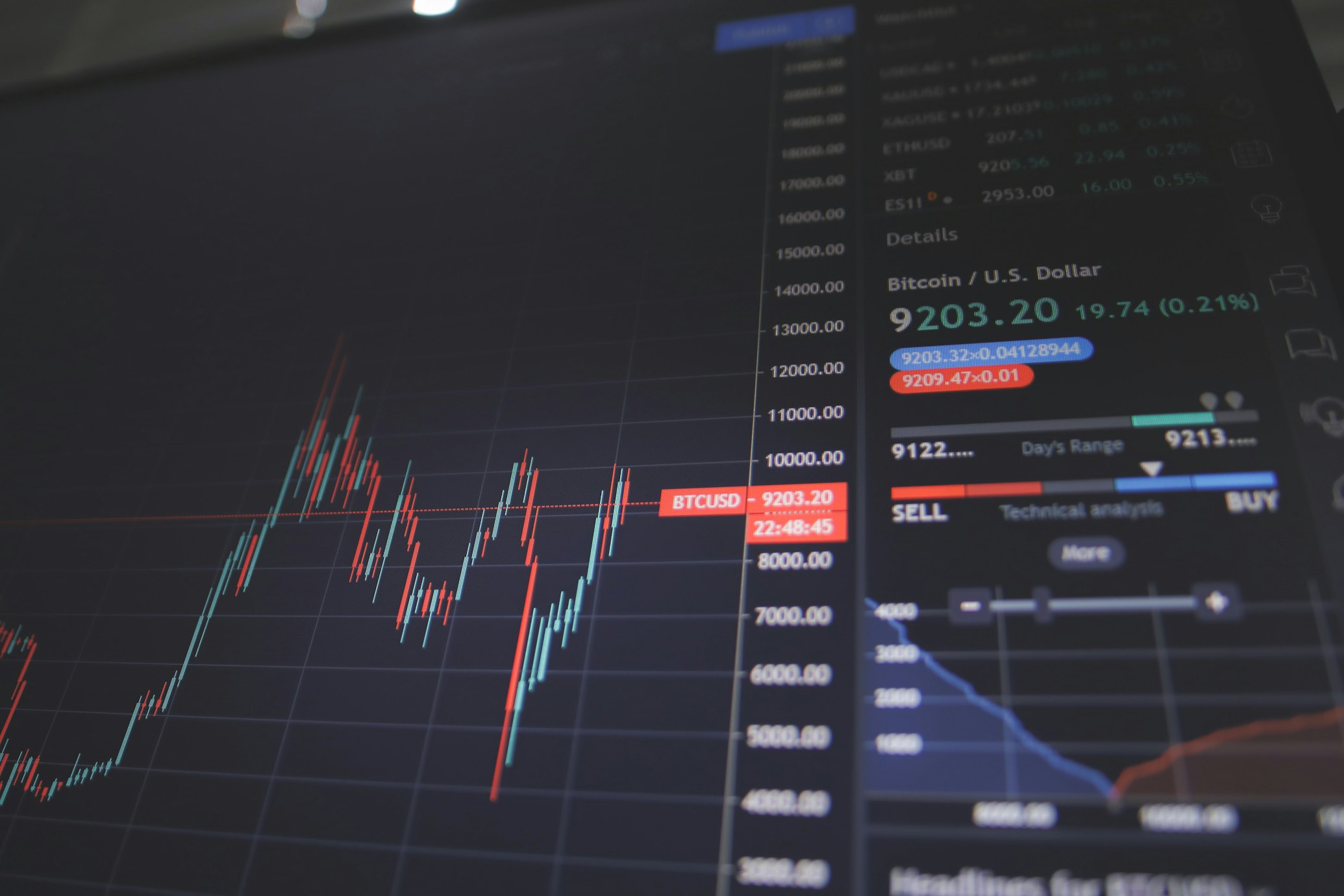
Photo by Nicholas Cappello on Unsplash

What Secondary Market Prices Tell Us About Vendor Risk

Secondary markets aren't perfect predictors, but they're brutally honest about institutional sentiment. When a "very well-known growth fund" offers to buy Anthropic shares at $1.05 trillion (as Jesse Leimgruber of OpenHome posted on X), that's not FOMO—that's sophisticated institutional capital making allocation decisions with real money. Similarly, when buyers offer to sell their homes in exchange for Anthropic shares at $800+ billion valuations, you're seeing desperation driven by supply scarcity and conviction about future upside.

Bradley Horowitz of Wisdom Ventures (an early investor in both Anthropic and OpenAI) says his firm receives "daily offers from the ridiculous to the sublime" but is "playing a long game" and holding their Anthropic position. That's telling. Early investors who've already made multiples on their money are choosing not to sell at $1 trillion valuations because they believe the exit (likely an IPO in October 2026 at $400-500 billion primary valuation) will deliver even more upside.

Meanwhile, OpenAI faces a credibility gap on secondary markets. Anderson from Rainmaker Securities reports seeing bids below OpenAI's $852 billion last round. That discount signals skepticism about whether OpenAI can sustain its premium valuation against Anthropic's growth trajectory. For enterprise buyers, this is relevant: if institutional investors are voting with their wallets that Anthropic has better momentum, that's a leading indicator of vendor staying power, feature velocity, and long-term support quality.

Cost Analysis: Cash Burn, Margins, and Path to Profitability

Here's where the CFO lens matters. Anthropic is burning cash at an eye-watering rate: $12 billion for model training and $7 billion for inference in 2026 alone. That's $19 billion in annual cash burn for a company doing $30 billion in annualized revenue. But here's the key difference: Anthropic projects positive free cash flow by 2027, while OpenAI is targeting breakeven by 2030. That's a three-year difference in capital efficiency.

For enterprise buyers, this matters in two ways. First, vendors approaching profitability have less existential risk. If Anthropic hits positive cash flow in 2027, it can fund operations and R&D from revenue, reducing dependency on continued fundraising in a potentially tighter capital environment. Second, profitable vendors have more pricing flexibility. They can offer aggressive enterprise discounts to win strategic accounts without jeopardizing runway. Unprofitable vendors often have rigid pricing because they need to hit growth metrics to justify their next funding round.

The gross margin question is equally important. Inference costs are rising as model complexity increases, putting pressure on gross margins across the industry. Anthropic's faster path to profitability suggests either (1) better inference cost efficiency through proprietary optimization, (2) higher pricing power with enterprise customers, or (3) a product mix weighted toward higher-margin offerings like Claude Code. Any of those scenarios is good news for enterprise buyers—it means vendor stability and sustainable economics.

IPO Timeline: What October 2026 Means for Enterprise Commitments

Anthropic is reportedly preparing for an October 2026 IPO targeting a $400-500 billion primary valuation. That's half the secondary market price, which creates an interesting dynamic for enterprise buyers. If you're signing a multi-year contract with Anthropic in Q2 2026, you're doing so knowing they'll be a public company within six months. That brings regulatory scrutiny, quarterly earnings pressure, and investor expectations into the picture.

Public companies are generally more stable vendor partners—they have disclosure requirements, governance structures, and fiduciary duties that private companies don't. But they also face short-term earnings pressure that can lead to pricing changes, support quality cuts, or product roadmap shifts to hit quarterly targets. For CIOs, the question is whether you want to lock in pricing before the IPO (when Anthropic still has flexibility) or wait until after (when you have more financial transparency but potentially less negotiating leverage).

The Public Benefit Corporation (PBC) structure adds another wrinkle. Anthropic's founders (Dario and Daniela Amodei, both former OpenAI researchers) established a PBC structure prioritizing societal impact alongside shareholder returns. For safety-conscious enterprise buyers—especially in regulated industries like healthcare, finance, or government—this is reassuring. It means AI safety and alignment research won't get cut the moment Wall Street demands margin expansion. But it also means public market investors need to accept that Anthropic won't maximize short-term profits at the expense of long-term safety principles.

Vendor Selection: What This Means for Your AI Strategy

If you're evaluating AI vendors today, here's what this secondary market shift tells you:

  1. Momentum matters. Anthropic's enterprise adoption velocity (under 15% to 32% market share in 8 months) suggests product-market fit that OpenAI is struggling to match. For technical leaders, that means Claude's API/SDK is likely easier to integrate, performs better in production, or has fewer support tickets than competitors.

  2. Follow the enterprise money. When 80% of revenue comes from business customers and $1M+ clients double in two months, that's enterprise buyers voting with procurement budgets. Those buyers have done their own due diligence on ROI, TCO, and vendor risk. You can learn from their revealed preferences.

  3. Pricing leverage exists. Anthropic's aggressive growth suggests they're willing to offer competitive pricing to win strategic accounts. If you're negotiating with OpenAI, mentioning Anthropic's enterprise share gains gives you leverage. If you're negotiating with Anthropic, their urgency to hit IPO growth targets gives you leverage. Either way, this is a buyer's market for large enterprise deals.

  4. Evaluate multi-vendor strategies. The fact that engineering teams toggle between Claude Code and Codex suggests single-vendor lock-in is unnecessary. Build your infrastructure to support multiple LLM providers, and let internal teams choose the best tool for each use case. That hedges vendor risk and gives you negotiating leverage on pricing.

  5. Watch the IPO S-1 filing. When Anthropic files for IPO (likely August 2026), the S-1 will disclose revenue recognition practices, customer concentration, gross margins, and profitability projections. That's the most credible vendor due diligence you'll get. If you're signing multi-year contracts worth $1M+, wait for the S-1 to validate what you're hearing in sales calls.

The Bottom Line

Secondary market valuations aren't gospel, but they're honest signals. When Anthropic trades at $1 trillion while OpenAI trades at $880 billion (below its last primary round), institutional capital is telling you something about growth trajectories, enterprise adoption, and vendor staying power. For CTOs, this suggests Claude's technical capabilities are winning in production environments. For CFOs, this suggests Anthropic's unit economics and path to profitability are more attractive than OpenAI's. And for both, it suggests the AI vendor landscape is more competitive—and dynamic—than it was six months ago.

The question isn't whether to pick Anthropic over OpenAI (or vice versa). The question is whether your AI strategy has enough vendor flexibility to adapt as this market continues to shift. If your entire roadmap depends on a single provider, you're taking unnecessary risk. Build for multi-vendor compatibility, negotiate pricing aggressively, and watch the October IPO filing like a hawk. That's how you turn market volatility into strategic advantage.


Want to calculate your own AI ROI? Try our AI ROI Calculator — takes 60 seconds and shows projected savings, payback period, and 3-year ROI.

Continue Reading

For more insights on enterprise AI strategy and vendor selection:

THE DAILY BRIEF

Enterprise AI insights for technology and business leaders, twice weekly.

thedailybrief.com

Subscribe at thedailybrief.com/subscribe for weekly AI insights delivered to your inbox.

LinkedIn: linkedin.com/in/rberi  |  X: x.com/rajeshberi

© 2026 Rajesh Beri. All rights reserved.

Anthropic Hits $1 Trillion Valuation, Overtakes OpenAI on Secondary Markets

Photo by Shubham Dhage on Unsplash

The AI vendor landscape just experienced a seismic shift. Anthropic, the company behind Claude, hit a $1 trillion valuation on secondary markets this week—eclipsing OpenAI's $880 billion secondary market price despite OpenAI's more recent $852 billion primary funding round. For CTOs and CFOs evaluating AI vendors, this isn't just financial theater. It's a market-driven signal about enterprise adoption momentum, revenue growth trajectories, and where institutional money is placing its bets for the next 18 months.

According to Business Insider's exclusive reporting, Anthropic's valuation on Forge Global—a leading private marketplace exchange—now hovers around $1 trillion. OpenAI trades at $880 billion on the same platform, representing a slight uptick from its March 2026 funding round but a clear discount to Anthropic's surging price. One Anthropic shareholder recently offered shares at a $1.15 trillion valuation, according to Ken Sawyer, cofounder of Saints Capital. Meanwhile, Glen Anderson, CEO of Rainmaker Securities, reports "tepid" demand for OpenAI shares, with bids coming in below its last primary round valuation.

What's driving this feverish demand? Three factors that enterprise leaders should pay close attention to: (1) 233% annualized revenue growth in a single quarter (late 2025 to March 2026), jumping from $9 billion to $30 billion, (2) explosive enterprise customer expansion—1,000+ clients now spending over $1 million annually, doubling in just two months, and (3) Claude Code, Anthropic's AI-powered coding assistant, generating $2.5 billion in annualized revenue on its own. Compare that to OpenAI's "more measured expansion," and you can see why secondary market buyers are willing to pay a premium for Anthropic exposure.

Enterprise Adoption: The Real Story Behind the Valuation

The numbers tell a clear story for CIOs evaluating AI vendors. Anthropic's enterprise market share grew from under 15% to 32% between mid-2025 and early 2026, according to TechCrunch reporting. That's the fastest enterprise adoption trajectory in generative AI history. Meanwhile, 80% of Anthropic's revenue now comes from over 300,000 business customers, including eight of the Fortune 10 companies. This isn't consumer hype or developer hobbyists—this is enterprise budget reallocation at scale.

For technical leaders, the Claude Code story is particularly revealing. At $2.5 billion in annualized revenue, this single product represents roughly 8% of Anthropic's total revenue. More importantly, it's displacing incumbent tools in production environments. Multiple enterprise engineering leaders have told me their teams now toggle between Claude Code and OpenAI's Codex to see which delivers better results—but Google's offerings "often aren't in the conversation." That's a damning signal about developer preference and production fit.

The enterprise customer expansion metrics are even more striking. Anthropic doubled its $1M+ annual customer count in under two months. That's not "land and expand" sales strategy—that's product-market fit manifesting in renewal rates and seat expansion. For CFOs evaluating total cost of ownership, this suggests strong retention economics and minimal churn. When enterprise customers are expanding spend at that velocity, it means the ROI case is clearing internal hurdles without requiring constant vendor hand-holding.

AI Stock Market Trading Photo by Nicholas Cappello on Unsplash

What Secondary Market Prices Tell Us About Vendor Risk

Secondary markets aren't perfect predictors, but they're brutally honest about institutional sentiment. When a "very well-known growth fund" offers to buy Anthropic shares at $1.05 trillion (as Jesse Leimgruber of OpenHome posted on X), that's not FOMO—that's sophisticated institutional capital making allocation decisions with real money. Similarly, when buyers offer to sell their homes in exchange for Anthropic shares at $800+ billion valuations, you're seeing desperation driven by supply scarcity and conviction about future upside.

Bradley Horowitz of Wisdom Ventures (an early investor in both Anthropic and OpenAI) says his firm receives "daily offers from the ridiculous to the sublime" but is "playing a long game" and holding their Anthropic position. That's telling. Early investors who've already made multiples on their money are choosing not to sell at $1 trillion valuations because they believe the exit (likely an IPO in October 2026 at $400-500 billion primary valuation) will deliver even more upside.

Meanwhile, OpenAI faces a credibility gap on secondary markets. Anderson from Rainmaker Securities reports seeing bids below OpenAI's $852 billion last round. That discount signals skepticism about whether OpenAI can sustain its premium valuation against Anthropic's growth trajectory. For enterprise buyers, this is relevant: if institutional investors are voting with their wallets that Anthropic has better momentum, that's a leading indicator of vendor staying power, feature velocity, and long-term support quality.

Cost Analysis: Cash Burn, Margins, and Path to Profitability

Here's where the CFO lens matters. Anthropic is burning cash at an eye-watering rate: $12 billion for model training and $7 billion for inference in 2026 alone. That's $19 billion in annual cash burn for a company doing $30 billion in annualized revenue. But here's the key difference: Anthropic projects positive free cash flow by 2027, while OpenAI is targeting breakeven by 2030. That's a three-year difference in capital efficiency.

For enterprise buyers, this matters in two ways. First, vendors approaching profitability have less existential risk. If Anthropic hits positive cash flow in 2027, it can fund operations and R&D from revenue, reducing dependency on continued fundraising in a potentially tighter capital environment. Second, profitable vendors have more pricing flexibility. They can offer aggressive enterprise discounts to win strategic accounts without jeopardizing runway. Unprofitable vendors often have rigid pricing because they need to hit growth metrics to justify their next funding round.

The gross margin question is equally important. Inference costs are rising as model complexity increases, putting pressure on gross margins across the industry. Anthropic's faster path to profitability suggests either (1) better inference cost efficiency through proprietary optimization, (2) higher pricing power with enterprise customers, or (3) a product mix weighted toward higher-margin offerings like Claude Code. Any of those scenarios is good news for enterprise buyers—it means vendor stability and sustainable economics.

IPO Timeline: What October 2026 Means for Enterprise Commitments

Anthropic is reportedly preparing for an October 2026 IPO targeting a $400-500 billion primary valuation. That's half the secondary market price, which creates an interesting dynamic for enterprise buyers. If you're signing a multi-year contract with Anthropic in Q2 2026, you're doing so knowing they'll be a public company within six months. That brings regulatory scrutiny, quarterly earnings pressure, and investor expectations into the picture.

Public companies are generally more stable vendor partners—they have disclosure requirements, governance structures, and fiduciary duties that private companies don't. But they also face short-term earnings pressure that can lead to pricing changes, support quality cuts, or product roadmap shifts to hit quarterly targets. For CIOs, the question is whether you want to lock in pricing before the IPO (when Anthropic still has flexibility) or wait until after (when you have more financial transparency but potentially less negotiating leverage).

The Public Benefit Corporation (PBC) structure adds another wrinkle. Anthropic's founders (Dario and Daniela Amodei, both former OpenAI researchers) established a PBC structure prioritizing societal impact alongside shareholder returns. For safety-conscious enterprise buyers—especially in regulated industries like healthcare, finance, or government—this is reassuring. It means AI safety and alignment research won't get cut the moment Wall Street demands margin expansion. But it also means public market investors need to accept that Anthropic won't maximize short-term profits at the expense of long-term safety principles.

Vendor Selection: What This Means for Your AI Strategy

If you're evaluating AI vendors today, here's what this secondary market shift tells you:

  1. Momentum matters. Anthropic's enterprise adoption velocity (under 15% to 32% market share in 8 months) suggests product-market fit that OpenAI is struggling to match. For technical leaders, that means Claude's API/SDK is likely easier to integrate, performs better in production, or has fewer support tickets than competitors.

  2. Follow the enterprise money. When 80% of revenue comes from business customers and $1M+ clients double in two months, that's enterprise buyers voting with procurement budgets. Those buyers have done their own due diligence on ROI, TCO, and vendor risk. You can learn from their revealed preferences.

  3. Pricing leverage exists. Anthropic's aggressive growth suggests they're willing to offer competitive pricing to win strategic accounts. If you're negotiating with OpenAI, mentioning Anthropic's enterprise share gains gives you leverage. If you're negotiating with Anthropic, their urgency to hit IPO growth targets gives you leverage. Either way, this is a buyer's market for large enterprise deals.

  4. Evaluate multi-vendor strategies. The fact that engineering teams toggle between Claude Code and Codex suggests single-vendor lock-in is unnecessary. Build your infrastructure to support multiple LLM providers, and let internal teams choose the best tool for each use case. That hedges vendor risk and gives you negotiating leverage on pricing.

  5. Watch the IPO S-1 filing. When Anthropic files for IPO (likely August 2026), the S-1 will disclose revenue recognition practices, customer concentration, gross margins, and profitability projections. That's the most credible vendor due diligence you'll get. If you're signing multi-year contracts worth $1M+, wait for the S-1 to validate what you're hearing in sales calls.

The Bottom Line

Secondary market valuations aren't gospel, but they're honest signals. When Anthropic trades at $1 trillion while OpenAI trades at $880 billion (below its last primary round), institutional capital is telling you something about growth trajectories, enterprise adoption, and vendor staying power. For CTOs, this suggests Claude's technical capabilities are winning in production environments. For CFOs, this suggests Anthropic's unit economics and path to profitability are more attractive than OpenAI's. And for both, it suggests the AI vendor landscape is more competitive—and dynamic—than it was six months ago.

The question isn't whether to pick Anthropic over OpenAI (or vice versa). The question is whether your AI strategy has enough vendor flexibility to adapt as this market continues to shift. If your entire roadmap depends on a single provider, you're taking unnecessary risk. Build for multi-vendor compatibility, negotiate pricing aggressively, and watch the October IPO filing like a hawk. That's how you turn market volatility into strategic advantage.


Want to calculate your own AI ROI? Try our AI ROI Calculator — takes 60 seconds and shows projected savings, payback period, and 3-year ROI.

Continue Reading

For more insights on enterprise AI strategy and vendor selection:

Share:

THE DAILY BRIEF

AnthropicOpenAIEnterprise AIValuationInvestment

Anthropic Hits $1 Trillion Valuation, Overtakes OpenAI on Secondary Markets

Secondary market trading pushes Anthropic past $1 trillion valuation as desperate buyers chase shares. Meanwhile, OpenAI demand slumps. What enterprise leaders need to know about this seismic shift in AI vendor momentum.

By Rajesh Beri·April 23, 2026·9 min read

The AI vendor landscape just experienced a seismic shift. Anthropic, the company behind Claude, hit a $1 trillion valuation on secondary markets this week—eclipsing OpenAI's $880 billion secondary market price despite OpenAI's more recent $852 billion primary funding round. For CTOs and CFOs evaluating AI vendors, this isn't just financial theater. It's a market-driven signal about enterprise adoption momentum, revenue growth trajectories, and where institutional money is placing its bets for the next 18 months.

According to Business Insider's exclusive reporting, Anthropic's valuation on Forge Global—a leading private marketplace exchange—now hovers around $1 trillion. OpenAI trades at $880 billion on the same platform, representing a slight uptick from its March 2026 funding round but a clear discount to Anthropic's surging price. One Anthropic shareholder recently offered shares at a $1.15 trillion valuation, according to Ken Sawyer, cofounder of Saints Capital. Meanwhile, Glen Anderson, CEO of Rainmaker Securities, reports "tepid" demand for OpenAI shares, with bids coming in below its last primary round valuation.

What's driving this feverish demand? Three factors that enterprise leaders should pay close attention to: (1) 233% annualized revenue growth in a single quarter (late 2025 to March 2026), jumping from $9 billion to $30 billion, (2) explosive enterprise customer expansion—1,000+ clients now spending over $1 million annually, doubling in just two months, and (3) Claude Code, Anthropic's AI-powered coding assistant, generating $2.5 billion in annualized revenue on its own. Compare that to OpenAI's "more measured expansion," and you can see why secondary market buyers are willing to pay a premium for Anthropic exposure.

Enterprise Adoption: The Real Story Behind the Valuation

The numbers tell a clear story for CIOs evaluating AI vendors. Anthropic's enterprise market share grew from under 15% to 32% between mid-2025 and early 2026, according to TechCrunch reporting. That's the fastest enterprise adoption trajectory in generative AI history. Meanwhile, 80% of Anthropic's revenue now comes from over 300,000 business customers, including eight of the Fortune 10 companies. This isn't consumer hype or developer hobbyists—this is enterprise budget reallocation at scale.

For technical leaders, the Claude Code story is particularly revealing. At $2.5 billion in annualized revenue, this single product represents roughly 8% of Anthropic's total revenue. More importantly, it's displacing incumbent tools in production environments. Multiple enterprise engineering leaders have told me their teams now toggle between Claude Code and OpenAI's Codex to see which delivers better results—but Google's offerings "often aren't in the conversation." That's a damning signal about developer preference and production fit.

The enterprise customer expansion metrics are even more striking. Anthropic doubled its $1M+ annual customer count in under two months. That's not "land and expand" sales strategy—that's product-market fit manifesting in renewal rates and seat expansion. For CFOs evaluating total cost of ownership, this suggests strong retention economics and minimal churn. When enterprise customers are expanding spend at that velocity, it means the ROI case is clearing internal hurdles without requiring constant vendor hand-holding.

Photo by Nicholas Cappello on Unsplash

What Secondary Market Prices Tell Us About Vendor Risk

Secondary markets aren't perfect predictors, but they're brutally honest about institutional sentiment. When a "very well-known growth fund" offers to buy Anthropic shares at $1.05 trillion (as Jesse Leimgruber of OpenHome posted on X), that's not FOMO—that's sophisticated institutional capital making allocation decisions with real money. Similarly, when buyers offer to sell their homes in exchange for Anthropic shares at $800+ billion valuations, you're seeing desperation driven by supply scarcity and conviction about future upside.

Bradley Horowitz of Wisdom Ventures (an early investor in both Anthropic and OpenAI) says his firm receives "daily offers from the ridiculous to the sublime" but is "playing a long game" and holding their Anthropic position. That's telling. Early investors who've already made multiples on their money are choosing not to sell at $1 trillion valuations because they believe the exit (likely an IPO in October 2026 at $400-500 billion primary valuation) will deliver even more upside.

Meanwhile, OpenAI faces a credibility gap on secondary markets. Anderson from Rainmaker Securities reports seeing bids below OpenAI's $852 billion last round. That discount signals skepticism about whether OpenAI can sustain its premium valuation against Anthropic's growth trajectory. For enterprise buyers, this is relevant: if institutional investors are voting with their wallets that Anthropic has better momentum, that's a leading indicator of vendor staying power, feature velocity, and long-term support quality.

Cost Analysis: Cash Burn, Margins, and Path to Profitability

Here's where the CFO lens matters. Anthropic is burning cash at an eye-watering rate: $12 billion for model training and $7 billion for inference in 2026 alone. That's $19 billion in annual cash burn for a company doing $30 billion in annualized revenue. But here's the key difference: Anthropic projects positive free cash flow by 2027, while OpenAI is targeting breakeven by 2030. That's a three-year difference in capital efficiency.

For enterprise buyers, this matters in two ways. First, vendors approaching profitability have less existential risk. If Anthropic hits positive cash flow in 2027, it can fund operations and R&D from revenue, reducing dependency on continued fundraising in a potentially tighter capital environment. Second, profitable vendors have more pricing flexibility. They can offer aggressive enterprise discounts to win strategic accounts without jeopardizing runway. Unprofitable vendors often have rigid pricing because they need to hit growth metrics to justify their next funding round.

The gross margin question is equally important. Inference costs are rising as model complexity increases, putting pressure on gross margins across the industry. Anthropic's faster path to profitability suggests either (1) better inference cost efficiency through proprietary optimization, (2) higher pricing power with enterprise customers, or (3) a product mix weighted toward higher-margin offerings like Claude Code. Any of those scenarios is good news for enterprise buyers—it means vendor stability and sustainable economics.

IPO Timeline: What October 2026 Means for Enterprise Commitments

Anthropic is reportedly preparing for an October 2026 IPO targeting a $400-500 billion primary valuation. That's half the secondary market price, which creates an interesting dynamic for enterprise buyers. If you're signing a multi-year contract with Anthropic in Q2 2026, you're doing so knowing they'll be a public company within six months. That brings regulatory scrutiny, quarterly earnings pressure, and investor expectations into the picture.

Public companies are generally more stable vendor partners—they have disclosure requirements, governance structures, and fiduciary duties that private companies don't. But they also face short-term earnings pressure that can lead to pricing changes, support quality cuts, or product roadmap shifts to hit quarterly targets. For CIOs, the question is whether you want to lock in pricing before the IPO (when Anthropic still has flexibility) or wait until after (when you have more financial transparency but potentially less negotiating leverage).

The Public Benefit Corporation (PBC) structure adds another wrinkle. Anthropic's founders (Dario and Daniela Amodei, both former OpenAI researchers) established a PBC structure prioritizing societal impact alongside shareholder returns. For safety-conscious enterprise buyers—especially in regulated industries like healthcare, finance, or government—this is reassuring. It means AI safety and alignment research won't get cut the moment Wall Street demands margin expansion. But it also means public market investors need to accept that Anthropic won't maximize short-term profits at the expense of long-term safety principles.

Vendor Selection: What This Means for Your AI Strategy

If you're evaluating AI vendors today, here's what this secondary market shift tells you:

  1. Momentum matters. Anthropic's enterprise adoption velocity (under 15% to 32% market share in 8 months) suggests product-market fit that OpenAI is struggling to match. For technical leaders, that means Claude's API/SDK is likely easier to integrate, performs better in production, or has fewer support tickets than competitors.

  2. Follow the enterprise money. When 80% of revenue comes from business customers and $1M+ clients double in two months, that's enterprise buyers voting with procurement budgets. Those buyers have done their own due diligence on ROI, TCO, and vendor risk. You can learn from their revealed preferences.

  3. Pricing leverage exists. Anthropic's aggressive growth suggests they're willing to offer competitive pricing to win strategic accounts. If you're negotiating with OpenAI, mentioning Anthropic's enterprise share gains gives you leverage. If you're negotiating with Anthropic, their urgency to hit IPO growth targets gives you leverage. Either way, this is a buyer's market for large enterprise deals.

  4. Evaluate multi-vendor strategies. The fact that engineering teams toggle between Claude Code and Codex suggests single-vendor lock-in is unnecessary. Build your infrastructure to support multiple LLM providers, and let internal teams choose the best tool for each use case. That hedges vendor risk and gives you negotiating leverage on pricing.

  5. Watch the IPO S-1 filing. When Anthropic files for IPO (likely August 2026), the S-1 will disclose revenue recognition practices, customer concentration, gross margins, and profitability projections. That's the most credible vendor due diligence you'll get. If you're signing multi-year contracts worth $1M+, wait for the S-1 to validate what you're hearing in sales calls.

The Bottom Line

Secondary market valuations aren't gospel, but they're honest signals. When Anthropic trades at $1 trillion while OpenAI trades at $880 billion (below its last primary round), institutional capital is telling you something about growth trajectories, enterprise adoption, and vendor staying power. For CTOs, this suggests Claude's technical capabilities are winning in production environments. For CFOs, this suggests Anthropic's unit economics and path to profitability are more attractive than OpenAI's. And for both, it suggests the AI vendor landscape is more competitive—and dynamic—than it was six months ago.

The question isn't whether to pick Anthropic over OpenAI (or vice versa). The question is whether your AI strategy has enough vendor flexibility to adapt as this market continues to shift. If your entire roadmap depends on a single provider, you're taking unnecessary risk. Build for multi-vendor compatibility, negotiate pricing aggressively, and watch the October IPO filing like a hawk. That's how you turn market volatility into strategic advantage.


Want to calculate your own AI ROI? Try our AI ROI Calculator — takes 60 seconds and shows projected savings, payback period, and 3-year ROI.

Continue Reading

For more insights on enterprise AI strategy and vendor selection:

THE DAILY BRIEF

Enterprise AI insights for technology and business leaders, twice weekly.

thedailybrief.com

Subscribe at thedailybrief.com/subscribe for weekly AI insights delivered to your inbox.

LinkedIn: linkedin.com/in/rberi  |  X: x.com/rajeshberi

© 2026 Rajesh Beri. All rights reserved.

Newsletter

Stay Ahead of the Curve

Weekly enterprise AI insights for technology leaders. No spam, no vendor pitches—unsubscribe anytime.

Subscribe